
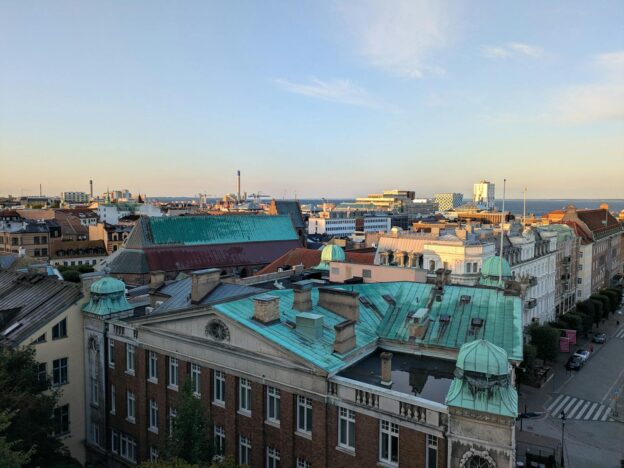
Scandinavians are often described as a people who endure winter with stoic grace, as if the long dark were a character-building exercise we have all silently agreed to respect. That framing gets the culture backwards. We do not endure the dark; we spend most of the year in quiet, coordinated negotiation with light — rationing it, chasing it, faking it with candles and lamps, and then, when April finally delivers a 20:00 sun that refuses to set, responding with something closer to religious feeling than weather appreciation.
If you have just moved here, you will experience this moment soon. It tends to arrive in mid-April in Copenhagen, slightly later in Oslo, and somewhere around Walpurgis Eve in Stockholm. You will be eating dinner and notice that the kitchen does not need a lamp on. You will stand up, walk to the window, and feel a physical recalibration you were not expecting.
That recalibration is what this piece is about. It is also, I think, the single experience that makes expats decide whether they will actually stay.
The arithmetic of Nordic light
Copenhagen sits at approximately 55.7 degrees north. On the winter solstice, the sun is above the horizon for roughly seven hours, and even that is generous — much of it is the grey, sideways light that never quite commits. On the summer solstice, the same city gets more than 17 hours of daylight, plus a long civil twilight that keeps the sky pale until close to midnight.
That is a swing of ten hours of daylight between the solstices. Oslo’s swing is wider. Tromsø’s is absolute: two months of polar night, two months of midnight sun.
What this means, in practice, is that a Nordic year is not four equal seasons but a light budget that expands and contracts so violently that the body has to adapt or break. The culture is the adaptation.
Why the body actually cares
The physical response to that first long evening is not poetic. It is endocrine. Reduced daylight in autumn and winter appears to disrupt serotonin and melatonin regulation, which is why roughly 5% of people in northern latitudes experience full seasonal affective disorder, and another 10 to 20% experience milder winter blues, according to health experts cited by PhillyVoice. Light therapy at 10,000 lux has become a first-line treatment partly because it works on the same biology that the seasons are jerking around.
Research has noted that for seasonal and non-seasonal depression, light therapy’s effectiveness is roughly comparable to antidepressants or cognitive behavioural therapy. That is not a small claim. It means the thing an entire Nordic culture organises itself around — access to light — is medically load-bearing.
When you stand at your window in April and feel the room get lighter instead of darker at 19:30, your circadian system is receiving a signal it has been starved of for five months. The relief is not metaphorical.
The cultural infrastructure of light-chasing
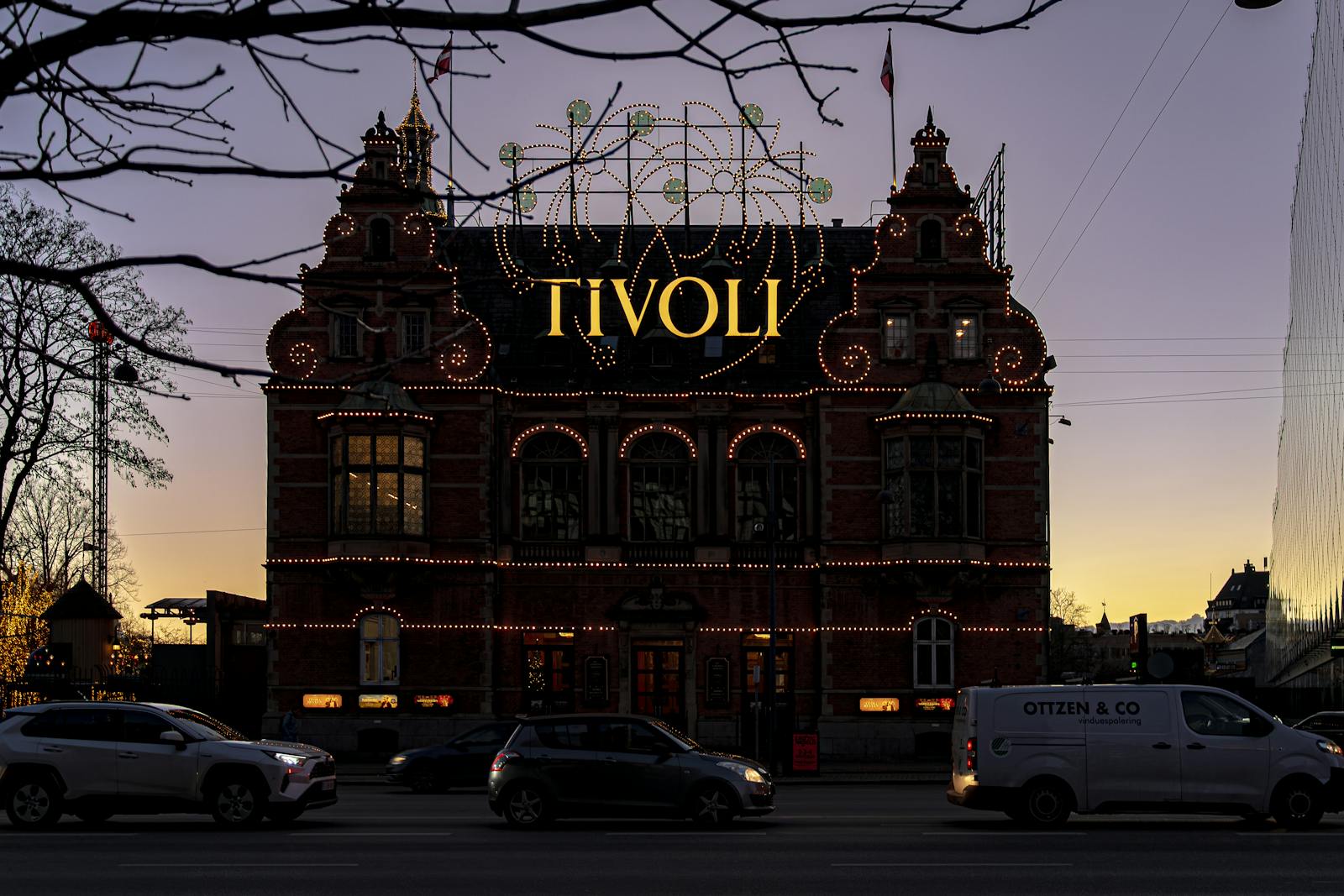
Spend a winter here and you start to notice how much of Nordic daily life is secretly a light-management system. Candles on café tables at 10 in the morning. South-facing balconies that command a premium in the property market. The national obsession with windows — big ones, clean ones, unobstructed ones. The architectural preference for pale wood and white walls that bounce whatever photons arrive.
Then there are the lamps. Denmark is known for its designer lighting culture, and it is not really a style choice. The iconic PH lamp was designed in the 1920s to distribute light softly in dark interiors. The product followed the latitude.
Scandinavia Standard has written about the small daily habits Scandinavians use to make winter liveable, and almost all of them are light-adjacent: morning walks before work, candles with breakfast, lamps placed at different heights so a room has layers rather than one overhead glare. The cultural vocabulary around this — hygge in Denmark, koselig in Norway — is often exported as cosy interior styling, but at home it is closer to survival tooling.
What the first long evening actually feels like
The moment tends to happen somewhere between the spring equinox and the first week of May. You notice it while doing something ordinary. Taking the bins out. Walking home from the bakery. Putting a child to bed.
In my case, living in Frederiksberg, it usually happens on the cycle home from somewhere across town. One evening in mid-April I will leave a meeting at 19:15, unlock the bike, and realise I do not need to switch the light on. The sky over Sankt Jørgens Sø is still blue. Parents are out with strollers. Someone is eating on a balcony. The city has quietly added three hours to the day without telling anyone.
Expats describe this moment in almost identical terms: a sudden, slightly embarrassed emotional response to what is, objectively, just the planet tilting. One American friend cried in a supermarket parking lot in Malmö. A Spanish colleague called her mother. A British neighbour told me she finally understood why her Danish in-laws were “like that” about summerhouses.
Why the worship is not performative
Outsiders sometimes find Nordic solstice behaviour a little much. The bonfires. The flower crowns. The entire nation of Sweden essentially closing for Midsummer. The Finnish tradition, which my wife grew up with, of disappearing to a lakeside cabin for several days to sit in silence watching light refuse to leave the sky.
None of it is performative. It is the collective exhale of a population whose nervous systems have just been returned to them.
Research indicates that SAD can last as much as roughly 40% of the year, and that starting bright light exposure early in the season is one of the most evidence-backed interventions. When you live at 55 or 60 degrees north, roughly 40% of the year is not a statistic. It is the stretch between late October and early April, the months you have just survived when that long April evening arrives.
The celebration is proportionate to what preceded it.
The expat threshold
I have watched a lot of foreigners move to Copenhagen over the last twenty years. The ones who leave tend to leave in February. The ones who stay almost all describe some version of the April light moment as the thing that flipped them.
That tracks with the biology. AP News has reported on how Nordic populations develop coping strategies that newcomers often lack: accepting the dark rather than fighting it, getting outside in whatever light exists, treating winter as a season with its own pleasures rather than a deficit version of summer. But those strategies take a year or two to absorb. The April payoff does not. It lands the first spring you are here, and it lands hard.
The expats who stay are the ones who, in that moment, do the mental arithmetic — five months of dark in exchange for this — and decide the trade is worth it.
The policy footnote nobody asked for
Because I cannot help myself: the light response is not only biological and cultural, it is also built into policy. Nordic societies have structured daily life to maximise daylight exposure during winter months, from outdoor breaks during school hours to workplace design considerations. The common practice of ending the working day around 16:00 in Denmark exists partly because of family policy, but it also means that in April and May, people get out of the office while the sun is still high. I wrote recently about how Nordic regions think about the Arctic, and the light calculus runs through that too — the further north you govern, the more daylight becomes an explicit variable in how you design a society.
The practical effect is that when spring arrives, the infrastructure is waiting. Parks are already maintained for evening use. Harbour baths reopen. Outdoor cafés put out blankets instead of asking you to come inside. An entire country pivots outward within about a week.
A small warning about the opposite direction
If the April moment is the reason people stay, the October moment is the reason some still leave. The light contracts as fast as it expanded, and the first year is hardest because you do not yet trust that it will come back.
This is where the lamps come in. CNET’s round-up of expert advice on light therapy lamps emphasises the same technical specs the Center for Environmental Therapeutics has promoted for years: 10,000 lux at sitting distance, a reasonably large screen, UV filtering, used for 20 to 30 minutes in the morning. Psychology Today has also covered the practical protocol, including the detail that many clinicians recommend starting in early autumn, before symptoms arrive, rather than waiting for the dark to do its work.
My own household has two lamps running from mid-October to mid-March. Nobody talks about them. They just get switched on with the coffee machine. That, I would argue, is the Nordic approach in miniature: medicalise the dark quietly, build the habit, wait for April.
What the light is actually teaching you
The expat epiphany is not really about weather. It is about understanding, physically, that the culture you moved into was shaped by a material condition you did not previously take seriously. The candles are not aesthetic. The early dinners are not quaint. The summerhouse obsession is not middle-class posturing. They are all answers to the same question: how do you build a life at a latitude where the sun is a part-time employee?
Once you understand that, a lot of other things start to make sense. Why Danes plan summer holidays in January. Why the cycle lanes are full at 21:00 in June. Why my eight-year-old knows, without being told, that the first properly warm evening of the year is a kind of national holiday and that we will be eating outside even if the food is not quite ready.
You will have your own version of the April moment soon, if you have not already. Pay attention to it. Notice what your body does before your mind catches up. That response, whatever it is, is the beginning of actually living here rather than just being posted here.
And then, come October, buy the lamp.
Photo by Jakob Andersson on Pexels