
Inside a windowless room on Microsoft’s Redmond campus, sound registers at roughly minus 20.3 decibels — a figure Guinness World Records certified after engineers built the chamber specifically to test hardware and refine voice recognition software. The number is stranger than it looks. Zero decibels is the threshold of average human hearing. The chamber, tucked inside Building 87 and isolated from the rest of the complex to keep vibration from seeping in, sits only a few decibels above the physical noise floor of moving air itself.
Walk in, and the room does something to you.
Visitors describe a slow inversion of attention. The clocklike ticking that seemed to come from a wristwatch turns out to be tendons in the neck. A soft, wet rhythm resolves into blood moving through the arteries near the ears. Fingers cracking sound like small branches. Many people report difficulty staying for extended periods, with some anechoic chamber visitors unable to remain for more than 45 minutes.
What the chamber actually does
The word anechoic means, plainly, without echo. Every hard surface in the ordinary world — glass, drywall, tabletop, sidewalk — reflects sound waves back at the listener. What people call "a sound" is almost always the original vibration blended with dozens of reflections arriving milliseconds later. The brain uses those reflections to place objects in space, judge distance, and confirm that a room is a room.
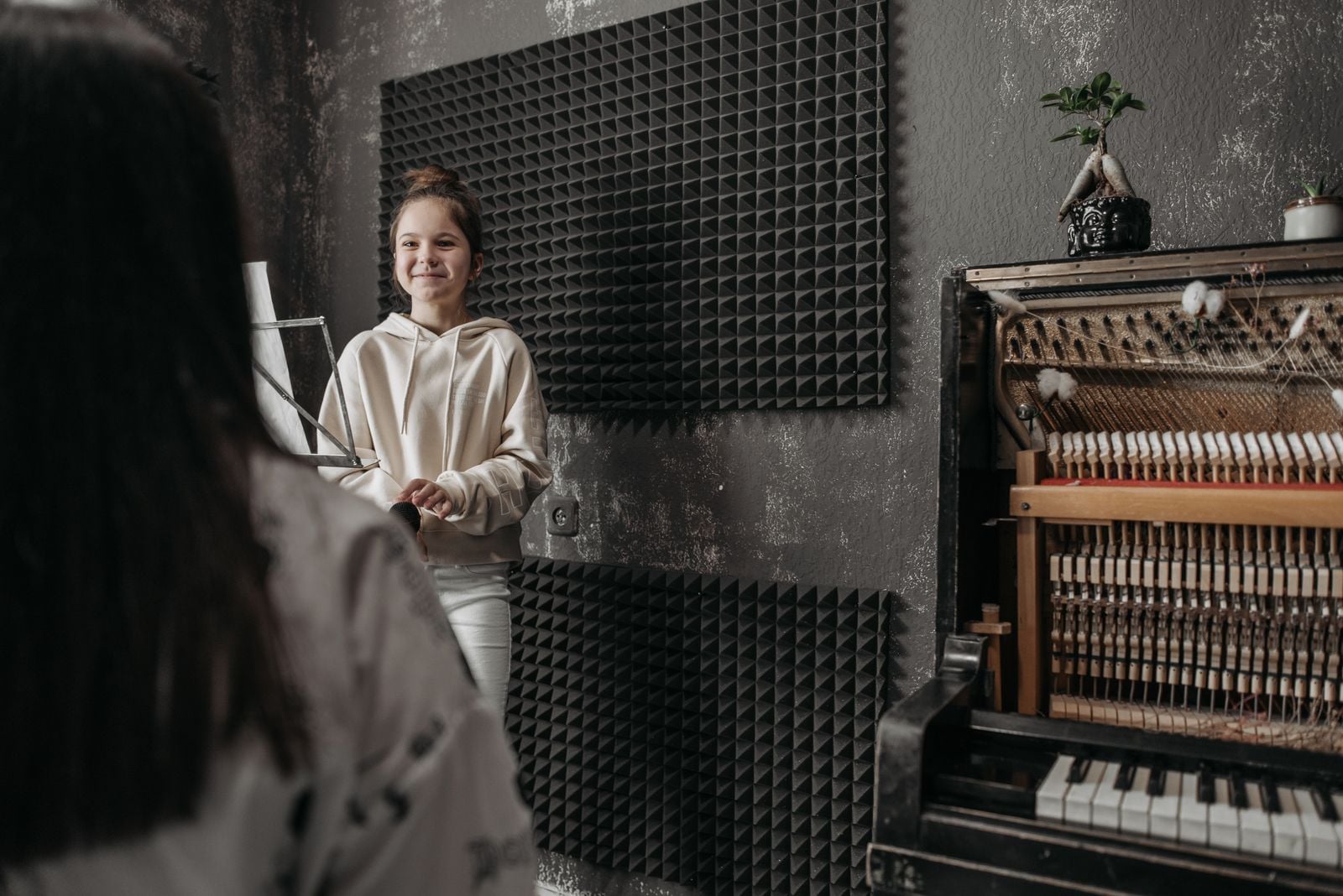
An anechoic chamber removes the reflections. Walls, ceiling, and floor are covered in fiberglass wedges, often twelve inches deep, arranged so the thick base absorbs low frequencies and the narrow tip catches the high ones. Any wave that misses the first wedge slips into the crevice and gets caught by the next. Sound goes in and does not come back.
The closest real-world equivalent to an anechoic chamber is not a cave or a soundproof booth. It is an open grassy field on a windless, dry day. Scream in a meadow and the waves have nothing to bounce off. The chamber is that field, folded into a twelve-foot cube.
How Microsoft ended up with the record
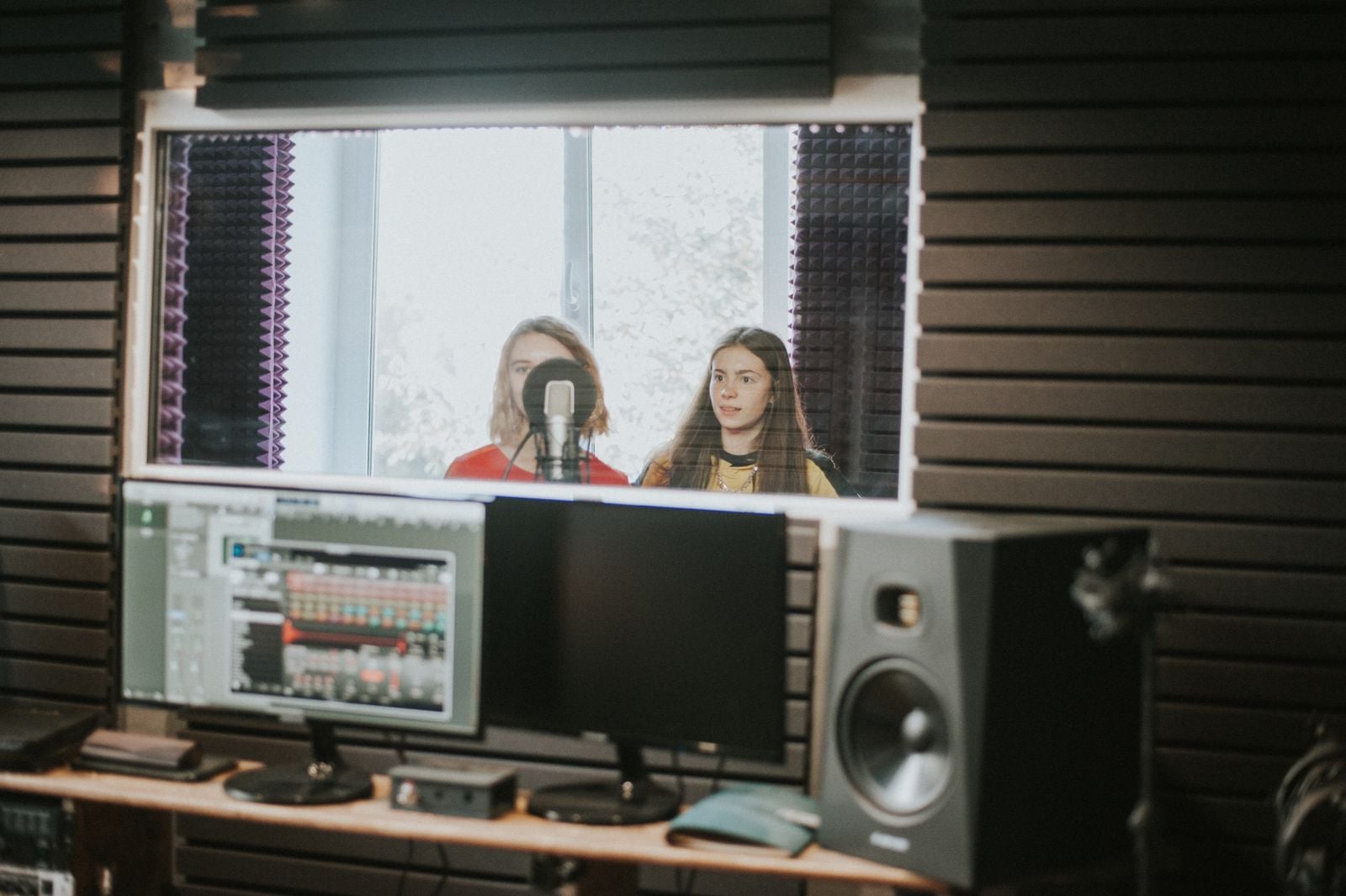
The Redmond chamber was not designed to be a curiosity. It was built to test the microphones, speakers, and voice-recognition pipelines behind products like Cortana, Xbox, HoloLens, and the Surface line. To measure how a laptop hinge squeaks or how far a whispered command can reach a smart speaker’s array, engineers need a room where the only sound in the recording is the sound they are studying.
Microsoft engineers spent months on isolation. The chamber sits on a system of vibration-damping springs. Six layers of concrete and steel separate it from the rest of Building 87. It is a room inside a room inside a room, each shell floating independently so that footsteps in a hallway, HVAC in the ceiling, or a truck on a road outside cannot creep into the measurement.
The result, as Inverse reported, was a certified reading of minus 20.3 decibels — a value that set the world record. Orfield Laboratories in Minneapolis has also achieved exceptionally low readings. The two chambers now sit at the extreme edge of what quiet even means as a measurement.
What visitors actually hear
The peculiar thing about the room is that it is not silent. It sounds like you.
With the ambient floor of the world stripped out — no refrigerator hum, no distant traffic, no whisper of ventilation — the body’s own noises rise to fill the space. The heartbeat becomes a low, steady percussion in the chest and neck. Blood flowing through the arteries near the eardrum produces a soft whooshing. Some people report hearing their scalp move when they turn their head. Others describe a faint high whine, which audiologists identify as spontaneous otoacoustic emissions — tiny sounds generated by the outer hair cells in the cochlea itself.
Visitors to anechoic chambers have described the experience as disorienting. Some report trying to keep calm and not run out of the room, feeling like the walls were closing in and they could not breathe.
Why the brain panics
Absolute quiet is not the neutral condition people expect it to be. We have trained our whole lives to hear in natural conditions, and echoes help us orient ourselves very literally in the world. When those cues disappear, the brain loses the acoustic scaffolding it uses to confirm where the walls are, where the ceiling is, where other people might be standing.
Far more research has gone into how the brain processes sound than into what it does when there is nothing to process. What is the default state of the auditory system at rest? Is there a default? These are questions the field has barely begun to answer.
There may be a physiological piece as well. Writing in Psychology Today, George Michelsen Foy — the author of a book on his own search for absolute silence — explores the relationship between silence and the nervous system. Inner silence, meaning a quiet mind, appears to soothe the parasympathetic nervous system and dampen stress responses. Outer silence, meaning the sudden removal of environmental sound, seems to do the opposite. It can induce a heightened state of alertness and potentially trigger sympathetic activation. Foy wonders, in that context, whether the panic that visitors sometimes report inside anechoic chambers is a raw expression of that inhibition being lifted.
There is a scene in almost every Western in which the frontiersman on watch says, it’s quiet, Jake. His partner answers, yep — too quiet. It turns out the trope is neurologically literal. Predator-era brains treated the sudden absence of ambient sound as information: something out there has just stopped moving, and it is probably watching you.
What the chamber is actually used for
None of this was the point. The point was product testing. Microsoft engineers use the room to measure the sound signature of a fan on a Surface laptop, the click of a keyboard, the acoustic fingerprint of a Teams call routed through a specific microphone array. Voice recognition, in particular, depends on knowing exactly what the device is picking up and what it is inventing.
Other anechoic chambers serve similarly specific purposes. NASA maintains anechoic chambers large enough to hold antennas destined for spacecraft. Military facilities have built chambers that can accommodate aircraft. Orfield’s chamber in Minneapolis has been used to measure the hum of refrigerators, the audible click of pacemakers, and the mylar rustle of a sleeping bag that a manufacturer eventually redesigned to be less crinkly.
The commercial rush toward quiet
The chambers exist inside a wider cultural pivot. The market for acoustic insulation and active-noise-canceling headphones has grown substantially in recent years. Sensory-deprivation float tanks have become increasingly available in major cities.
Some of that appetite maps onto real health data. Roughly one in three Americans is exposed to noise sufficient to raise cardiovascular risk. Chronic exposure to traffic and industrial noise has been linked to hypertension, sleep disruption, and elevated cortisol. There is a real medical case for turning the volume down. The question anechoic chambers pose is whether there is a floor beneath which quiet stops being restorative and starts becoming something else — a stimulus in its own right, one the nervous system reads as threat.
Scandinavian cultures have long treated stillness and unstructured time as a resource rather than an absence, a theme Scandinavia Standard has explored before. The chamber pushes that idea to its physical limit and past it. Ordinary quiet — a forest, a fjord at dawn, a room with the windows closed — still contains the low ambient signature of the world. The Redmond chamber does not.
What happens at 45 minutes
The 45-minute figure is not a hard biological limit. It is a rough average, the point at which most visitors report the experience tipping from novel to intolerable. Some report vertigo — the ears use faint reflected sound to help calibrate balance, and without it the vestibular system loses one of its cross-references. Some hallucinate faint sounds, the auditory cortex apparently generating signal to fill the gap. Some simply feel watched.
The underlying question — what is the brain doing at rest, and is there even such a thing — hangs over all of it. The chamber suggests the answer is: not much rest at all. Strip away the input and the brain seems to start listening harder, to itself, to the body, to the faint mechanical noise of being alive. The heartbeat gets loud. The breath gets loud. The blood gets loud.
Outside Building 87, the ordinary noise of a Redmond afternoon returns in a rush — HVAC, distant traffic on 520, the muffled clatter of the cafeteria two floors down. Visitors describe stepping out and feeling almost lightheaded from the reintroduction of the world. The room they just left is measuring, at that moment, the sound of nothing much at all. Air molecules bumping into each other. A number just barely above the physical limit of what quiet can be.