
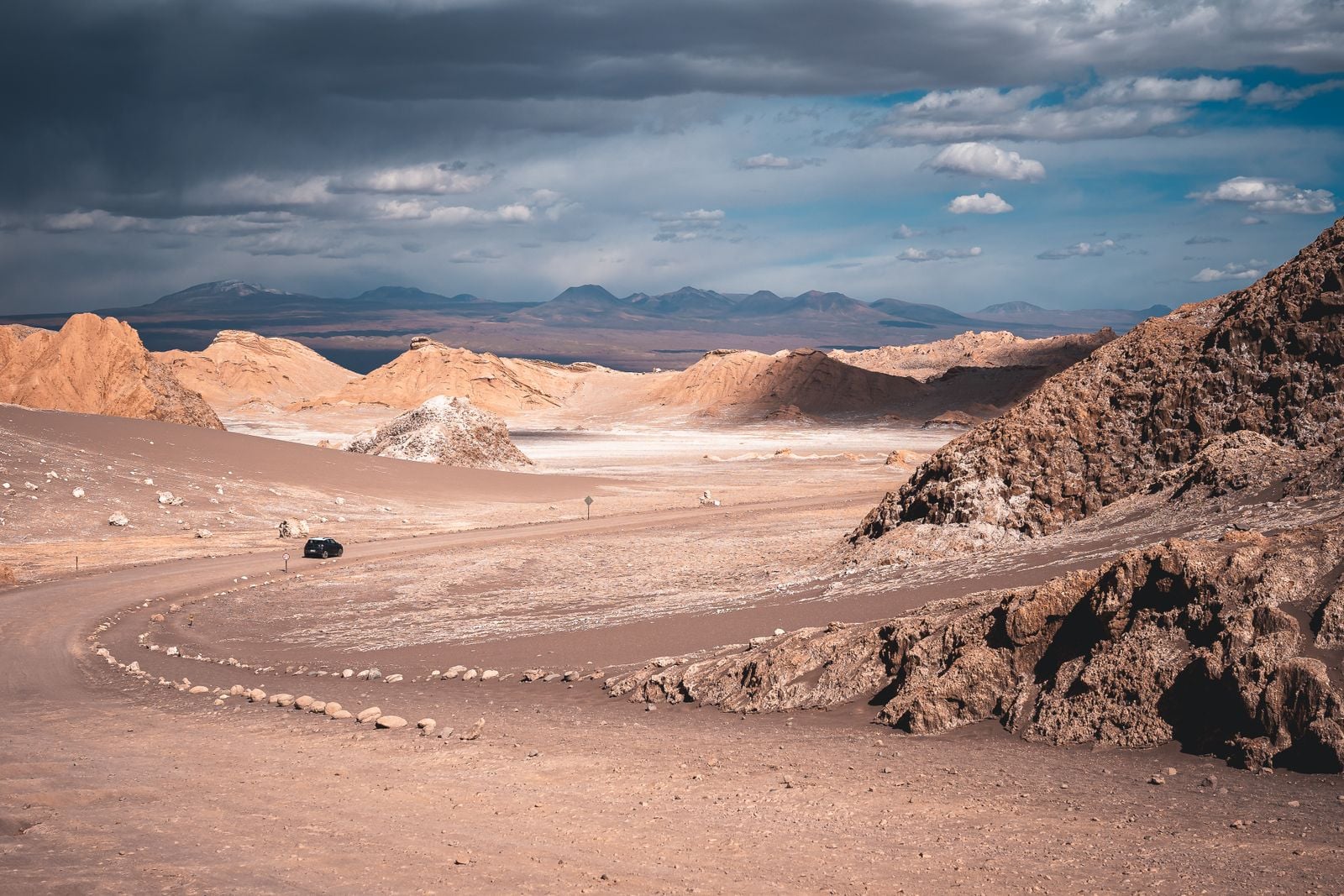
The Atacama is not literally a place where rain can never fall. In its hyperarid core, however, annual precipitation can remain below two millimetres, and major storms are rare enough to become scientific events in their own right. The region’s defining feature is not one unbroken record of zero, but an extraordinary combination of dryness, salt, intense ultraviolet radiation and soils containing very little organic material.
Those conditions have made northern Chile one of planetary science’s most important natural laboratories. A major scientific review describes the Atacama as a leading terrestrial analogue for the dry, saline and oxidising surface of Mars. It is not a perfect copy of the Red Planet, but certain parts of the desert reproduce enough of its environmental pressures to test instruments, drilling systems and methods for detecting extremely faint signs of life.
A desert built by geography
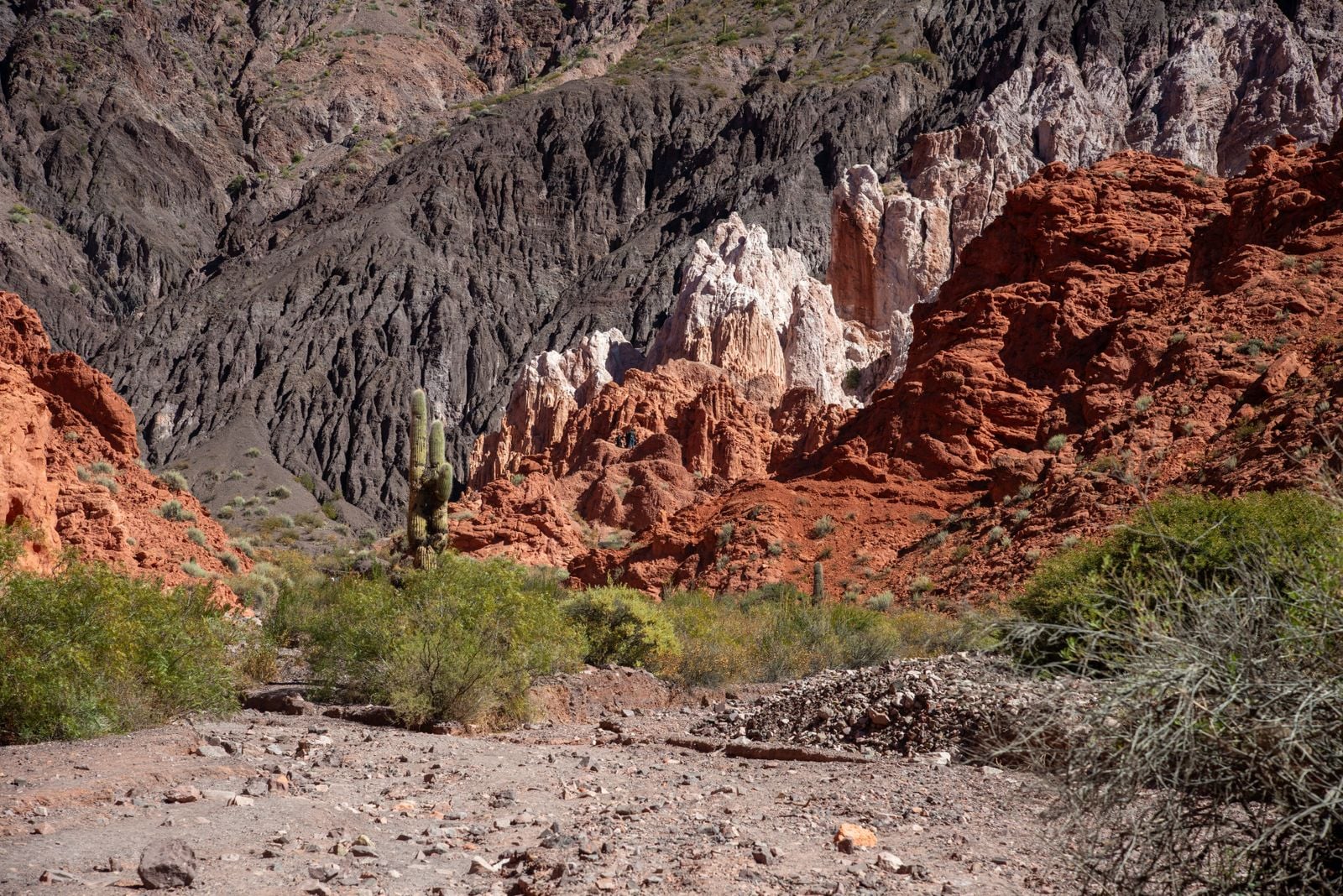
The Atacama lies between the Pacific Ocean and the Andes, where several large-scale processes work together to limit rainfall. The Andes obstruct moisture arriving from the east, while the cold Humboldt Current reduces evaporation from the Pacific and helps maintain a stable layer of cool coastal air. The Coastal Range then blocks much of the low cloud and fog from moving farther inland.
The result is a sharp environmental gradient rather than one uniform desert. Coastal areas can receive regular fog, mountain slopes may receive seasonal moisture and the central hyperarid zone can remain almost completely dry for long periods. Treating every part of the Atacama as equally rainless obscures the feature that makes it scientifically valuable: extreme conditions sit remarkably close to less hostile ones.
What the rainfall measurements actually show
Rainfall records in the desert are sparse, and claims about a station that has “never” measured rain depend on where the instrument stands, how long it has operated and the smallest amount it can detect. The strongest scientific evidence supports a more careful statement. The driest core receives exceptionally little precipitation, while rare storms still interrupt the long dry intervals.
That distinction became impossible to ignore after unusual rain events struck parts of the core in 2015 and 2017. Water collected in previously undocumented hypersaline lagoons, and researchers found that many surface microbes died from osmotic shock when water suddenly became abundant. Organisms adapted to surviving on tiny amounts of moisture were not necessarily equipped to withstand flooding.
The finding turns the familiar assumption about deserts on its head. In most ecosystems, water means relief. In a habitat that has operated near the dry limit for millions of years, a sudden excess can be a disturbance as severe as drought would be somewhere else.
Why the soil is useful to Mars scientists
Soils in the hyperarid core can be highly saline, enriched in nitrates, sulphates and perchlorates, and extremely poor in organic material. These characteristics overlap with several important features measured in Martian regolith. Strong ultraviolet exposure and oxidising chemistry also make biological traces difficult to preserve or detect near the surface.
The comparison still has limits. The Atacama is warmer than Mars, sits beneath Earth’s atmosphere and contains living organisms that have evolved under terrestrial conditions. Scientists therefore use it as an analogue, not a replica. Different sites reproduce different pieces of the Martian problem, from drilling through hard salt layers to distinguishing a genuine biosignature from chemical background noise.
How NASA and ESA use the desert
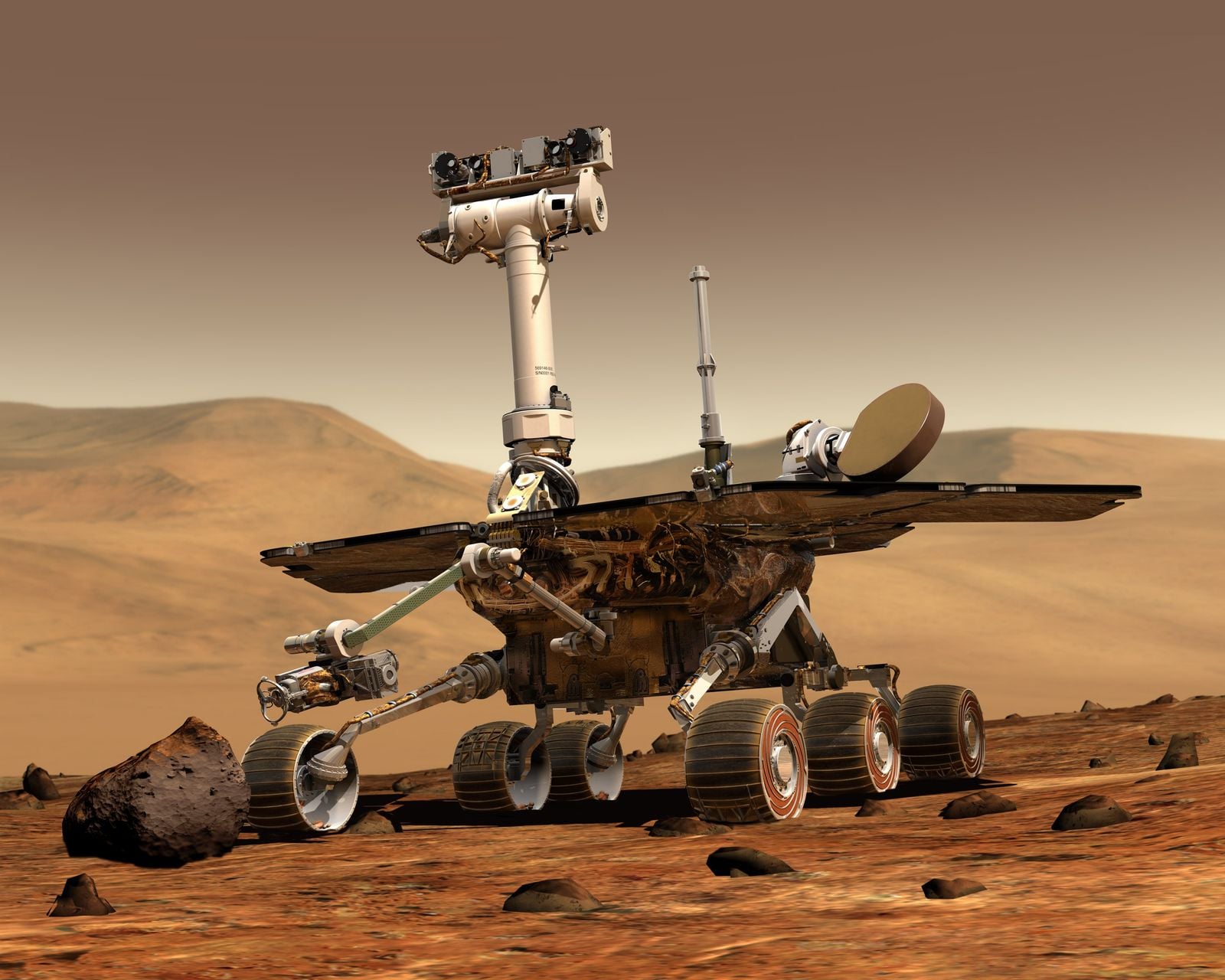
NASA’s Atacama Rover Astrobiology Drilling Studies project, known as ARADS, carried out repeated field campaigns between 2016 and 2019. Its K-REX2 prototype combined autonomous driving, drilling, sample transfer and biochemical analysis in one system. NASA described the work as testing tools and techniques in one of the most Mars-like places on Earth.
The European Space Agency has also used the region for planetary-rover exercises. In a 2013 trial, an early ExoMars prototype was operated through a simulated Mars mission while teams practised combining surface imagery, ground-penetrating radar and subsurface sampling. ESA called the Atacama one of the closest terrestrial matches for Mars.
These projects are not evidence that one specific flight rover was secretly driven through Chile before launch. Their value lies in testing the wider chain of operations that a mission needs: choosing a target, moving across difficult ground, drilling, transferring samples and deciding what the resulting chemical signals mean.
What the Atacama taught scientists about Viking
The connection between the Atacama and NASA’s Viking programme stretches across several different periods. Before the Viking landers reached Mars in 1976, researchers examined desert soils from around the world, including material from the Atacama’s Coastal Range, to understand how life-detection experiments might perform in extremely dry environments.
Later work on soil from the Yungay region addressed a different question. Researchers found that organic material could exist at concentrations so low, and in chemistry so oxidising, that Viking-style heating and analysis might fail to reveal it clearly. Those studies helped scientists reconsider what an apparently negative result from Mars could mean.
The timeline matters. The early sampling helped prepare for Viking, while the more detailed false-negative interpretation developed after the mission. Combining the two into a single pre-launch experiment makes the history sound cleaner than it really was.
Life beneath an apparently empty surface
The desert’s resemblance to Mars does not mean it is sterile. In 2026, an international team led by researchers at the University of Cologne reported diverse communities of microscopic nematodes across six Atacama regions. The animals were recovered from environments that included dunes, salt flats, riverbeds and mountain terrain.
The distribution followed recognisable ecological patterns. Wetter locations supported greater diversity, while elevation and temperature helped determine which species were present. At higher elevations, many species reproduced through parthenogenesis, an asexual strategy that may be advantageous where potential mates are scarce.
The study did not prove that asexual reproduction is always the superior strategy in extreme environments. It provided evidence supporting a long-standing idea and showed that ordinary ecological relationships can remain visible even near the apparent limits of animal life.
Water hidden inside salt
Some of the Atacama’s most remarkable habitats exist inside translucent salt rocks. Halite can draw water vapour from the air and form microscopic films or brines, a process called deliquescence. Research on these communities found that salt deliquescence can create wet conditions inside halite nodules, allowing periods of microbial activity even when the surrounding landscape appears completely dry.
Cyanobacteria and other microorganisms gain more than water from living inside rock. The mineral structure also reduces exposure to damaging radiation while allowing enough light to support photosynthesis in suitable locations. To a person walking across the surface, the nodule may look lifeless. At microscopic scale, it can function as a protected habitat.
Mars stores water through related but not identical processes. A 2025 modelling study found that the adsorption properties of Martian regolith strongly affect how much water it can retain. In adsorption, molecules cling to mineral surfaces, while deliquescent salts absorb enough atmospheric moisture to form a liquid solution.
The comparison gives researchers possible places to look, not proof that Martian salt deposits contain life. If organisms ever persisted on an increasingly dry Mars, protected mineral interiors would be more promising targets than an exposed surface bombarded by radiation.
The fog-fed edge of the desert
Along the Coastal Range, low clouds known locally as camanchaca arrive from the Pacific and supply moisture without ordinary rainfall. Fog condenses on rocks and plants, sustaining isolated biological communities that would be impossible in the interior. These coastal systems help explain why broad statements about the entire desert can be misleading.
The fog also offers a useful comparison with the hyperarid core. Near the coast, organisms can depend on moisture arriving regularly through the air. Farther inland, life becomes patchier and increasingly dependent on salts, shaded rock, buried soil or brief changes in humidity.
A desert built for astronomy as well as astrobiology
The Atacama’s dry atmosphere and high elevations have also made it one of the world’s most important regions for ground-based astronomy. The Atacama Large Millimeter/submillimeter Array operates on the Chajnantor Plateau at an altitude of 5,000 metres. The official observatory describes ALMA as a single telescope composed of 66 high-precision antennas.
The observatory does not make the Atacama more Martian, but it reflects the same environmental extremes. Low atmospheric moisture allows instruments to observe wavelengths that water vapour would otherwise absorb. The desert therefore supports two very different ways of studying space: looking outward through the atmosphere and testing how machines might operate on another planet’s surface.
Standing in it
From the desert floor, most of this science is invisible. Wind moves dust across salt crusts, distant volcanoes rise above the plateau and the surface can appear empty in every direction. The living communities, retained moisture and faint organic traces often become apparent only after a rock is split, a core is drilled or a sample is examined in a laboratory.
That is the Atacama’s real claim to fame. It is not a flawless copy of Mars, and the desert does not need an eternal record of zero rainfall to be extraordinary. Its importance lies in how closely it approaches that limit, and in how much becomes visible when life, water and organic chemistry are reduced almost to the edge of detection.