

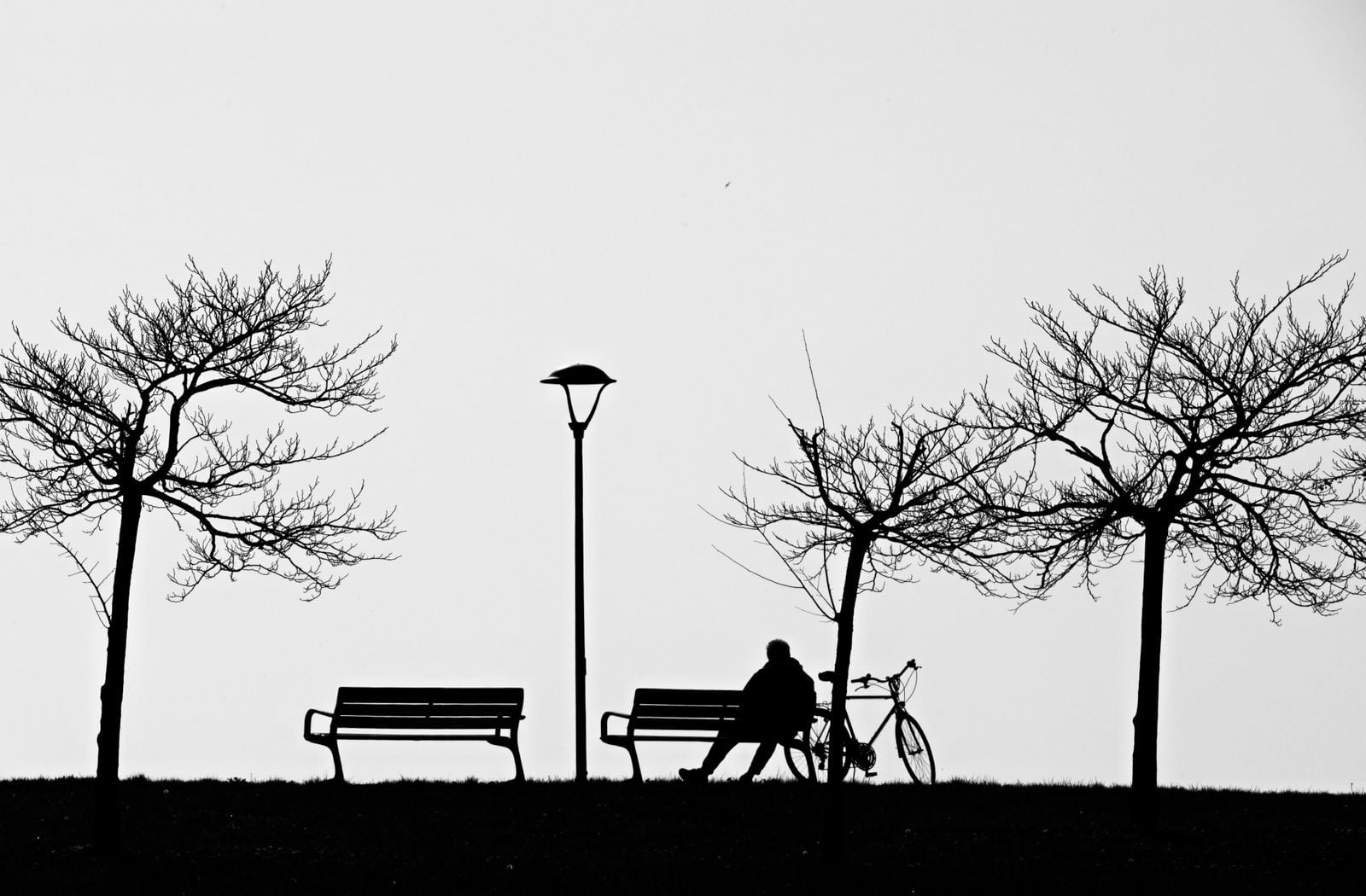
There is a particular kind of person who leaves the house forty minutes before a twenty-minute journey, and then sits on a bench outside the café, or in the car in the car park, or on a low wall near the entrance, doing very little. Not scrolling frantically. Not rehearsing what they are about to say. Just sitting, in a version of themselves that no one they are about to meet has ever seen.
The received wisdom is that these are anxious people. They arrive early because they cannot bear the possibility of being late, and the fifteen minutes on the bench is the tax they pay to their own nervous system. Sometimes this is true. Often, that is not what is actually going on.
What is going on is quieter and, in a way, more strategic. The buffer is not a symptom. It is a small, protected pocket of time that no colleague, partner, child, boss, or friend has any claim on, and the person sitting on the bench has worked out, without necessarily putting it into words, that this pocket is one of the few they get.
The buffer is doing work that looks like nothing
From the outside, fifteen minutes on a bench looks like waste. From the inside, it is often the most functional part of the day. The person arriving early has already handled the transit, which is the stressful part, and has not yet begun the meeting, the appointment, or the dinner, which is the demanding part. What sits between those two is a stretch of time in which nothing is required.
Voluntary solitude is not the absence of social life but a distinct psychological state that helps people recover from the demands of it. People often feel worse in the moment when alone, then noticeably better afterward, as if solitude were doing quiet maintenance the person themselves does not fully register.
The fifteen minutes on the bench works the same way. The early arriver is not necessarily enjoying the wait. They are simply refusing to hand that stretch of time over to anyone else. It is theirs to spend on nothing.
What early arrival is not
It is worth being careful. Some people do arrive early because the thought of being late produces real distress, and treating that as a lifestyle choice would miss the point. A useful piece on the habit at an overview of the psychology of chronic earliness notes that punctuality can be tied to conscientiousness, respect for others, and a need for certainty and control. All three can coexist in the same person on different days.
The claim here is narrower. Among people who arrive early to almost everything, and who do so without visible panic, the buffer often functions as protected time rather than as a safety margin against catastrophe. The tell is what they do with it. Anxious early arrivers tend to keep working, keep checking, keep bracing. The other kind tend to go still.
Time sovereignty in a scheduled life
Modern schedules colonise even the gaps. Notifications fill the queue at the supermarket. Emails fill the walk from the bus stop. A calendar invite lands during what used to be lunch. The result is that very little time in a typical adult week is genuinely unclaimed.
Against that background, arriving fifteen minutes early is a small act of temporal sovereignty. The person has decided, without asking permission, that a slice of the day belongs to them. They cannot be interrupted, because they are technically already on their way somewhere. They cannot be assigned a task, because they are not yet at the destination. The buffer is legible to others as commuting, which no one questions, but it is functioning as something closer to rest.
Scandinavia Standard has covered this territory before: the advice nobody packages as advice, the small unremarked practices that quietly hold a life together. The fifteen-minute buffer belongs on that list. It is not marketed. It is not a wellness product. It is just a habit that some people have worked out for themselves.
Liminal space, without the anthropology jargon
The term liminal refers to the in-between phase of a rite of passage, the stretch where a person is no longer who they were and not yet who they will become. The concept gets stretched, sometimes too far, but its ordinary version is useful. Waiting rooms, train platforms, the pavement outside a friend’s flat before you ring the bell, all of these are small liminal moments. Normal roles are suspended. You are not on duty as a parent, an employee, a partner, or a host.
People who arrive early often like liminal space because it is one of the few places where they are not being asked to perform any particular version of themselves. The bench outside the café is not their office, their home, or their meeting. It is a corridor between roles, and corridors are quieter than rooms.

What the solitude research actually says
It would be tidy to claim that all solitude restores. The evidence is more specific. A 2024 study led by Morgan Quinn Ross at Oregon State University, published in PLOS One and summarised by Science Daily, surveyed nearly 900 adults in the United States about how different kinds of time alone affected them. Ross and his co-author Scott Campbell found that less complete forms of solitude, such as reading in a café or listening to music on a commute, were more likely to restore energy and maintain a sense of connection than very intense forms, such as a solo hike deep in a forest.
This is one study, not settled consensus, and it measured self-reports rather than physiology. Its relevance here is that the buffer time before an appointment is almost a textbook example of the lighter kind of solitude. The person is alone but not isolated. Other people are visible. Music might be playing. A phone might be within reach but ignored. The world is present, but nothing in it is asking anything.
Ross also noted that attitude matters. In his framing, solitude chosen because you want to restore energy tends to feel better than solitude chosen because you want to avoid people. The distinction lines up with what we are describing. The early arriver on the bench has not fled anyone. They have simply built themselves a gap.
Why the habit reads as anxious from the outside
Punctuality is a social signal, and being fifteen minutes early is legibly odd. In many workplaces, the person who consistently arrives first is quietly labelled as keen, tense, or slightly too invested. The label sticks because the alternative explanation, that they are guarding a private stretch of the day, is invisible. You cannot see someone claiming time sovereignty. You can only see them sitting there, apparently waiting.
This mislabelling matters because it makes the habit harder to defend. The early arriver rarely explains themselves. If asked, they might say they hate being late, which is true and also beside the point. The fuller answer, that the fifteen minutes is one of the only reliably unclaimed pieces of the week, is not the kind of thing most people say out loud at the reception desk.
There is a connection here to what Scandinavia Standard has written about the quiet costs of being the reliable one, the person who carries the invisible logistics no one else tracks. Many chronic early arrivers are also chronic organisers. The buffer is partly compensation. If your day is spent absorbing other people’s demands, you learn to build small rooms in it that they cannot enter.
The rest of the day is not so easily protected
A piece in Psychology Today on personal autonomy pushes back on the tidier version of that story. Its argument is that the self-managing, self-directing individual, the person who runs their own life like a well-run business, is something of a myth. Real autonomy, it suggests, depends on other people’s participation, on their attention and their claims on us, not on escaping those claims. Self-direction alone does not sustain a life.
That is a useful complication, but it does not undo the smaller, more concrete point at the centre of this piece. Even a life that depends on other people, as every life does, still runs on a finite number of hours, and almost none of those hours in a typical week arrive unclaimed. The fifteen-minute buffer is small enough that it does not compete with anyone’s legitimate claim on the early arriver. It simply sits in the gap other people have not yet reached.
Even people at the top of an organisation notice this. Tim Cook has spoken publicly, in a piece covered by Forbes, about carving out early-morning solitude before his day is claimed by other people’s agendas. Whatever one thinks of executive routines, the underlying logic is not exotic. If you do not defend a small pocket, you will not have one. The early arriver has picked a different pocket, later in the day and lower in status, but the mechanism is the same.
A modest habit, not a personality
None of this makes the fifteen-minute buffer a virtue. Some people do not need it. Some people would find it excruciating. Introverts and extroverts, according to Ross’s data, benefit from light solitude in roughly similar ways, but that is an average, not a rule about any particular person.
What the habit is, in the version described here, is a small piece of practical psychology worked out without theory. The person has noticed that their day contains almost no unclaimed time, and that the transitions between obligations are the only stretches over which they have real control. So they have extended those transitions by fifteen minutes and treated the extension as sacred. If you ask them what they do with the time, they will probably say nothing. That is the point.
The next time you notice someone already at the table, coat still on, drink not yet ordered, looking mildly at the street, it may be worth resisting the assumption that they are nervous. They might be. They might also be enjoying the only fifteen minutes of the day that belong entirely to them, and quietly hoping you will arrive on time so it lasts a little longer.