
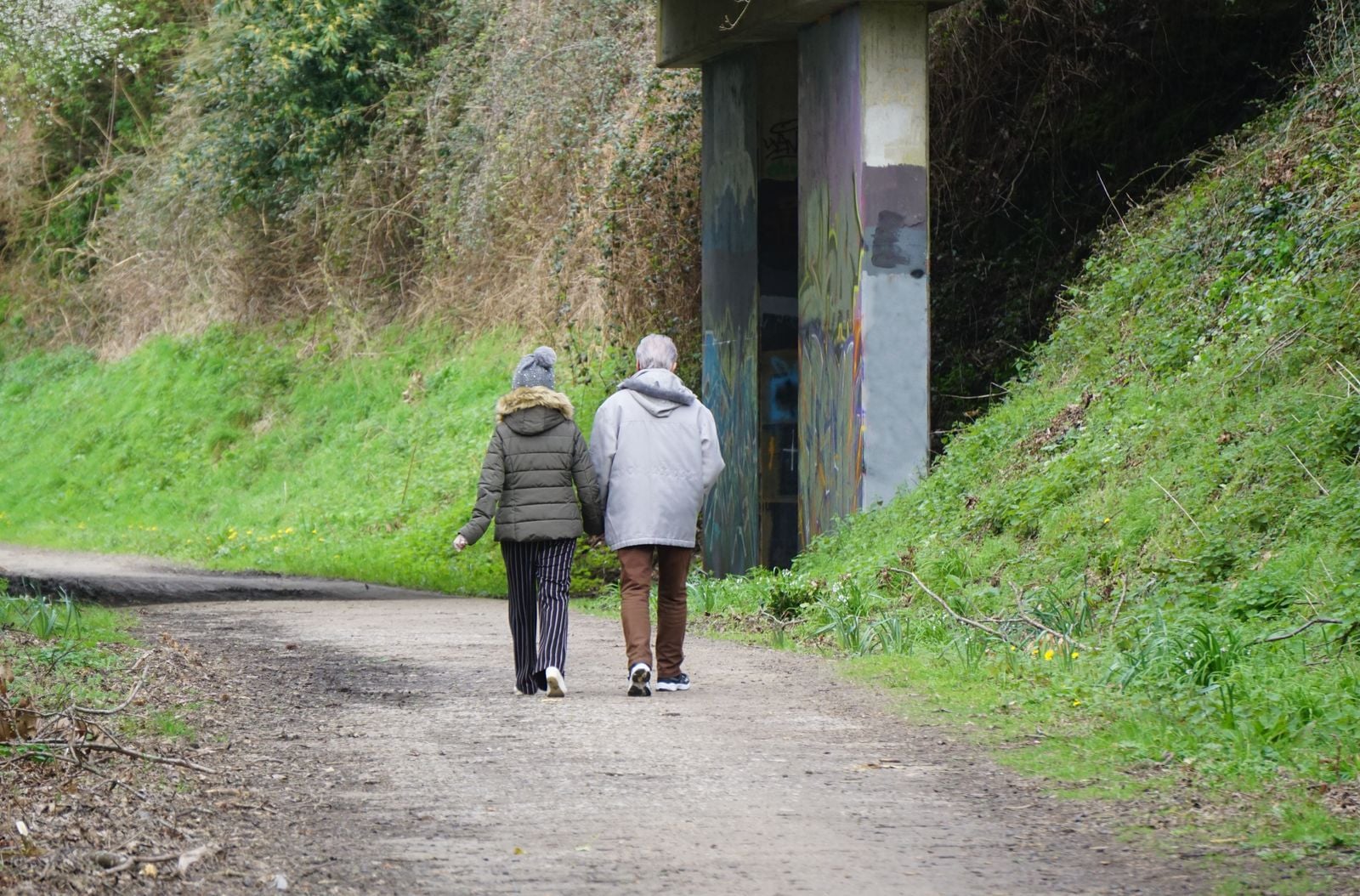
What’s missing from the calendar of a certain kind of fifty-something is instructive. No standing coffee with a colleague who used to be a friend. No obligatory birthday drinks for someone whose surname takes a moment to recall. No group chat notifications multiplying overnight. The absence is not automatically evidence of decline. It can be a decision, arrived at slowly, and often defended against people who read the empty squares as evidence that something has gone wrong.
This is one of the most misread patterns in midlife. Someone who once said yes to everything begins saying no to most things. Their social world contracts. From the outside, this can look like withdrawal or hardening. From the inside, it can look like arithmetic. There are fewer decades left than there were, and the people who genuinely reach them are a smaller number than the ones the calendar used to accommodate.
Psychology has a useful name for part of this shift: socioemotional selectivity.
What Carstensen actually described
The most useful frame is Socioemotional Selectivity Theory, developed by Stanford psychologist Laura Carstensen. In plain terms, the theory holds that as people perceive their remaining time as more limited, priorities shift away from exploration and toward emotionally meaningful goals. That can mean putting more attention into a smaller number of relationships that feel important now.
Carstensen’s review describes a social-choice experiment in which younger and older adults imagined having thirty minutes of free time to spend with one of several possible social partners. Older adults tended to prefer emotionally close partners. When younger adults were asked to imagine a sharply constrained future, they shifted in the same direction. The key variable was not age by itself, but the way the future was perceived.
In daily life, the fifties and sixties can be the decades when that reweighting becomes easier to see. Parents age or die. Friends encounter serious illness. A person begins to notice, without necessarily saying so, that Sundays are not infinite.

Availability is not the same as connection
The title’s distinction is worth stating plainly. Availability is a scheduling fact. Connection is an emotional one. For much of adult life, particularly the years spent building a career or raising a family, the two can get conflated. A person is available to colleagues, school groups, extended family, neighbours and visiting acquaintances. Availability starts to feel like a measure of decency. Refusing it can feel like a small moral failure.
By the fifties, some people have simply run the experiment enough times to notice that a crowded calendar does not guarantee closeness. The Harvard Study of Adult Development found that satisfaction in close relationships at midlife was a strong predictor of who would be happy and healthy at age 80. It is a useful corrective to treating a large social roster as the same thing as connection. A person can be reachable to forty people and still feel genuinely known by only a few.
The inner convoy
A complementary model describes a person’s social world as a convoy. In Kahn and Antonucci’s social-network work, relationships were mapped in three concentric circles of closeness. The innermost circle held the people who mattered most; outer circles captured less-close but still meaningful ties.
The useful part of the metaphor is that a convoy moves. Jobs end, children leave school, neighbours move and shared routines disappear. Some ties stay close while others drift outward. Later-life selectivity is not the same as becoming antisocial. It can be a reallocation of attention toward the people a person most wants beside them.
Acquaintances and looser ties can still matter for information, opportunity and everyday belonging. The point is not that they suddenly become useless. It is that people with a stronger sense of limited time may become less willing to maintain every relationship at the same intensity.
What the loneliness numbers actually say
The cultural confusion is that this quiet reallocation sits beside constant warnings about loneliness, which can make any older adult with a thinning calendar look like a statistic waiting to happen. The data is more complicated than that.
A 2024 coordinated analysis of nine longitudinal studies, covering 128,118 people from more than 20 countries, found a U-shaped pattern: loneliness tended to fall from young adulthood into midlife and then rise again in older adulthood. The same analysis found that factors including marital status and physical function were associated with loneliness levels. That is a long way from saying that a quiet calendar, by itself, is evidence of loneliness.
Psychologist Virginia Thomas has spent years researching solitude. In a 2025 essay originally published by The Conversation and republished by ScienceAlert, she points to research suggesting that older adults can experience solitude more positively than the usual loneliness narrative implies.
The distinction that matters here is choice. Chosen solitude is not the same experience as being left without wanted connection. A quieter social life can feel restorative when it sits alongside dependable relationships; it can feel very different when closeness is missing and the solitude was not chosen.
What the pruning actually looks like
In practice, the pattern is not dramatic. People in their fifties and sixties who have made this shift tend not to announce it. They stop replying quickly to the group chat, then stop replying at all. They accept fewer invitations but show up properly to the ones they accept. They stop trying to convert every acquaintance into a friend. They notice which friendships survive on genuine curiosity and which survive only through constant maintenance.
The people who remain are often surprising. Not always the ones with the longest history. Someone met in their forties who is genuinely curious about them may outrank a school friend of thirty-five years whose calls always circle back to their own life. The criterion becomes something like: does this person actually see me, and do I see them, and does time together leave both people clearer rather than depleted?
In socioemotional selectivity terms, this is less about retreat than about prioritising the situations and people that feel emotionally meaningful now.
The Nordic angle, briefly
The stereotype of Scandinavian reserve makes this pattern easy to caricature. It is more useful to look at what Nordic research can and cannot tell us. A Finnish study of 3,543 public-sector employees moving through retirement found that overall life satisfaction improved during the transition and then remained stable. The largest domain-specific improvement was in how easy life felt.
That finding does not prove that solitude is better, or that less social activity is automatically healthier. It suggests something narrower and more relevant here: later life can involve relief from obligations as well as loss, and a less crowded schedule can represent regained choice rather than simple disengagement.
What is easy to get wrong
Two limits matter, because this reframe becomes misleading when they are ignored.
The first is that selectivity depends on having real connection to select. Someone in their sixties who has fewer casual ties but still has people they can rely on is in a different situation from someone who has no close ties at all. A small circle can be enough. No circle is a different problem.
The second is that the pattern is easier to sustain with decent health, mobility and financial room than without them. Serious illness, caregiving, widowhood or money pressure can turn a chosen quiet life into a constrained one. Choosing solitude and being left with it are not the same experience.
Within those limits, though, the reframe holds. Someone who used to fill their week and now doesn’t may not be shrinking. They may simply have finished a long negotiation with themselves about what a week is for.
The handful of people who reach them will notice, because the phone still gets picked up when they call.