

Swedish researchers studying three generations of the same families kept running into a word that does not translate cleanly into English: guldkant, literally a “golden edge” or “golden touch,” the small extra something a grandparent adds to an ordinary day. It turned up so often, and meant so much to the people using it, that a research team at Lund University built it into the name of a concept: intensive grandparenting, described in a 2024 paper in the journal Sociology by Terese Anving, Sara Eldén, Linn Alenius Wallin and Franciska Brodersen.
This is one qualitative study, built on interviews with 63 people across three generations of Swedish families, including 28 grandparents, not a large-scale survey that can put a number on which specific gesture matters most. What it offers instead is something rarer in this territory: a close, careful account, in grandparents’ own words, of what they are actually trying to do when they show up for a grandchild, and why some of it lands so differently than the standard, well-meaning advice about spending “quality time.”
Two different things grandparents are doing, often in the same afternoon
The researchers found that Swedish grandparents in their study were doing two distinct kinds of care, often within the same visit, without necessarily separating them in their own minds. The first, which the researchers call proxy parenting, is the practical layer: picking a grandchild up from school, covering a shift when childcare falls through, helping a grandchild practise reading or get to a music lesson on time. It is useful, appreciated, and largely about supporting the parents’ own parenting goals.
The second layer is the one that produces guldkant. Golden-touch activities are not about helping parents get through the week. They are organised around the grandparent-grandchild relationship on its own terms: the specific thing this grandparent does with this child that a parent, occupied with the ordinary logistics of running a household, does not usually have the bandwidth for. The paper describes this as grandparents trying to provide “something extra” in a way that is recognisably theirs, not a repeat of what a parent already offers.
Why golden-touch gestures work differently than a special outing
It would be easy to read “golden touch” as a researcher’s fancy label for spoiling a grandchild with treats or trips, and the paper is honest that consumption, sweets, an extra toy, a paid outing, does show up as part of how some grandparents try to create it. But the more consistent thread running through the interviews is not the price tag of the gesture. It is that the activity exists mainly to create space and time for the grandparent-grandchild relationship itself, separate from anything the parents need managed.
A companion study by the same Lund University team, published in 2024 in the journal Childhood, looked specifically at how grandchildren themselves narrated these relationships, an angle the researchers note is genuinely under-studied compared with the large literature on grandparents’ own perspectives. Their framing treats care as something built reciprocally between grandparent and grandchild, rather than something a grandparent simply delivers and a child simply receives. Read against the golden-touch idea, the study suggests a hypothesis about why relationship-centred time may matter. It did not rank what grandchildren remember or show that a gesture’s emotional meaning matters more than its monetary size.
The tension the researchers found underneath it
The Sociology paper is also candid about a real strain this creates. Golden-touch activities, the researchers found, can require a genuine financial and emotional investment, and grandparents who cannot afford them described feeling that they were failing at “good grandparenting” as a result, even while several of the same grandparents also expressed ambivalence about, or outright criticism of, the expectation itself. The researchers frame this as a risk that intensive grandparenting reproduces existing inequalities of class and gender between families, since not every grandparent has equal time, money, or physical stamina to offer.
That detail matters for reading the concept honestly. The point of the research is not that a grandparent needs to spend money to matter to a grandchild. Several grandparents in the study pushed back against exactly that assumption. The golden-touch idea describes what grandparents in this one Swedish sample were narrating as meaningful, not a verified ranking of which gestures grandchildren love most, and the researchers themselves treat the pressure to provide it as something worth questioning rather than simply celebrating.
What this looks like in practice
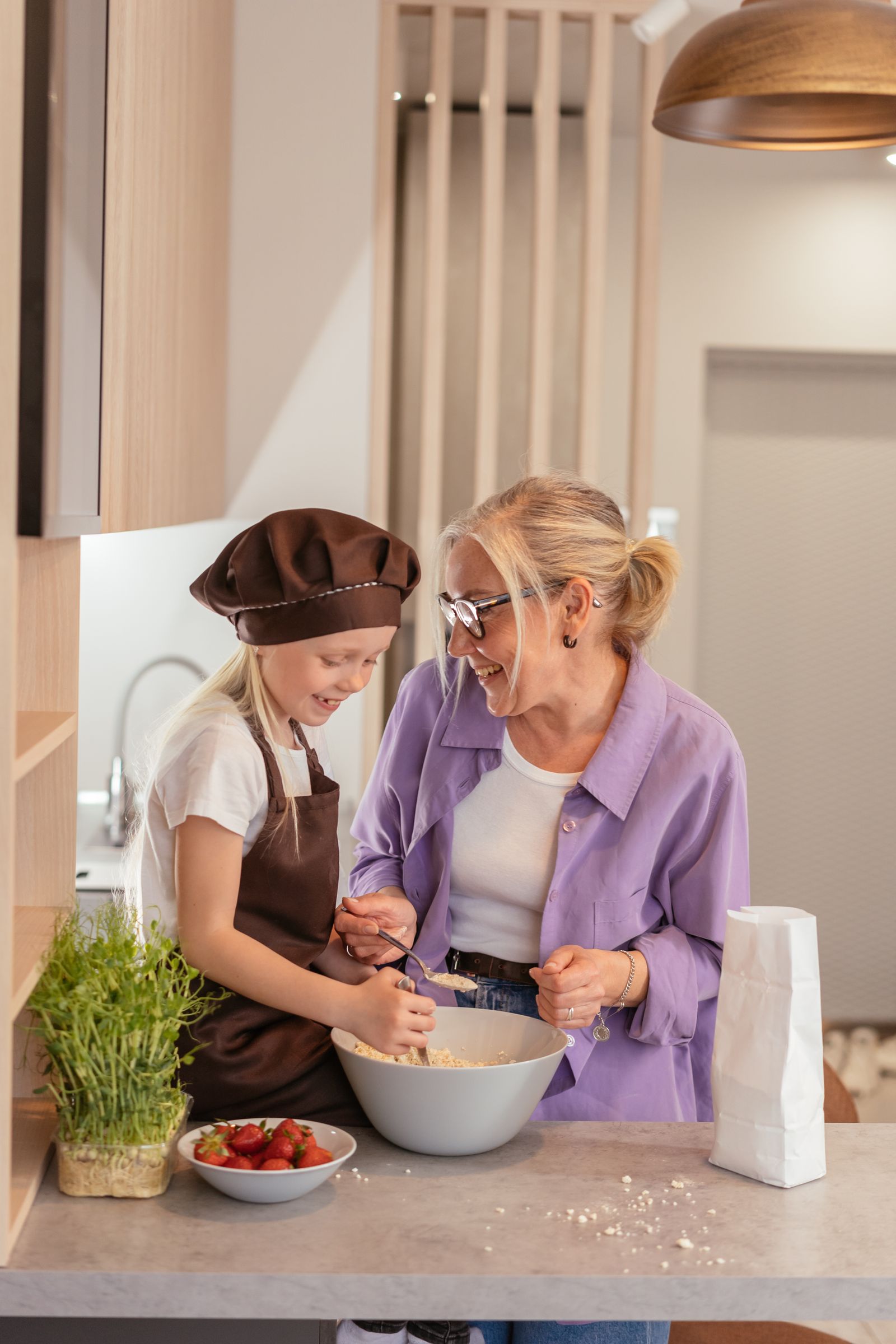
Stripped of its price tag, the pattern the researchers describe is closer to a working principle than a shopping list: golden-touch moments are the ones where a grandparent’s attention is organised around the child specifically, doing something that is recognisably theirs to offer, on a stretch of time that belongs to the relationship rather than to the household’s logistics. That could be a particular kind of baking only grandma does a certain way, a walk with no destination, or simply being the one adult in the room who is not also thinking about the next school pickup. What the Swedish interviews suggest holds it together is not the size of the gesture but the fact that, for that stretch of time, the grandchild is not being minded. They are being met.
What this does not settle
This is a study of Swedish families, shaped by a welfare state with unusually high rates of grandparental involvement already built into family life, and the researchers do not claim the pattern generalises cleanly to every country or family structure. It is also a qualitative interview study, well suited to describing how people make sense of their own care practices, not to measuring which specific gesture produces the strongest bond across a large population. What it offers is not a verified formula but a well-documented account, from grandparents and researchers who spent real time listening to them, of the difference between showing up to help and showing up simply to be with a child.