
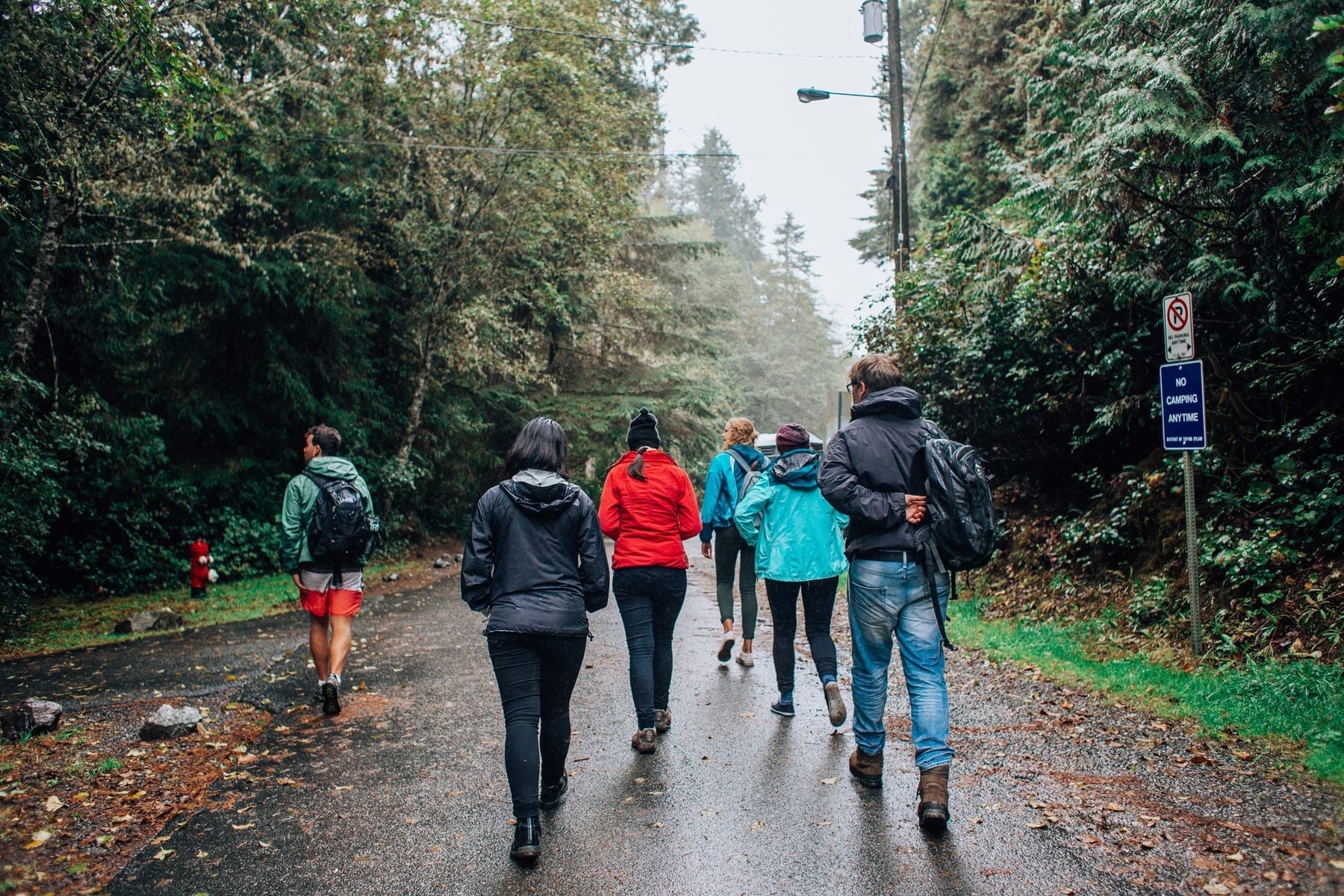

An invitation arrives, a hike in the rain, a slot in the local badminton club, a colleague’s spontaneous coffee, and the easiest answer is usually no. Something else needs doing. The weather is wrong. It is simpler to stay home. “There are certain things in life that you should say yes to” is the kind of line that turns up in advice columns everywhere, but it is worth asking which things, and on what actual evidence.
What people regret, once enough time has passed
The most relevant psychological research on this comes from work on regret by Thomas Gilovich and Victoria Husted Medvec. In their 1994 study in the Journal of Personality and Social Psychology, the researchers surveyed and interviewed people about the things they regretted most, distinguishing regrets over actions taken from regrets over actions not taken, opportunities declined, invitations turned down, things left unsaid. Immediately after a disappointing decision, action and inaction produced regret in roughly similar measure. Looking back over a longer stretch of time, the pattern shifted sharply: people were far more likely to name something they did not do as their deepest regret than something they did.
This is one line of research, not a settled law of the human mind, and it is worth being precise about what has held up since. A 2023 replication in Royal Society Open Science, run by Gilovich alongside Annie Richardson with more than 2,600 museum visitors in Chicago, confirmed the short-term pattern, action regrets stung more immediately, but found the long-term skew toward inaction regrets had weakened considerably compared with the original study. The finding is worth taking seriously, but it should not be read as a fixed rule about everyone’s regrets across every decade. What survives across both studies is the more modest claim that regret over things left undone tends to persist, or at least not fade as quickly, compared with regret over an action that simply did not work out.
A Danish habit of saying yes to the club meeting
One place this shows up in an actual, countable way is Denmark’s associational life, known locally as foreningsliv. According to Denmark’s official government portal, citing figures compiled with the Danish National Centre for Social Research, the country has more than 100,000 active associations for a population of roughly 5.7 million people, and about 41 percent of Danes give their time as volunteers through one of them, sports clubs, choirs, allotment garden societies, hobby groups, and local charities among them.
This is a real, sourced figure about Denmark specifically, not a claim about Sweden, Norway, Finland, or Iceland, and it describes a national volunteering rate rather than a psychological state. It does not prove that saying yes to a club meeting causes greater happiness or social trust, only that a large share of one country’s population has, in practice, said yes to this particular kind of ongoing commitment. Denmark’s high level of associational membership is often discussed alongside the country’s high levels of reported social trust, but the relationship between the two is genuinely difficult to disentangle from decades of welfare policy, education, and history, and this figure alone does not settle which causes which.
Saying yes to bad weather in Norway
A related, more specific Norwegian habit is friluftsliv, a term covering outdoor recreation done for its own sake, walking, skiing, camping, sitting by water, often summarised by the phrase that there is no such thing as bad weather, only bad clothing. A 2023 study in Frontiers in Sports and Active Living, led by researchers at Nord University, surveyed 287 Norwegian adolescents aged sixteen to nineteen about their outdoor recreation habits during the pandemic. Traditional friluftsliv activity dropped by a modest 7.8 percent even as many other forms of organised activity were shut down entirely, and participants reported that friluftsliv became more, not less, important to their sense of community during that period.
This is one study of Norwegian teenagers during a specific and unusual period, not a claim that every Norwegian treats bad weather as a non-excuse, and it should not be generalised into a national personality trait. What it documents is narrower and more useful: among this specific group, a habit of saying yes to the outdoors regardless of conditions persisted through circumstances that interrupted almost everything else.
The same pattern, away from Scandinavia entirely
A useful comparison point comes from research done far from the Nordic countries. In a series of nine field and laboratory experiments reported in a 2014 study in the Journal of Experimental Psychology: General, the researchers Nicholas Epley and Juliana Schroeder had commuters on Chicago trains and buses either strike up a conversation with a stranger or sit in their usual solitude. People who talked to a stranger reported a significantly more positive commute than those who did not, despite having predicted beforehand that solitude would be the more pleasant option.
This is one set of experiments, run with American commuters, not evidence about Scandinavian social habits specifically, but it lines up with the same basic shape as the Danish and Norwegian material above: people tend to underestimate, in advance, how much a small social or outdoor yes will actually be worth, and that misjudgment shows up in a very different setting and culture from either Denmark or Norway.
What this adds up to
None of this is evidence that saying yes generally, to everything, is a wise policy, and none of these four bodies of research were designed to test each other. What they suggest, taken together, is something narrower and more specific than the appealing idea in the title: the invitations most worth reconsidering are not any and all of them, but the small, recurring ones, a weather-dependent walk, a club meeting, a conversation with someone unfamiliar, where the actual cost of saying yes is modest and the research on regret suggests the cost of a reflexive no tends to compound quietly over years rather than announcing itself right away.