
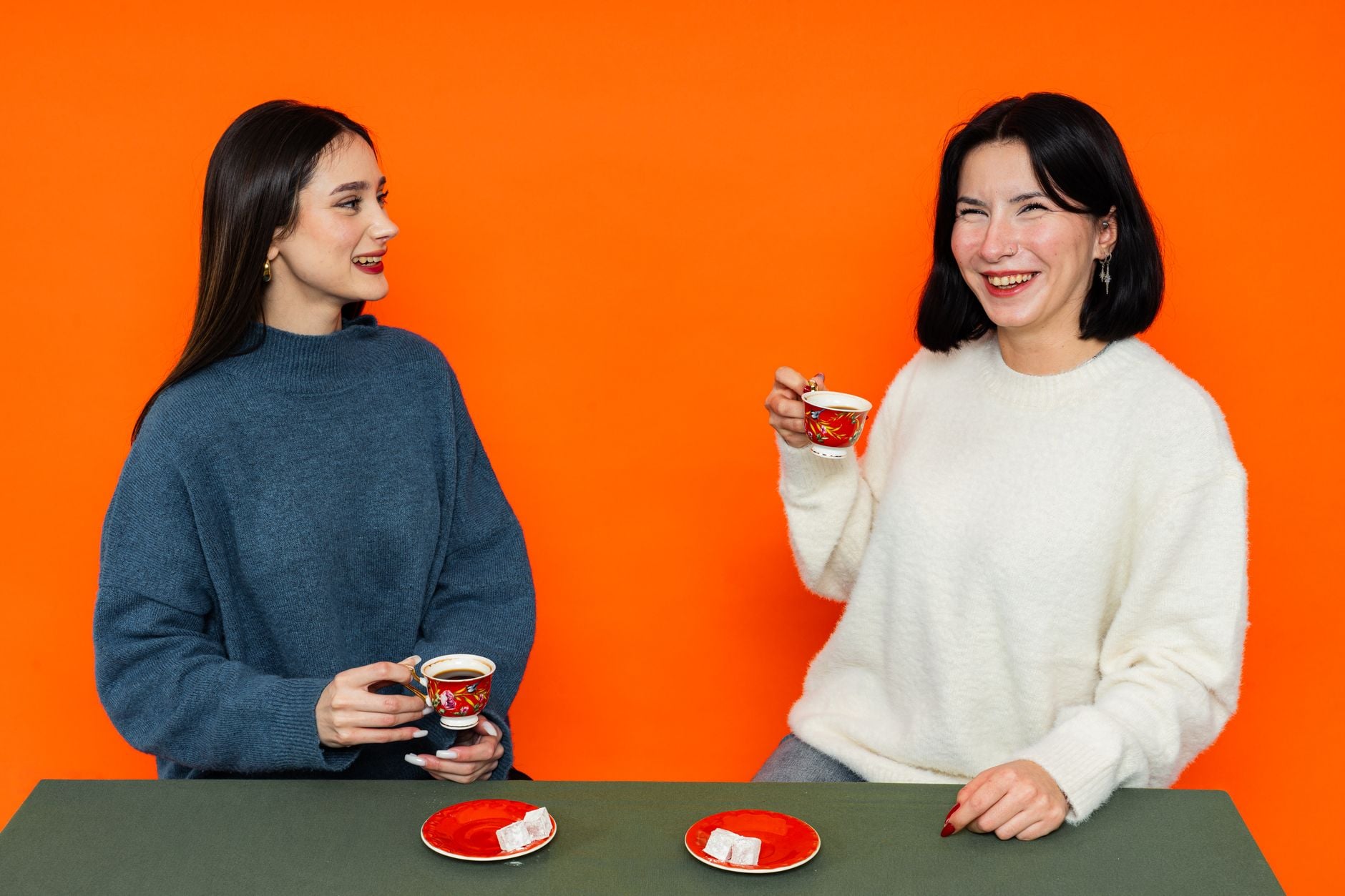

Ask most people how to become someone others enjoy being around, and the instinct is to reach for something impressive: be wittier, be more interesting, have better stories, fill the silences with something clever. It is a natural assumption, and it is mostly wrong. The people we gravitate towards, the ones whose company feels easy and warming rather than effortful, are rarely the most dazzling in the room. They are the ones who make being around them feel good. That is a different skill entirely, and the research on it is unusually clear, and unusually encouraging, because almost all of it is learnable.
Ask, rather than perform
Start with the single most counterintuitive finding, because it overturns the whole be-more-interesting instinct. In a set of studies out of Harvard, researchers led by Karen Huang recorded real conversations and counted what people actually did. They found a robust and consistent pattern: people who asked more questions, and especially more follow-up questions, were better liked by their conversation partners, because follow-up questions signal that you are listening, that you understood, and that you want to know more.
The detail that ought to change how you approach a conversation is this: the very same study found that people do not expect question-asking to work, and so they do not do enough of it. We arrive at conversations braced to be interesting, mentally rehearsing our own contribution, when the thing that actually makes us pleasant company is turning that attention outward. A follow-up question is a small, almost invisible act of generosity. It says, quietly, that the other person is worth hearing more from, and people warm to the person who makes them feel that way far more than to the one delivering a monologue, however good.
Like them first
The second principle is older and just as powerful, and it explains why warmth is so magnetic. Psychologists call it the reciprocity of liking, and it is one of the most dependable findings in the study of attraction. The research, going back to early experiments by Elliot Aronson and others, shows that we tend to like people who we believe like us, because learning that someone thinks well of us is genuinely gratifying and inclines us to think well of them in return.
The practical lesson is that being someone people want to be around starts with visibly, warmly liking them first. Not flattery, which reads as hollow, but genuine, expressed warmth: remembering what matters to someone, being pleased to see them, letting your regard actually show rather than keeping it politely hidden. Most people default to a guarded neutrality, waiting to see if they are welcome before offering warmth. The person who goes first, who makes others feel liked, sets the reciprocity in motion, and tends to be surrounded by people who cannot quite say why they enjoy them so much.
Be easy to be around, not impressive
There is a quieter quality underneath both of these, and it matters more than charisma. People judge warmth before they judge competence, and they return to company that feels safe and light rather than to company that feels like an audition. The person others want to be around is usually not the cleverest or the funniest but the one who is easy: who does not compete, does not correct, does not turn every remark into a contest or every conversation into a complaint.
Being enjoyable company is, to a surprising degree, simply the absence of small frictions. Not making people feel judged. Not needing to win. Not draining the room with grievance. The warmth people remember is often just the experience of feeling relaxed and well-regarded in someone’s presence, and that is created less by what you bring and more by what you refrain from imposing.
The honest caveats
A few things keep this fair, because it would be easy to turn it into a manipulative checklist, and that is exactly where it stops working. None of this survives being faked. A follow-up question asked as a technique, while you wait for your turn, is transparent and slightly chilling; the studies work because the questions signal real interest, and interest cannot be counterfeited for long. The aim is not to perform curiosity but to actually become more curious about people, which is a genuine and rewarding shift rather than a social trick.
The reciprocity of liking has its limits too. The research notes that people low in self-esteem can resist it, sometimes distrusting or discounting the warmth of those who like them, so it is not a lever that works identically on everyone. And there is a deeper caution worth stating plainly: being liked is a fine thing, but it is not the only thing, and a life organised entirely around being pleasant company can quietly cost you your honesty. The people most worth being around can also disagree, say the hard thing, and hold a boundary. Warmth without a spine is just agreeableness, and that is a thinner virtue than it looks.
Where it leaves us
Put the evidence together and the art turns out to be smaller and kinder than the word art suggests. Being someone people want to be around is less a matter of becoming impressive than of reliably making others feel heard, liked and at ease. Ask the follow-up question. Let your warmth show before you have confirmed it is safe to. Be the company that does not cost anything to keep. None of it requires charisma, and all of it is within reach of an ordinary person on an ordinary day.
The people who seem to have a gift for this are not, mostly, gifted. They have simply worked out that the surest way to be enjoyed is to make other people feel enjoyable, and then gone and done it, again and again, until it stopped being a strategy and became the way they are.