

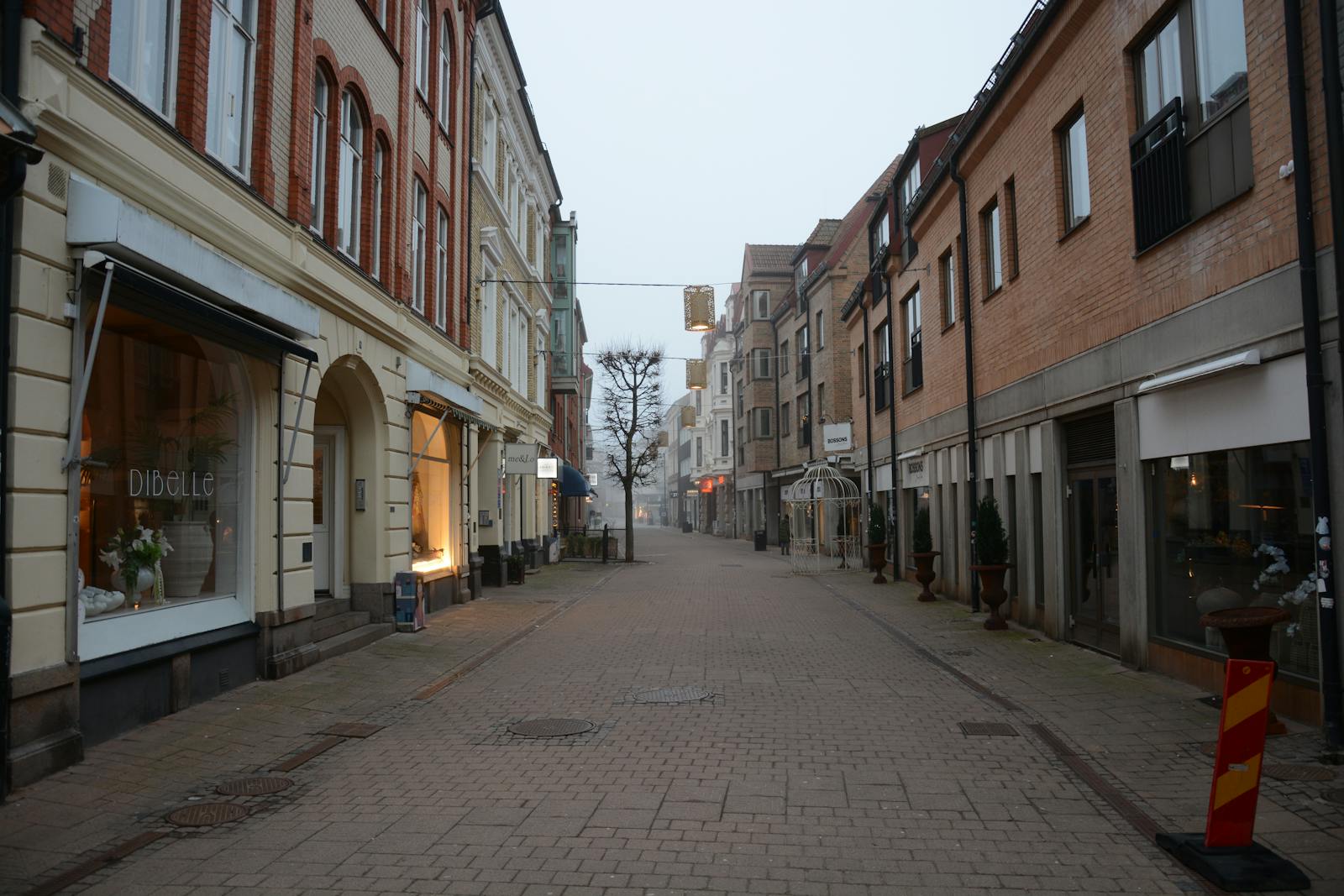
The standard pitch for moving to Scandinavia goes something like this: you trade noise for calm, stress for balance, chaos for the kind of clean, quiet life that Instagram aesthetics have taught the world to associate with good Nordic vowels and better furniture. The pitch is mostly accurate. What it leaves out is that the quiet is the easy part to acquire, and by far the harder part to know what to do with once you have it.
I’m writing this as someone who has lived inside the Nordic promise for my entire adult life, and who has watched, at close range, dozens of people arrive from elsewhere expecting the quiet to do more of the work than it actually does. It won’t. It can’t. The quiet is a room. You still have to furnish it.
The fantasy is real. It’s just not self-assembling.
Let me start with what’s true. If you move to Denmark, Sweden, Norway, or Finland for a quieter life, you will in fact get one. The working week is shorter. The commute is shorter. Public space is less aggressive. Healthcare doesn’t require a spreadsheet. Schools close at reasonable hours and nobody will ask your 11-year-old to do three hours of homework to prove character. Shops shut early, which sounds inconvenient until you realise it means the cashier has a life.
All of this is real infrastructure, built deliberately, and it produces measurable outcomes: higher reported wellbeing, lower work hours, more unscheduled time. You will sleep better. Your shoulders will drop two centimetres in the first six months. Your phone will buzz less because the people around you have mostly agreed not to buzz it on weekends.
Then the quiet arrives in full, and a lot of people discover they were not, in fact, ready for it.
The hedonic adaptation problem nobody warns you about
Psychologists call it hedonic adaptation, the phenomenon by which humans adjust to nearly any change in circumstance and return, over time, to something close to their baseline level of happiness. The BBC has written usefully about how major life events affect long-term wellbeing, and the short version is that the bump from a big change fades faster than anyone expects. A move, a new job, a new country: the glow typically lasts somewhere between six and eighteen months. Then you are just a person, in a place, with your own mind, same as before.
Jennifer Moss, the workplace wellbeing researcher, has made a related point about happiness set points and why they’re stickier than we think. Your nervous system travels with you. So do your relationships with work, solitude, ambition, and rest. Moving to Copenhagen does not install new software. It just gives you a quieter room in which to run the old one.
This is the thing that catches people off guard. They arrive with a problem they thought was environmental, discover the environment is indeed better, and then slowly realise the problem had other ingredients.
What the quiet actually asks of you
In a loud life, the noise does a lot of emotional work for you. It distracts. It provides a running narrative. It fills the evenings. It gives you people to complain about and deadlines to blame. Remove it, and you are left alone with what you actually want to do with your hours. Many people discover they don’t know.
I left daily journalism at 39 for reasons that looked, from the outside, like a lifestyle upgrade. Less adrenaline. More depth. Working from home in a calm neighbourhood, on my own schedule. It was, by every objective measure, quieter. It was also, for the first two years, disorienting in a way I hadn’t anticipated. The deadline treadmill had been doing something for me that I had mistaken for pure stress. It had been providing structure, identity, and a constant external signal that my day mattered. Without it, I had to build those things myself, and I didn’t have the tools.
I mention this because it maps almost exactly onto what I watch new arrivals go through. The move to Scandinavia removes a set of external pressures. What replaces them has to come from inside you, or from a community you haven’t built yet, or from a new relationship with time that you haven’t learned to have. That’s the real project.
The community question
Here is the part the relocation brochures undersell. Scandinavian societies are high-trust and low-contact. Strangers are polite but rarely curious. Friendships are durable but slow to start. The social architecture assumes you already have people, because most Danes and Swedes and Finns do, formed in school, university, work, and the long arc of a life lived in one country.
If you arrive at 35 or 42 or 50, you are dropping into a social system optimised for people who have been in it since they were seven. This is not hostility. It’s just geometry. The friends you make after 35 are different, and I’d add that the friends you make after 35 in a country where you weren’t raised are different again. They will be other expats, mostly, at least at first. That’s fine. But you have to go and find them. The quiet will not introduce you.
Psychology Today has a clean way of framing the broader trap, which is the illusion that different will be better. It often is better, in specific ways. It is almost never a substitute for the interior work of figuring out what you actually need.
What the numbers say about who’s actually moving
One thing worth knowing before you pack: the Nordic countries are in the middle of a long, complicated argument with themselves about immigration, and the terms of that argument have shifted. The BBC has covered how Denmark’s centre-left, not the far right, has pursued one of Europe’s strictest immigration regimes, and the Christian Science Monitor’s reporting on the dramatic migration experiment underway in Denmark and Sweden is worth reading if you want to understand the political weather your move would enter.
None of this is directly aimed at the kind of person who moves from Berlin or Brooklyn for a quieter life. But it shapes the broader conversation about belonging, who gets welcomed, who gets scrutinised, and what the social contract looks like from the outside. Knowing the context matters. You are not moving to a postcard.
The light and the dark will both do things to you
The seasons are their own adjustment, and I won’t rehash them in detail here. Many people find that the darkness isn’t actually the hardest part, the light is, and I think that’s right. The winter tests your discipline. The summer tests your interior life, because suddenly there is too much of everything, and nowhere to hide from your own thoughts at 11 p.m. when the sky still looks like late afternoon.
In my recent piece on the first Nordic spring every expat experiences, I wrote about the physical revelation of the light coming back. What I didn’t say, and should have, is that the revelation is also a kind of bill. Once you feel that, you have to figure out what to do with the feeling. The climate will give you sensation. You have to give it meaning.

A practical suggestion: build the small things early
The people I know who have landed well in Scandinavia, and I mean landed, not just arrived, share a set of quiet habits they developed in the first year. None of them are original. All of them are boring. That’s the point.
They joined something specific. A choir, a swimming club, a woodworking evening at the local library, a chess club, a reading group in their adopted language. Not because they loved the activity, necessarily, but because they needed a reason to leave the apartment on a Wednesday in November. Small daily habits that make winter feel survivable are a reasonable starting menu.
They walked. Not hiked, not trained. Walked. To the bakery, to the library, to a park. Living in Frederiksberg, I have come to believe that the 25-minute unplanned walk is the single most underrated piece of Nordic infrastructure. It does something to the mind that screens cannot undo.
They stopped treating quiet as an achievement and started treating it as a medium. Quiet is not the goal. Quiet is the substrate in which goals can actually form. The people who thrive here stop congratulating themselves for having made it to the calm, and start asking what the calm is for.
The money question, briefly
A quick word on finances, because it’s often the unspoken engine of the move. Scandinavia is expensive, taxes are high, and even on a comfortable salary you will feel less rich than you expected. The CBC has a useful piece on why almost nobody feels rich, regardless of income, and it’s relevant here, because the Nordic model asks you to accept that a lot of your money becomes someone else’s healthcare, someone else’s parental leave, someone else’s free university. You get the same things back, over a lifetime. The arithmetic works. The emotional adjustment to seeing the top line of your payslip disappear into the commons is a separate project.
If you come expecting to feel wealthy, you won’t. If you come expecting to feel supported, you will, eventually, once you’ve used the system a few times and noticed that it actually does what it says.
What the quiet is actually for
Here is the letter, really. If you are thinking about moving here for a quieter life, come. The quiet is genuine. The systems are real. The working hours will give you back hours of your life you had written off.
But please understand that the quiet is not a destination. It is raw material. It will hand you, within about 18 months, an uncomfortable amount of unstructured time and unfilled attention, and it will ask you, gently but persistently, what you intend to do with them. That question is the real Nordic tax, and it applies to locals and newcomers alike.
The people who answer it well tend to answer with specifics: a craft, a relationship, a body of knowledge, a long walk, a weekly dinner, a child taken seriously, a language learned slowly. Rarely with abstractions. Never with the move itself.
I moved jobs, not countries, and I still had to learn this. A colleague of mine who came here from London in her late thirties put it well once, after a couple of years: she said the quiet didn’t fix her, but it stopped letting her lie to herself about what needed fixing. That sounds bleak. It’s actually the best case. The noise lets you postpone the conversation. The quiet schedules it for Tuesday.
Come anyway. Just come with a project, even a small one. Come with some names of people you want to call on a dark afternoon. Come with a tolerance for being bored for a few months while your nervous system rewires. Come with the understanding that the life you want is not stored here, waiting for you to arrive. It’s something you will build, in the room the quiet gives you.
The room is excellent. The rest is up to you.
Photo by Harrison Haines on Pexels