
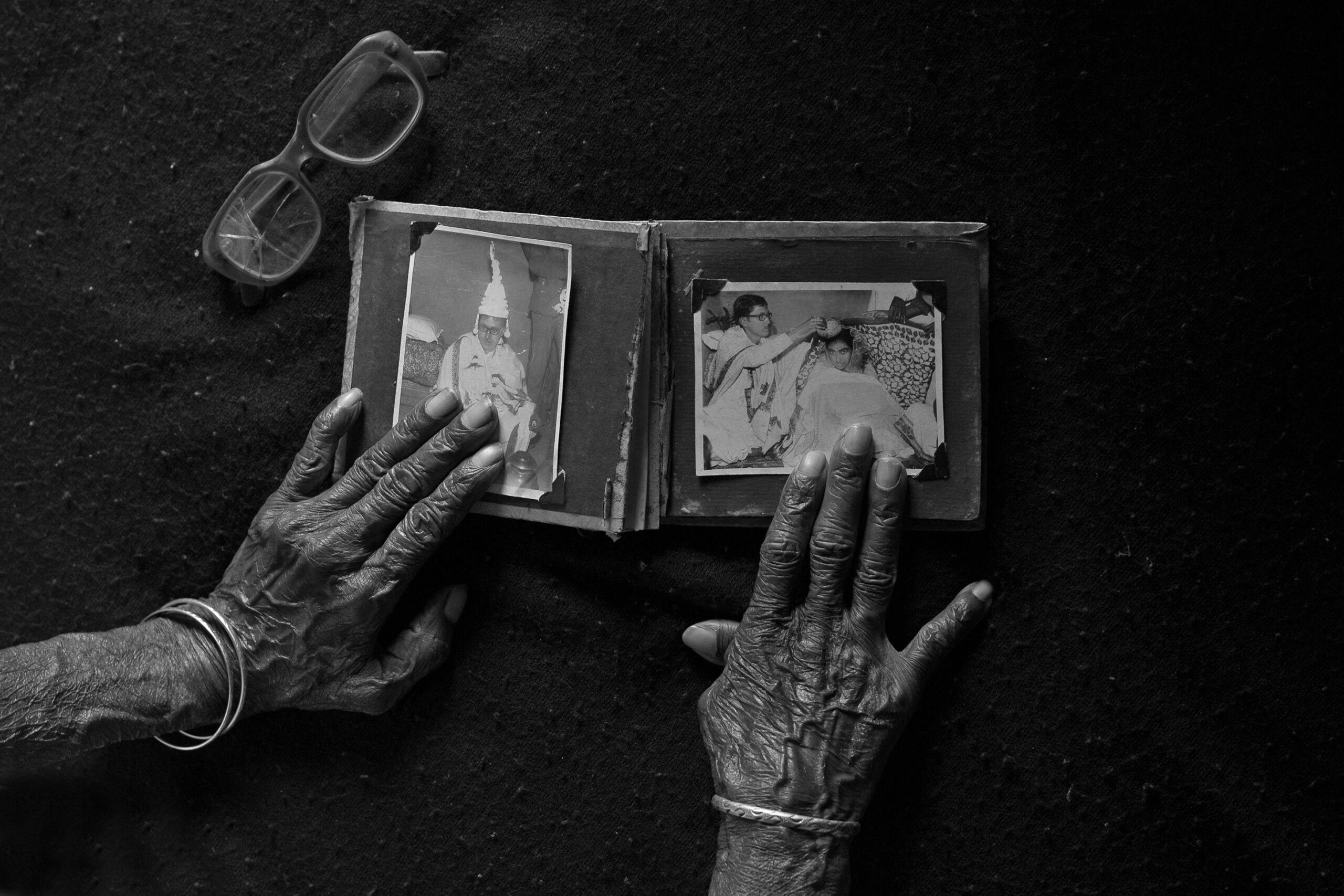

Ask most people what they would tell their younger self and you will usually get some version of the same advice: work harder, save more, take the safer path. It is a tidy, sensible answer, and according to the largest single effort to actually ask older people what they have learned, it is close to backwards.
Karl Pillemer, a gerontologist at Cornell University, spent years running what he called the Legacy Project. He and his team collected reflections from more than 1,500 Americans aged 60 and over, with in-depth interviews carried out with several hundred of them, asking a plain question: looking back, what do you know now that you wish you had known then. The results became a book, 30 Lessons for Living, and a body of interview material that Pillemer has kept returning to in the years since.
This is one research project, built on interviews rather than a controlled experiment, and it should be read as testimony rather than proof. Nobody in the sample was assigned a life to relive differently, and hindsight is its own kind of editing. But the same handful of themes turned up again and again across people who otherwise had very little in common, and that consistency is worth taking seriously, even if it is not the final word on how to live.
The regret that was not about money
The first surprise is what barely came up. Almost nobody Pillemer spoke to wished they had spent more of their life at the office, or chased a bigger salary at the cost of everything else. What did come up, repeatedly and without prompting, was the opposite complaint about work: caution. Pillemer found that older Americans were more likely to regret a risk they did not take than one that did not pay off. A path not attempted weighed on people in a way that an honest failure rarely did.
That is a genuinely counterintuitive finding, because most of us are wired to remember our failures more vividly than our missed chances. An attempt that goes wrong leaves a scar. A door that was never opened barely registers as a choice at all, until decades have passed and it is one of the only doors left to think about.
Family rifts that outlived their own reasons
The regret that seemed to cut deepest, though, was not about career at all. It was family estrangement, usually between a parent and an adult child, that had calcified into permanent distance. Pillemer’s own summary of the pattern is blunt: the things that felt worth a hard line at 40, when a child was 18, rarely felt worth it by 80. The stance had usually outlived the reason for taking it.
This is not a claim that every disagreement should be smoothed over, and estrangement is sometimes the healthier choice for someone in a genuinely harmful relationship. But the elders in Pillemer’s interviews were mostly describing something more ordinary: a grudge, a slight, a difference of opinion about how a grandchild should be raised, that hardened into years of silence nobody quite remembers choosing. The distance became the default, and the specific grievance that started it often faded from memory long before the silence did.
Unsaid things and unspent time
Two smaller themes sat alongside those larger ones. Older men in particular told Pillemer they regretted not telling people, especially spouses, plainly and often that they loved them, on the assumption that it was understood and did not need saying. And the elders who had travelled a reasonable amount still, more often than not, wished they had done more of it, favouring trips over the home renovations and possessions that had once felt like the more responsible use of money.
A third pattern was quieter and harder to romanticise: many of Pillemer’s interviewees described years spent worrying about problems that never actually arrived. Worry, in their accounts, was not a productive form of caution. It was simply time spent suffering a version of the future that then failed to happen.
What this does not prove
None of this amounts to a formula. The people Pillemer interviewed were mostly American, mostly in the second half of a long life, and remembering their own history through the particular haze that comes with looking back from 70 or 80. Someone interviewed at 30, in the middle of an estrangement or a risky decision, would very likely describe the same events completely differently. Hindsight has a way of sanding down complexity into a lesson, and a lesson is not the same thing as an accurate record of how a choice actually felt at the time.
It is also worth saying plainly that not every family rift is the wrong one to keep. Some distance is a boundary, not a mistake. The value in Pillemer’s interviews is not a rule that says reconcile with everyone, but a genuine, repeated observation from people near the end of long lives that the ordinary grudge, the one without real danger attached to it, tends to look smaller from a distance than it did up close.
A quieter kind of hindsight
What stayed with me, reading through the material behind Pillemer’s project, is how unglamorous the actual lessons are. Nobody in that sample discovered a secret. Take the chance you are hesitating over. Say the plain thing out loud instead of assuming it is understood. Let old arguments run out of oxygen before they run out your relationship with someone you love. None of it is a surprise once you hear it. The surprise is only that it took several hundred people, decades into their lives, to say it with this much agreement, when the rest of us are still busy assuming the opposite. I wrote a while back about the research showing wellbeing tends to rise again in our sixties and seventies rather than fade, and this feels like a companion finding to that one: whatever is happening in later life, it does not appear to be regret about the things people usually brace themselves to regret.