
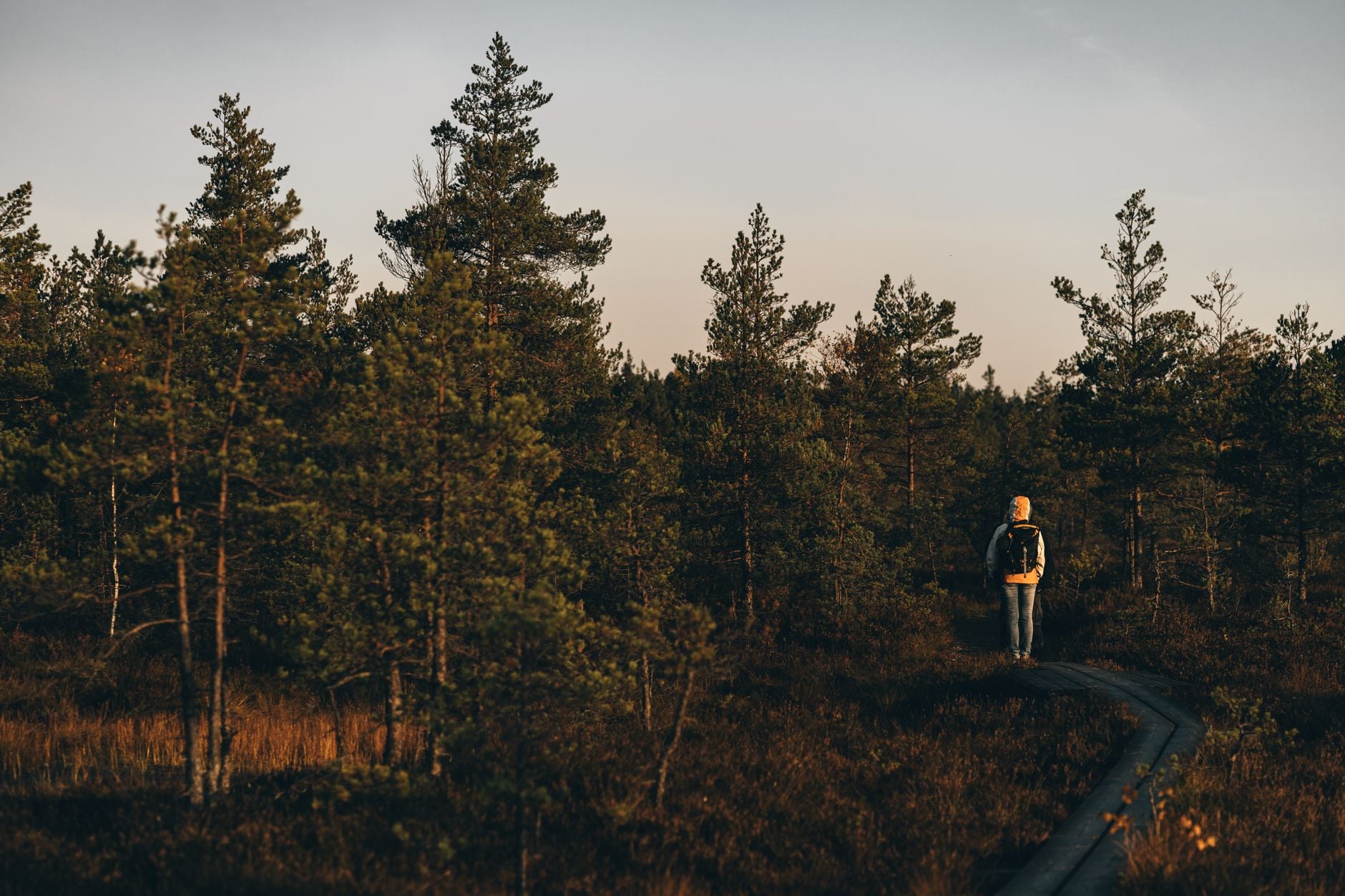

To call long walks a forgotten solution to health issues overstates the case in one direction, because walking is not a cure and cannot stand in for medicine. But there is a real and slightly embarrassing truth folded into the phrase. One of the best-evidenced, cheapest and most widely available things a person can do for both body and mind is also the one modern life has most thoroughly overlooked, having buried it beneath gym memberships, step targets, and the general assumption that anything this plain cannot be serious.
What walking does for the body
The evidence for ordinary walking keeps accumulating rather than fading. In a 2022 meta-analysis in The Lancet Public Health, led by the epidemiologist Amanda Paluch, researchers pooled fifteen international studies covering some 47,000 adults and found a clear pattern: the more people walked, the lower their risk of dying early, across a wide range of daily totals.
Here the myth-busting is liberating rather than deflating. The famous target of 10,000 steps, the one that makes walking feel like a daily exam you are failing, has no scientific pedigree at all. It began as a marketing slogan for a Japanese pedometer sold in the years around the 1964 Tokyo Olympics, a device whose name translated roughly to “10,000-step meter.” As the Harvard epidemiologist I-Min Lee has pointed out, the round figure was chosen because it sounded good and was easy to remember, not because any study had endorsed it. The actual data are gentler. In Paluch’s analysis the mortality benefit tended to level off somewhere around 6,000 to 8,000 steps a day for older adults, with meaningful gains appearing well below the mythical ten thousand. You do not need the number glowing on your wrist. You need the walk.
What walking does for the mind
The benefits are not only cardiovascular. In 2015, Gregory Bratman and colleagues at Stanford had people take a ninety-minute walk either through a natural setting or along a busy urban road, and measured two things: their self-reported rumination, the looping, self-critical thought that is an established risk factor for depression, and activity in a region of the brain, the subgenual prefrontal cortex, linked to that same risk. The people who had walked in nature came back with less rumination and quieter activity in that region. The people who had walked beside traffic did not. The walking alone was not the active ingredient; the greenery mattered.
This is, in effect, the laboratory footnote to something the Nordic countries have long treated as ordinary common sense. Friluftsliv, a Norwegian and Danish word meaning something close to open-air living, is the cultural habit of spending time outdoors for its own sake, in more or less any weather, not as a workout to be logged but as a normal way of being alive. What Bratman measured with brain scanners, friluftsliv has quietly practised for generations, on the unexamined assumption that a person is simply better for having been outside and moving.
Why it got forgotten
If the simplest intervention feels forgotten, part of the reason is that it is almost impossible to sell. There is no subscription, no equipment, and no programme to buy, and a culture organised around consumption tends not to notice the things that are free. There is also a persistent instinct to mistake effort for value, to assume that if a walk does not leave you sweating and spent it cannot be doing much, when the evidence points the other way. And the steady medicalisation of health has trained everyone to look for answers in clinics and bottles, which is exactly right for a great many conditions and quietly wrong for the broad, preventive good that a daily walk provides. The habit did not vanish because it stopped working. It slipped out of view because it was too cheap, too plain and too undramatic to hold anyone’s attention.
What the evidence does and does not settle
Several honest limits belong here. The phrase “solution to health issues” is too strong; walking is powerfully protective on average, but it is not a cure and does not replace treatment for illness that needs it. The step-and-mortality studies are observational, which means some of the association runs the other way, since people who are already unwell tend to walk less, and that inflates the apparent benefit of walking more. The nature-walk experiment is small and captured a single outing rather than a lifetime of them. Benefits depend on dose, and on being physically able to walk in the first place, which not everyone is. And this is general information rather than medical advice; anyone with a health condition, or planning a significant change in activity, is wise to speak to a doctor first.
Within those limits, the reclaimed version of the claim holds up well. Long walks are not a forgotten miracle, and it does no favours to oversell them as one. But they are a genuinely powerful, well-evidenced and badly underused tool for both the body and the mind, and for most people the only thing standing between them and the benefit is the quiet disbelief that something so ordinary, and so free, could possibly be enough.