
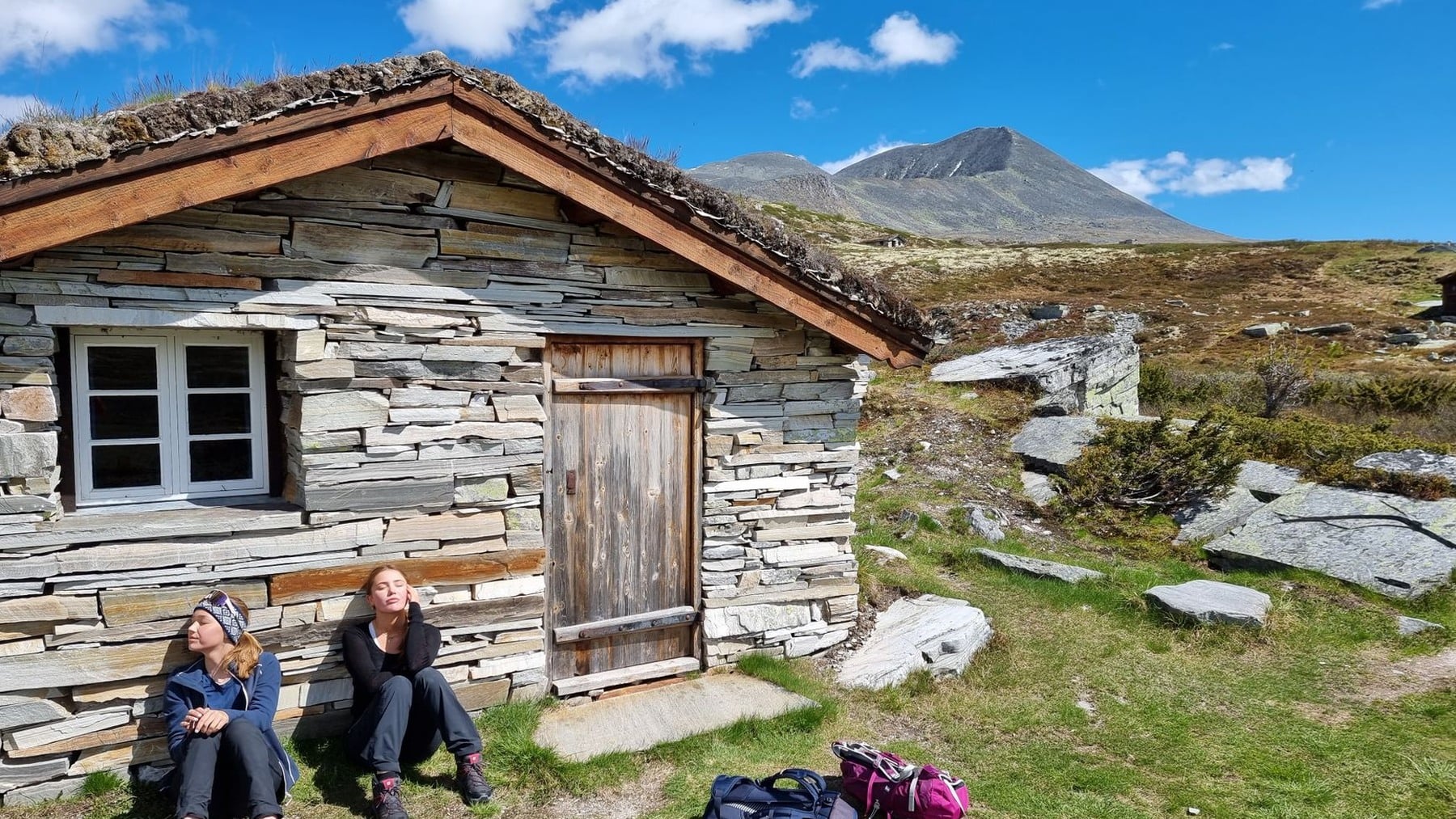

After a long walk through Norwegian mountains, a hiker can reach a locked wooden cabin with no road, receptionist or reliable phone signal. One small metal key may still open the door. The same standard key works at hundreds of cabins in the network run by Den Norske Turistforening, the Norwegian Trekking Association known as DNT.
What happens after the lock turns is less like checking into a hotel than temporarily taking over a shared household. At a self-service cabin, shelves may hold oatmeal, crispbread, pasta, soup, canned food, coffee and snacks. The visitor records the bed and provisions, pays through an app, fetches water, manages the stove, cleans the rooms and leaves firewood for whoever arrives next.
No employee needs to watch the exchange. The system combines a standard lock with written rules, digital payment, volunteer maintenance and a social expectation that a stranger will honour obligations created far beyond ordinary supervision.
The famous key opens hundreds of cabins, not every cabin
DNT’s current explanation of the cabin key says it unlocks hundreds of the organisation’s unstaffed and self-service cabins across Norway. The vast majority of DNT cabins without a resident host use the standard lock. Members obtain a key for a small deposit and can keep it while their membership remains active and paid.
The distinction between access and accommodation matters. Anyone can stay in the wider cabin system, subject to a cabin’s rules and availability, but at least one person in a group generally needs DNT membership to obtain the standard key. Members also receive lower accommodation prices. The key opens a door; it does not make the bed or anything taken from the pantry free.
Nor is it a flawless master key for the entire country. Some cabins remain unlocked. Others have a special key, a code lock or booking-specific access instructions. Cabins can close seasonally, during hunting periods, because of landowner agreements or to protect wildlife such as migrating wild reindeer. DNT tells hikers to inspect the individual cabin listing on UT.no before departure.
That qualification makes the system more interesting, not less. Norway has not abolished the practical differences among remote buildings. It has standardised access across enough of them that a member can carry one modest object through an enormous and varied network.
“Self-service” and “no-service” describe different kitchens
DNT has three broad accommodation types: staffed lodges, self-service cabins and no-service cabins. Its guide to the different types of cabins draws a line that can be lost in retellings of the trust system.
Self-service cabins have sleeping and cooking equipment plus a food pantry. The selection varies, but typical stores include oatmeal, crispbread, spreads, packets of soup, pasta, canned goods, coffee, tea and snacks. These are provisions for sale, not an emergency cache to be used without payment. Prices are listed, and the guest registers every item taken.
No-service cabins generally have bunks, duvets or blankets, cooking facilities, firewood and basic kitchenware, but they do not have food for sale. Hikers carry their own provisions. Some of these cabins are smaller and simpler, and a few require extra equipment. Staffed lodges are a third category, with hosts and served meals during their staffed season.
So the title’s “many stocked with food” is deliberate. Many self-service cabins do contain unattended pantries, while the common key also opens no-service cabins whose shelves are not a substitute for a packed dinner.
The app can record a purchase where there is no signal
DNT’s payment system is designed around the fact that mobile coverage often disappears where the cabins begin. The organisation’s guide to its app says visitors can choose a cabin and register accommodation and provisions while offline, then complete payment once the phone reconnects.
Preparation is still required. DNT recommends downloading the app, signing in and opening it before the trip so cabin, product and price data are loaded. A hiker who has pre-booked has normally paid for accommodation already, but still needs to record and pay for pantry items. A drop-in visitor records the stay as well as any food.
This changes the mechanics of trust without removing it. Earlier versions of the system relied heavily on paper payment forms, invoices and cash. The phone now carries the ledger, but DNT still depends on a guest truthfully choosing the right cabin, rate and products when nobody is standing beside the shelves.
The price of an empty cabin includes chores
The responsibilities start on arrival. DNT’s cabin-visit guide asks guests at self-service and no-service cabins to sign the protocol or guestbook, even when the bed was booked online. The entry helps with safety and visitor statistics as well as recording a human presence in an otherwise unstaffed place.
Cabin life then becomes practical. Guests may fetch water from a stream, lake or well; light and tend the wood stove; cook on propane; wash dishes; and keep wet equipment near the drying area. DNT’s first-trip guide notes that many cabins have neither running water nor electricity and that visitors are expected to chop wood when necessary.
Departure has its own checklist. Every used room should be cleaned. Cutlery, plates and countertops are washed, the floor is washed, blankets are folded, and a fresh supply of firewood is brought inside for the next guest. The gas regulator must be closed, windows and doors secured, and local waste instructions followed. In many locations, that means carrying all rubbish back out.
The governing rule is to leave the cabin as one would want to find it, preferably a little better. A warm room and dry wood are therefore not simply amenities supplied by DNT. They may be the final act of someone who slept there the night before.
The trust network grew out of a wider Norwegian cabin culture
Scandinavia Standard’s earlier guide to Norwegian cabin culture describes several closely related customs: do not behave like a passive guest, help with the dishes, follow the household rhythm and write in the cabin book. DNT turns that domestic etiquette into repeatable operating instructions for people who do not know one another.
The scale arrived gradually. DNT was founded in 1868 with the goal of making Norwegian nature easier and more affordable to experience. Its history of the organisation now describes a community of more than 300,000 members using over 600 cabins across Norway. The network includes mountain lodges, forest huts, coastal buildings, old farms, lighthouses and cabins close to cities.
One key does not maintain that estate. DNT’s local member associations, cabin wardens and volunteers stock pantries, repair roofs, split and carry wood, mark trails and inspect buildings. Guests encounter the visible end of a great deal of work, then contribute a small piece by accounting for their stay and resetting the room.
This helps explain why the system is more than a charming story about Norwegian honesty. Trust is supported by membership, clear prices, guest protocols, shared norms, digital records, local oversight and thousands of hours of maintenance. The notable part is not an absence of structure. It is how lightly that structure can be felt from inside a quiet cabin.
A common key does not make a mountain trip automatic
The simple arrival can obscure a difficult approach. DNT advises first-time visitors to check the route, weather, daylight, opening dates, bed-booking rules, lock type, water source and equipment requirements. A cabin may be a short walk from public transport or five hours from the nearest road. Some accept drop-ins; others require advance booking. Conditions that look manageable on a map may become serious in wind, snow or fog.
Hikers also need a sleeping-bag liner, suitable clothing, food appropriate to the cabin category and enough independent safety equipment for the route. The presence of bunks should never be treated as a promise that the door will open, the pantry will be stocked or another traveller will arrive to solve a problem.
Within those limits, the exchange is unusually direct. Carry the right key. Record what you use. Pay when the signal returns. Replace the wood, wash the floor and lock the door. The cabin is then ready for a person whose name may appear on the next line of the guestbook, but whose face the departing hiker may never see.