
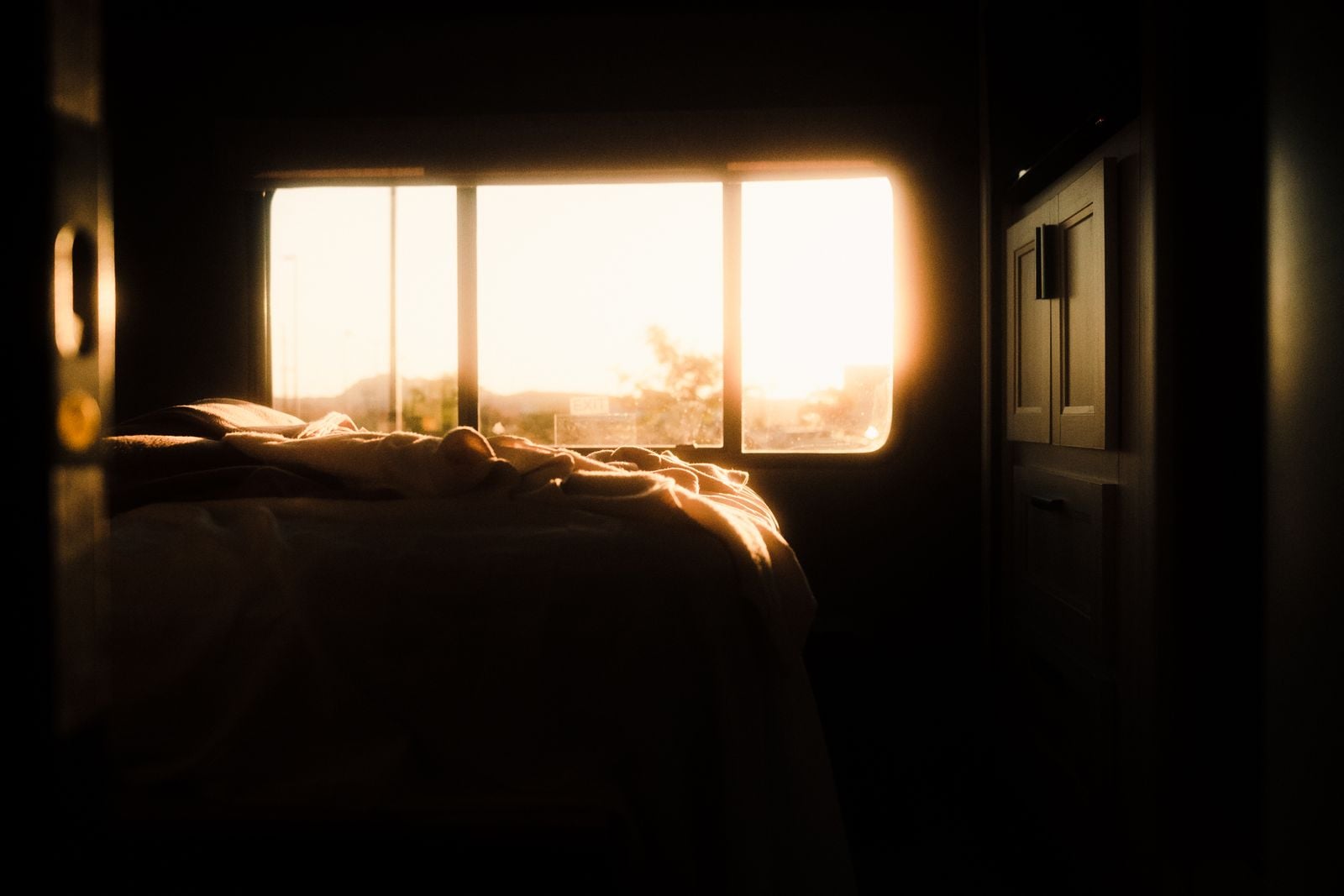

Mornings carry a heavy moral load. We treat them as the seat of discipline and virtue, the proof that a person has their life together, and we sell each other endless routines to make the most of them. Underneath all that noise there is a quieter and more interesting question: what is the actual relationship between mornings and how we feel?
It turns out there are two separate findings worth knowing here, and they are often muddled together. One is about the mood of the morning itself. The other is about the people who like mornings.
I am a writer with an interest in this research, not a psychologist, so take this as a careful reading rather than a set of instructions.
The morning has a mood of its own
The largest look at the daily rhythm of human mood came from an unlikely source. In a 2011 study in the journal Science, the sociologists Scott Golder and Michael Macy analysed around 500 million public messages from 2.4 million people across 84 countries, tracking the emotional tone of what people wrote hour by hour.
A clear pattern fell out, and it held across very different cultures. As the researchers described it, people tend to wake in a relatively good mood that then declines across the day. Positive tone was highest in the morning, sagged through the working hours, and lifted again late in the evening. On weekends the morning high arrived about two hours later, which is roughly how much longer people sleep in.
It is worth being careful about what this measures. Public posts are performances, not private feelings, and the tone of a message is a rough proxy for a mood. But the scale is enormous and the timing lines up neatly with sleep and the body clock, which is hard to explain away.
The honest version of the finding is modest and still lovely: for a lot of people, the freshest and most positive stretch of the day is the early one, before the day has had a chance to wear it down.
Morning people report being happier
The second finding is about temperament rather than time of day. People who describe themselves as morning types, the larks, tend to report more positive mood than night owls.
A frequently cited study here is by Renee Biss and Lynn Hasher, published in the journal Emotion in 2012 under the title “Happy as a Lark.” Surveying both younger and older adults, they found that morning types reported higher positive affect than their same-age peers who preferred later hours. The effect showed up in the young, who are rarely morning types, and in the old, who often are.
That study also connects to something I have written about before, which is that people often grow happier in later life. Part of that shift may simply be that people drift towards morningness as they age, and morningness travels with a better mood.
Which way does it run, and why
Here is where the enthusiasm usually gets ahead of the evidence, so it is worth slowing down.
These are correlations. They do not show that becoming a morning person would make you happier. The arrow could point the other way, with cheerful and well-rested people finding it easier to like mornings, or something else could be driving both, such as sleeping well.
There is also a less flattering explanation that I find persuasive. The world is built for larks. School start times, office hours, the whole nine-to-five architecture of ordinary life assumes you are at your best in the morning. If you naturally are, the day fits you, and you move through it with less friction. If you are an owl forced onto a lark’s timetable, you spend years mildly out of step with your own clock, which is not a recipe for good spirits. Some of the happiness gap between larks and owls may be less about mornings being wonderful and more about the schedule quietly rewarding one group and taxing the other.
So the morning-person advantage is partly real and partly an artefact of a world that was not designed with night owls in mind.
This is worth saying plainly because owls tend to get moralised at. Preferring late hours is routinely read as laziness or a lack of discipline, when the research frames it as a mismatch between a person’s internal timing and an external timetable they did not choose. A tired owl at 8am is not a worse person than a bright lark beside them. They are on a schedule that suits the lark and fights the owl, and some of the mood difference is just that.
What to make of it
If there is something useful in all this, it is gentler than the productivity industry would like.
The daily mood rhythm suggests that for many people the morning genuinely is a high point, which is a fair argument for protecting it, spending it on something that matters to you rather than surrendering it straight to a screen or an inbox. That is different from the claim that dragging yourself up at five will manufacture happiness. For a committed night owl, fighting your own clock can cost more than it returns, and none of the research says otherwise.
This is an observation about patterns, not advice about your alarm. People’s bodies and lives differ, and a study of millions of strangers cannot tell you when you personally feel most yourself.
What the work gently corrects is the idea that mornings are simply a test of character. For a great many people they are also, and more quietly, the best mood of the day, whether or not anyone chose to earn it.