

To find your sea legs is one of those phrases so worn smooth by use that we forget it describes something real and rather wonderful. A first-time sailor steps aboard and the deck betrays them at every turn; a few days later the same person crosses that pitching floor with a coffee in hand, barely thinking about it. Nothing has changed in the sea. Everything has changed in the sailor. And because the phrase has become a metaphor for steadying yourself in any turbulent new situation, it is worth looking at how the literal version actually works, because the real biology turns out to be a surprisingly good guide to the figurative art.
What actually happens when you get your sea legs
The first thing to notice is that finding your sea legs is not an act of will. You do not grit your teeth and decide to be steady. Your body quietly rebuilds the way it keeps you upright. On land, balance leans heavily on the assumption that the ground stays still, and a ship breaks that assumption, so the brain has to learn a new way of standing when the floor itself is moving. Researchers have actually measured this happening. In a study titled Getting Your Sea Legs, Thomas Stoffregen and colleagues tracked maritime novices during a voyage and found rapid changes in their postural control at sea, along with clues that the way a person’s body swayed even before departure was related to how seasick they would become.
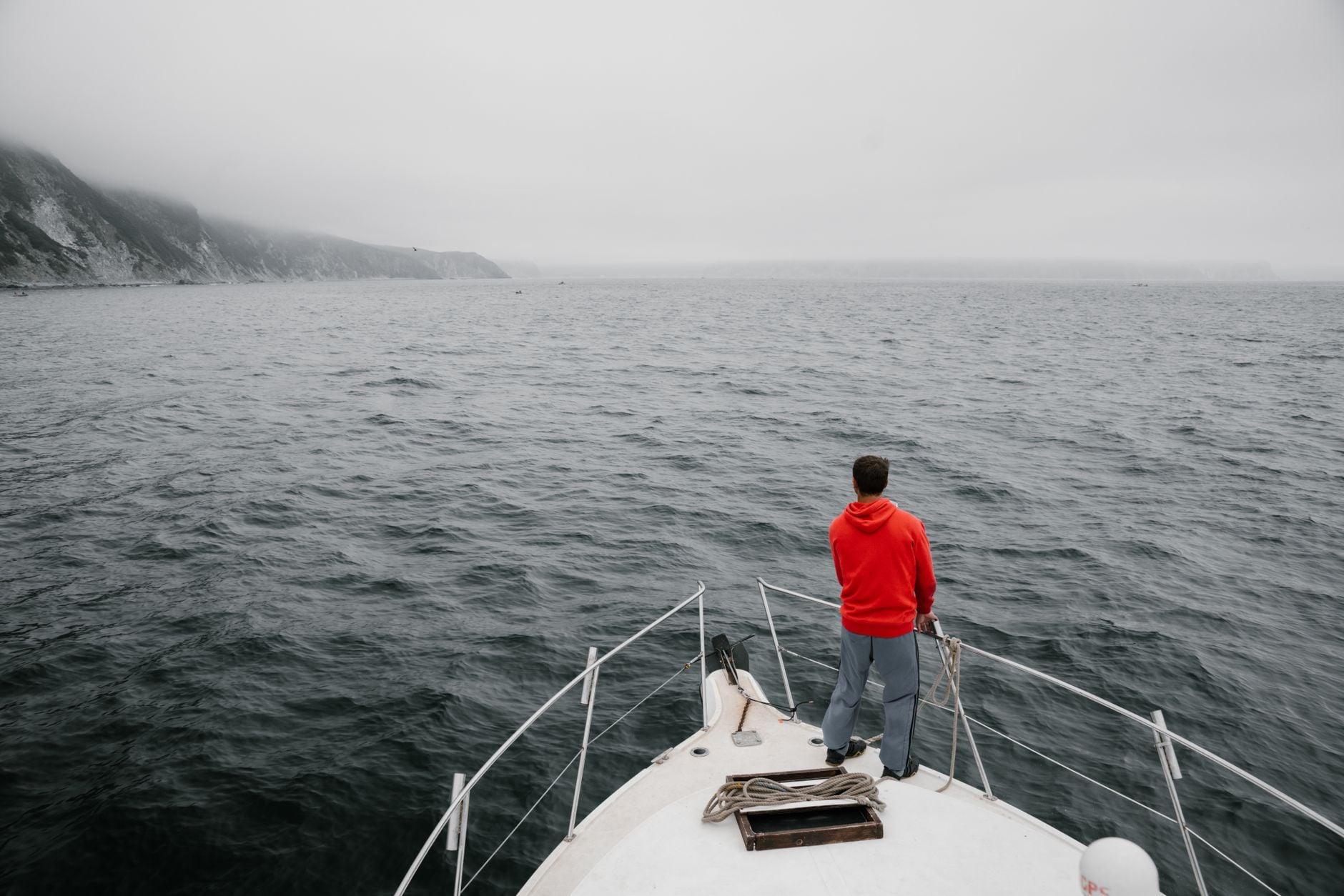
Two practical details from that world of research are worth carrying ashore. Widening your stance helps, giving you a broader base against the roll. And fixing your gaze on the horizon helps most of all, because the distant steady line gives your senses a fixed reference to hold on to while everything nearer is moving. Both are ways of feeding the balance system something stable to work with, and both, as we will see, have quiet parallels far from any boat.
The metaphor holds better than most
Transpose all this to the figurative sea legs we talk about, the steadiness we hope to find in a new job, a new city, a bereavement, any upheaval that tilts the familiar floor, and the lessons line up almost eerily well. The steadiness comes not from forcing yourself to feel settled but from letting your system recalibrate through exposure. You feel wretched and clumsy at first because your instincts are still tuned to the old, stable ground; you feel better later not because you tried harder but because you stayed aboard long enough to adapt.
The horizon lesson translates especially cleanly. When everything close at hand is lurching, the thing that steadies you is a fixed distant reference: a value you will not compromise, a morning routine you keep whatever else changes, a relationship or a purpose that stays constant while the details heave around it. And the wider stance has its echo too, in the sense that you weather instability better with a broader base of support beneath you, more than one friend, more than one source of meaning, so that no single wave can topple you.
The part people forget: the wobble follows you ashore
Here is the detail that makes the metaphor unexpectedly honest. Adaptation does not switch off the moment the sea does. Sailors returning to dry land often feel the ground itself rocking and swaying beneath them for hours or days, because the body is still running the program it built for the ship. Usually this passes quickly. Occasionally it does not. There is a recognised condition called mal de débarquement syndrome, a persistent sensation of rocking or swaying that begins after motion has stopped and can linger for months, thought to involve the brain’s balance and sensory systems failing to readjust.
The figurative lesson is quietly useful. When you leave a long period of turbulence, a demanding job, a caregiving stretch, a crisis that kept you braced, you should not be surprised to keep swaying for a while on the calm that follows. The vigilance you built to survive the rough passage does not vanish the instant the water flattens; you may feel oddly unsteady in the very stability you longed for. That is not a failure. It is the aftermath of having adapted well, and for most people it settles as the system stands down. When it does not settle, that persistent inner rocking is worth taking to a professional rather than simply enduring, exactly as its literal counterpart is.
The art, and its limits
So the art of developing your sea legs is mostly the art of cooperating with a process that is already trying to happen. You cannot rush the recalibration by sheer effort, but you can help it along: stay on deck rather than hiding below, keep moving instead of freezing, fix your eyes on something steady and distant, widen your base of support, and above all give it time, because the adaptation is reliable but not instant.
One honest caveat keeps the metaphor from tipping into something harsher. Not every rolling deck is one you should learn to stand on. Sometimes the wise response to a situation that keeps knocking you off your feet is not to develop sea legs for it but to get off the boat, to recognise that a job, a relationship or an environment is not a storm to be endured but one you are free to leave. Adaptation is a magnificent capacity, and it is not the same as obligation. The skill worth having is both: the patience to find your footing when the ground is worth standing on, and the clarity to know when the kindest thing is to step ashore for good.