
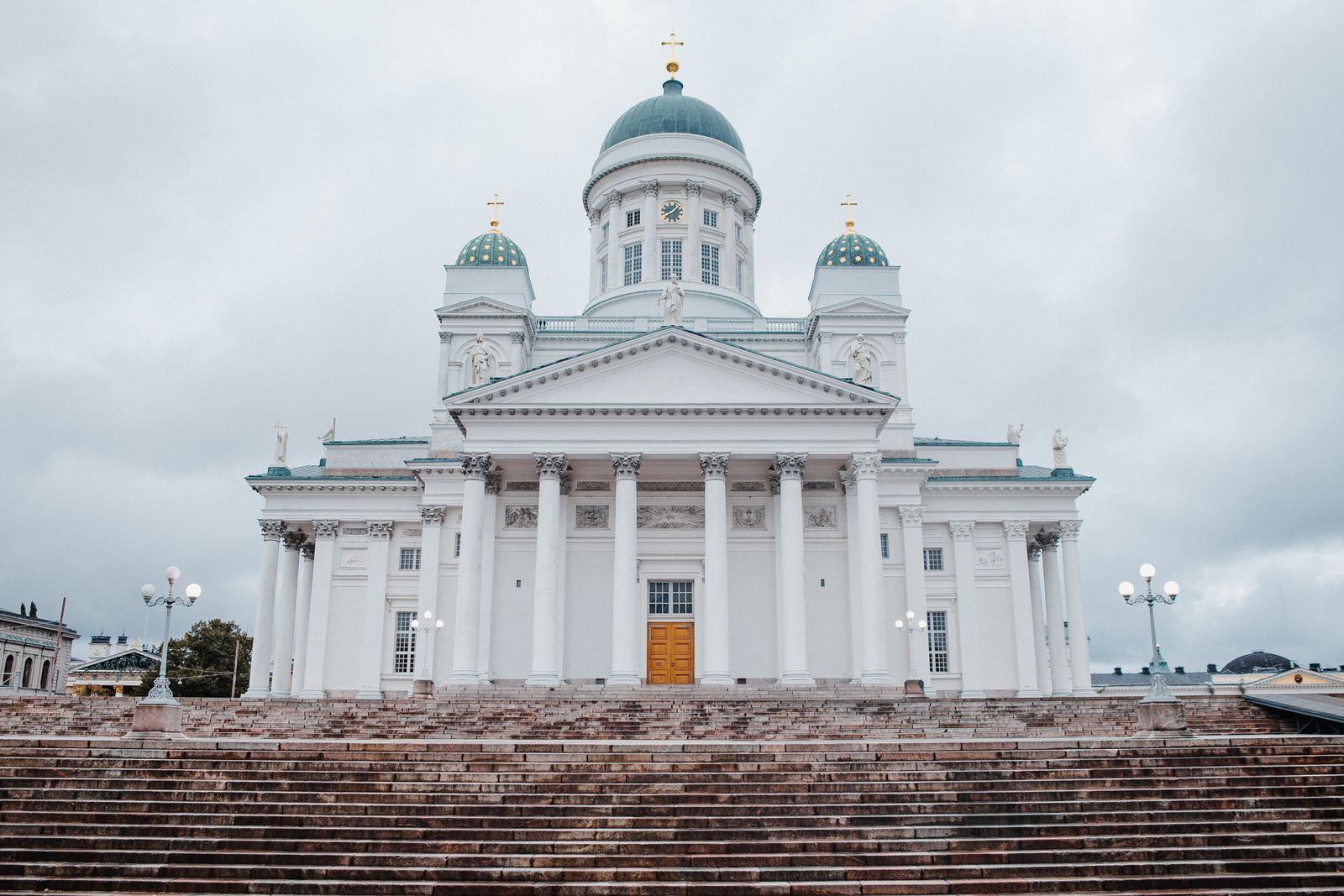

Every March, the same headline comes round: the happiest country on Earth is in the north of Europe. In 2026 it was Finland again, for the ninth year in a row. What almost no one mentions is that Finland is not part of Scandinavia at all.
That is not pedantry, or not only pedantry. It is the first clue that the story we tell about Nordic happiness is looser than the confident headlines suggest.
I am a writer with an interest in the region, not a social scientist, so treat this as a careful reading of the evidence rather than a verdict. But the gap between what the ranking measures and what people assume it measures is worth sitting with.
What the ranking actually is
The list comes from the World Happiness Report, published each year around the United Nations’ International Day of Happiness. Its data comes from the Gallup World Poll, which surveys people in more than 140 countries.
The 2026 edition again put Finland first, with a score of about 7.74 on a scale from 0 to 10. Denmark and Iceland followed close behind, both around 7.52, with Sweden and Norway also in the top ten. The notable change was Costa Rica rising to fourth, the first Latin American country to reach the top five.
Those numbers at the top are close. A tenth of a point between second and third place is not a meaningful gap in day-to-day life, and the ordering can shift on small movements. It is more accurate to say a cluster of Nordic countries sits consistently near the top than to crown a single winner each year.
Scandinavia, or the Nordic countries
Here the precise words matter. Scandinavia, in the usual sense, means Denmark, Norway and Sweden. The Nordic countries are those three plus Finland and Iceland, along with the Faroe Islands, Greenland and Åland.
So the perennial happiness champion, Finland, belongs to the Nordic group but not to Scandinavia proper. The report is a Nordic story more than a Scandinavian one, and the difference is not trivial when Finland has its own language family, its own history with Russia and Sweden, and its own social character.
It is a small correction, but it is the kind that keeps the whole subject honest.
What the question measures, and what it misses
The single most useful thing to understand is what people are actually asked. The survey uses the Cantril ladder: imagine a ladder numbered 0 to 10, where 10 is the best possible life for you and 0 the worst, and say where you stand.
That is a considered judgement about your life as a whole. It is not a reading of whether you felt cheerful this morning. The report measures life evaluation, and calling the result “happiness” does a lot of quiet translating.
Researchers have started to probe the framing itself. A team at Lund University in Sweden found that asking about the “best possible life” tends to steer people towards thoughts of wealth and power. When they swapped in “the most harmonious life,” answers shifted towards relationships, balance and health. The wording is not neutral, and it may favour the things a prosperous society already supplies.
The Finns themselves have noticed the mismatch. A study of Finnish media reactions, titled “Are we bad winners?”, found many Finns puzzled by the label, since a reserved contentment is not what most people picture when they hear the word happiest. The ranking may be measuring something real and stable, just not the sunny thing the headline implies.
The unglamorous explanations
When the report’s authors explain the Nordic results, they tend not to reach for culture or mood. They point to social support, trust in other people and in institutions, a sense of freedom, healthy life expectancy, and low corruption. One recurring detail is that these countries have relatively little inequality in wellbeing, meaning the gap between their happiest and least happy residents is smaller than in most places.
That is a structural story, not a mindset. It runs through tax-funded institutions, public services, labour arrangements, housing and a long history of building them, rather than through any single national trait you could bottle.
This is where the popular version usually goes wrong. It takes an outcome produced by policy and wealth and repackages it as a feeling, or worse, as a word like hygge that you can supposedly adopt from a shelf. A candle does not deliver what functioning institutions and low inequality do.
Costa Rica’s arrival in the top five is a useful check on that story. It is not a wealthy country by Nordic standards, yet it scores just as high, which suggests strong social ties and a sense of security can do some of the same work as a large public purse. Money clearly helps, but the ranking is not simply a table of the richest nations, and reading it that way would miss the point.
None of this means the Nordic countries are without problems, or that the average score describes any particular person in Helsinki or Aarhus. A national average is exactly that.
What I take from it
I have come to read the report as a genuinely useful instrument that has been asked to carry a word it cannot quite support. It tracks how securely and steadily people feel their lives are going, and by that measure the Nordic countries really do rank near the top, year after year.
The more interesting question is the one the ladder cannot reach: whether a life you would rate a nine from a distance is the same as a life that feels good from the inside. Finland’s quiet, durable contentment is a real achievement. It is just not the thing most of us mean when we say the word happy.