
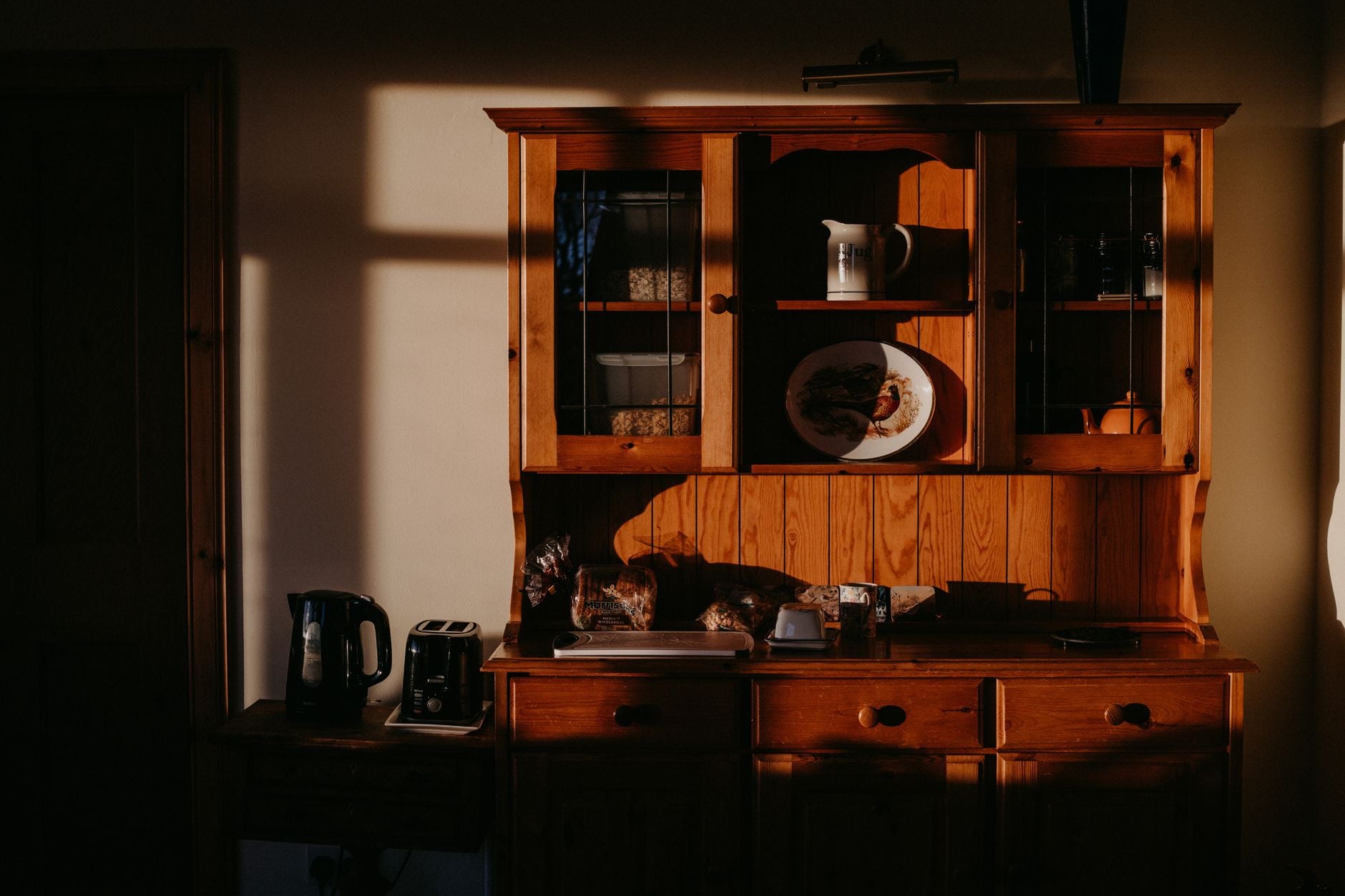

Ask people what they remember about the house they grew up in and the answers rhyme in a curious way. Almost nobody recalls the floor plan or the year it was built. They remember the exact creak of one stair, the pattern of the kitchen lino, the particular smell of the hallway on a winter morning, the corner where they read. The details are small, sensory, and oddly specific, and the fact that they take such a similar shape across very different people is worth pausing on. Two strands of memory research explain why the childhood home lodges in us the way it does, and why what survives tends to be a smell or a corner rather than a fact.
We remember it through the nose
The most striking of these findings concerns smell. In a 2006 study in Psychonomic Bulletin and Review, the psychologists Johan Willander and Maria Larsson presented older adults with cues in three forms, a word, a picture, or an odour, and asked what autobiographical memory each brought back. The memories summoned by smell were reliably older than those summoned by words or images, clustering in the first decade of life, and they arrived with a stronger sense of being brought back in time and of feeling something.
This is the mechanism behind the experience so many people describe, of a particular smell returning the childhood home whole and instantly: a certain soap, baking, damp coats in a hallway, a garden after rain. Unlike our other senses, smell has a direct line to the brain’s memory and emotion centres, and it appears to be especially bound to the earliest years. So the reason the things we remember about that house are so often things we can almost smell is not sentiment; it is a real quirk of how olfactory memory is wired to childhood. The nose keeps a longer archive than the eye, and it files the house we grew up in near the front.
We remember it as part of ourselves
The second strand explains why those fragments feel so weighted, out of all proportion to their size. Environmental psychologists use the idea of place attachment, and its close relative place identity, to describe the way a physical setting becomes woven into a person’s sense of who they are. In an influential 2010 framework in the Journal of Environmental Psychology, Leila Scannell and Robert Gifford set out how attachment forms between a person and a place, arguing that through memory, people create meaning in a place and connect it to the self. The childhood home is the first and often the deepest such place, the setting where an identity took shape rather than a neutral container it happened inside.
That is why the surviving details are so often the personal ones: my window, my spot on the stairs, the cupboard I hid in, the height marks on the door frame. They are not remembered as architecture but as the coordinates of an early self. The house is where we first became someone, and memory holds onto the physical evidence of that becoming. Between the two strands, sensory encoding and identity, the childhood home is stored in exactly the way that makes it vivid and durable: through the senses, at the age the senses bind most deeply, and bound to the self that was forming there.
Why it feels shared, and slightly polished
This also helps explain the “we all” in the phrase. Homes and childhoods share a great many features, the thresholds and stairs and kitchens, so the raw material overlaps. But there is more to it, because memory is not a recording. It reconstructs, and over the years it tends to warm and smooth what it holds, a well-documented tendency sometimes called rosy retrospection. Each of us, in other words, has quietly polished a similar set of small sensory details into a similar shape, which is part of why the genre feels so universal. The shared memory is real in its ingredients and gently idealised in its finish, and both of those are worth knowing when the feeling of a common childhood home washes over a room.
What the evidence does and does not settle
A few honest limits belong here. Memory is reconstructive rather than photographic, so the remembered house is partly rebuilt and partly improved in the retelling, and the earliest years leave very little, since few clear memories survive from before the age of three or four. The research describes tendencies across groups, not any one person’s experience, and individual variation is wide. It also matters to say plainly that not every childhood home is a warm memory. For some people the house they grew up in holds hardship, loss, or worse, and the same sensory doorway that returns comfort for one person can return difficulty for another. The odour that brings it all back does not discriminate between the memories it carries.
Within those limits, the phenomenon is a tender and well-grounded one. The house we grew up in endures in memory because it was recorded through the senses, smell above all, at the age when those senses reach furthest back, and because it was the first place our sense of self took shape around a set of rooms. That is why so little of what we remember is factual and so much of it is a texture, a corner, a particular light. And it is why, decades later and streets away, a single smell can still open the front door and let the whole of it back in.