
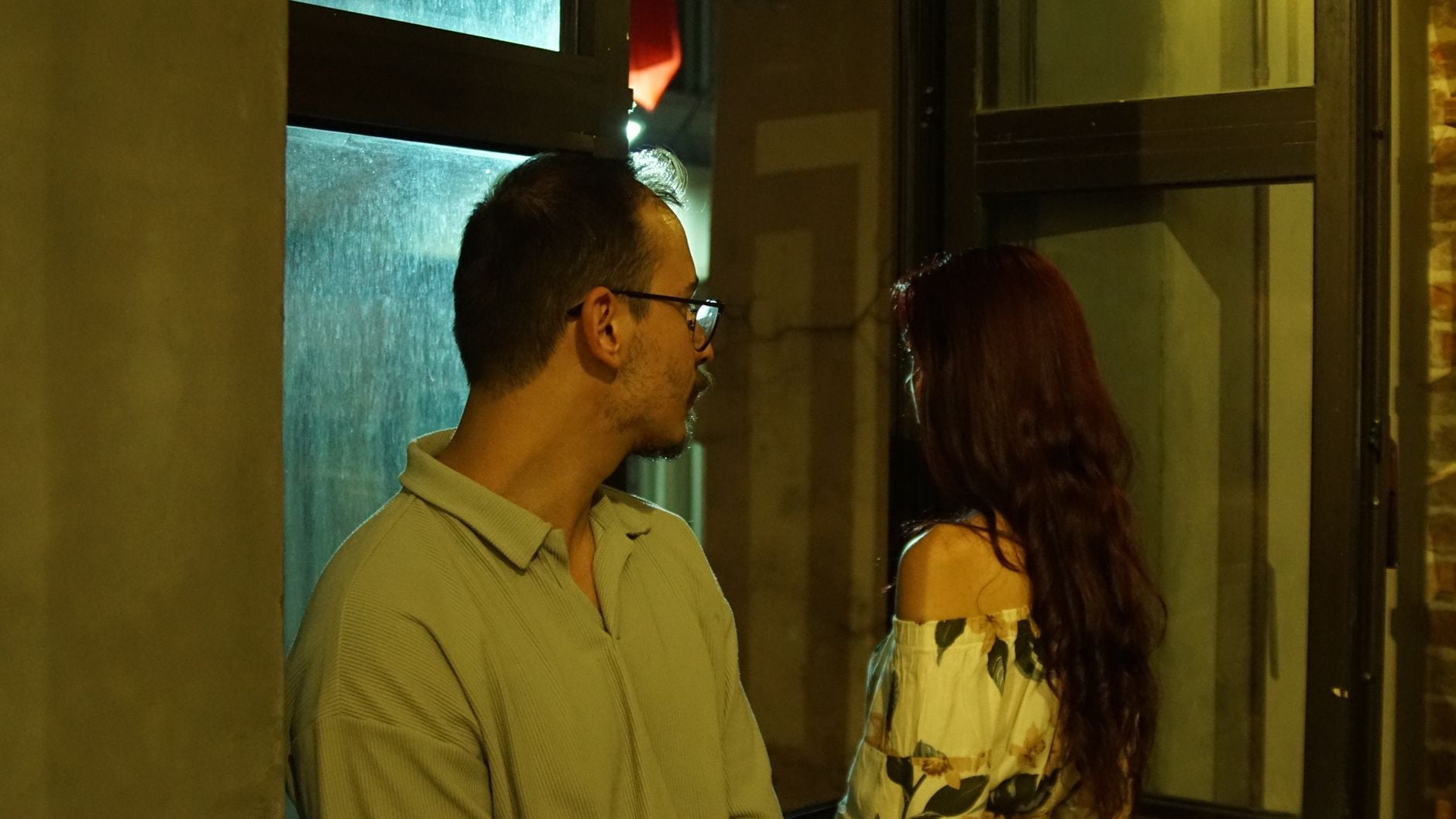

The headline is a gendered and slightly cartoonish version of something the research does actually support, though not for the reasons the phrasing implies. It is not that women are somehow wired to be drawn to weakness, or that men are hopeless at reading it. It is that one specific belief, the belief that showing emotion or vulnerability makes you look weak, is both widely held, especially by men, and largely mistaken. The whole thing lives in the gap between how vulnerability feels from the inside and how it looks from the outside.
The beautiful mess effect
Psychologists have studied this gap directly. In a 2018 paper in the Journal of Personality and Social Psychology, Anna Bruk and colleagues looked at exactly the moments people dread, confessing romantic feelings, admitting a mistake, asking for help, and found a consistent asymmetry. People judged their own displays of vulnerability harshly, as weakness or mess, while judging the very same displays in other people positively, as courage or strength. They named it the beautiful mess effect.
The explanation is intuitive once stated. When it is you, you are pressed up against all the risk and awkwardness of the moment, and your attention goes to everything that might go wrong. When it is someone else, you stand back and see the bravery of it. So the man who assumes his open, tender, or fallible moment reads as weak is very probably wrong about how it lands. To the person watching, it tends to look like the opposite. That is the grain of truth inside the headline, and it applies to everyone, not only to men and not only to romance.
Why men, in particular, get it wrong
If the misjudgement is universal, why does the phrase single out men? Because men are taught, more insistently, to make it. In a 2017 meta-analysis pooling almost twenty thousand people, Y. Joel Wong and colleagues found that conforming strongly to certain traditional masculine norms, particularly self-reliance and emotional control, was associated with worse mental health, and more strongly still with worse social functioning and relationships.
That last part matters here. The very script that instructs men to bottle things up and never appear to need anyone is the one that quietly corrodes the connections it claims to protect. So men do not usually fear vulnerability because it is genuinely off-putting. They fear it because they have been trained to, by a set of norms that, on the evidence, tends to cost them the closeness they want. The belief and the behaviour it produces are learned, which is also why they can be unlearned.
What this actually means
Put together, the honest version of the headline is less about some chemistry between the sexes and more about a correctable mistake. The openness that men often suppress as weakness, the willingness to say I was wrong, or that hurt me, or I really like you, tends to read to others as honesty, warmth, and a quiet kind of courage, all of which are genuinely appealing in a partner.
It is worth being careful in a few directions, though. This is not a licence to unload every insecurity on a first date as a seduction technique; the beautiful mess effect concerns appropriate, honest vulnerability, not a performance of it or a flood of it. Nor does it mean the traditional masculine strengths, steadiness, protectiveness, competence, are somehow unattractive, since plenty of people value those too. The point is not to swap one rigid script for another but to drop a single false premise: the idea that showing feeling cancels out strength. It does not, and the people worth being close to rarely think it does.
A few honest things to add
Some caveats belong here. The research describes tendencies, not laws, and both studies are averages across many people rather than a map of any particular relationship. The masculine-norms findings are correlational and modest in size, so they point to an association rather than a simple cause, and none of this is a reproach aimed at men. The norms are cultural inheritances, not personal failings, and they are already shifting. Attraction is also individual: some people are drawn to more reserve and some to more openness, and an average is never a rule about a person.
Within those limits, the useful core is small and rather freeing. The belief that showing feeling makes you look weak is, for most people most of the time, simply untrue, and it is held most tightly by exactly the people it costs the most. What you experience as an embarrassing crack in the armour, others tend to read as a door. Stripped of its swagger, then, the headline points at something real and kind. The tenderness, honesty, and vulnerability that men are so often taught to hide are rarely the weakness they fear. Far more often, they are the very thing that draws people closer, which is a good deal more hopeful than the tough-guy script that told them otherwise.