
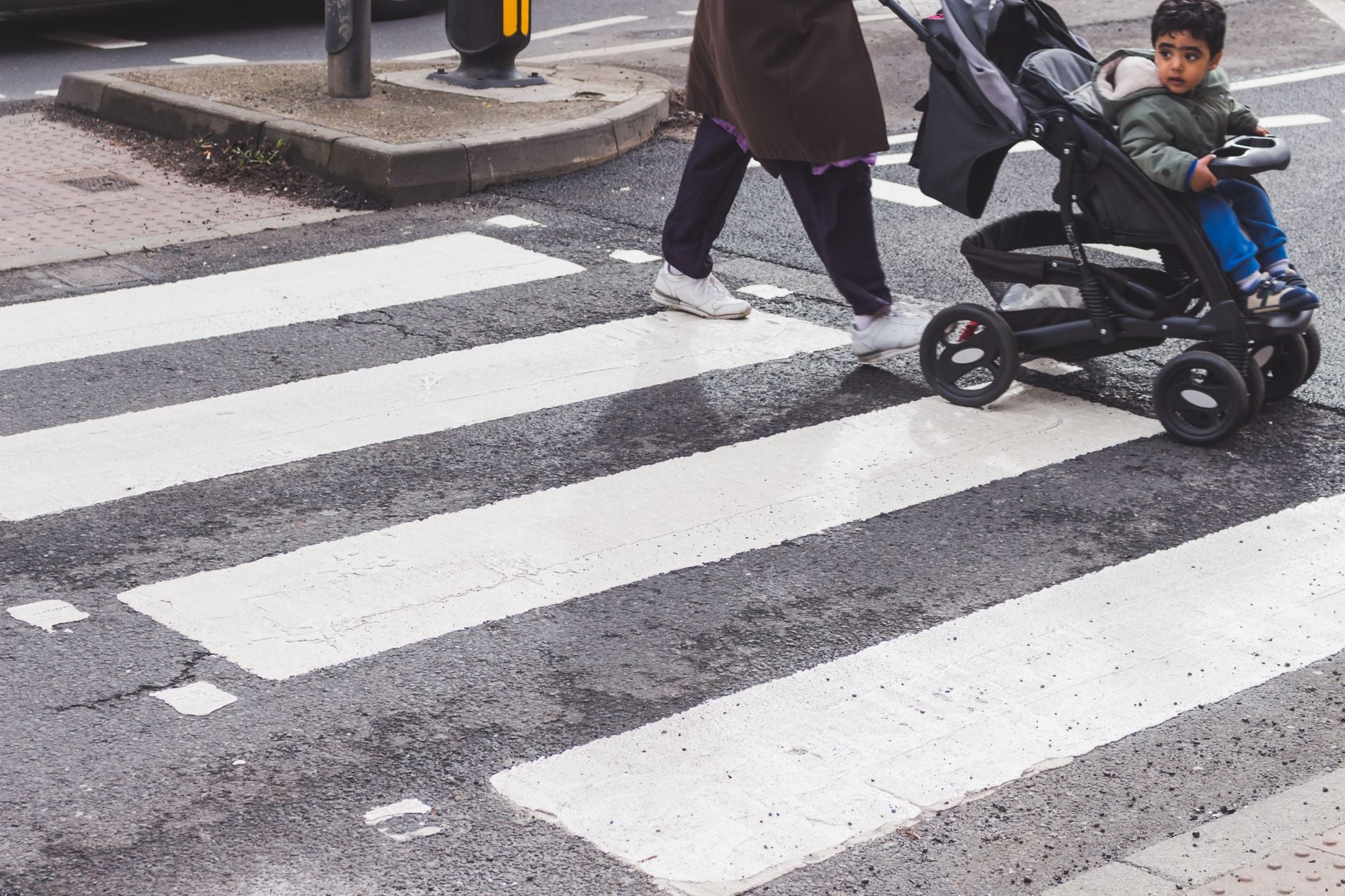

You have seen it, and perhaps you do it: a car stops at a crossing, a pedestrian lifts a hand, a small wave that means thank you. Articles regularly claim that psychology says this little gesture reveals a particular personality type, so it is worth being honest at the very start. There is no study on waving thanks at pedestrian crossings, and no research that turns one wave into a verdict on who you are. But the gesture is not nothing. It is a tiny, almost reflexive act of gratitude, and gratitude turns out to be one of the better-studied traits in all of psychology. So the honest version of the question is not what a single wave proves, but what the habit of expressing thanks tends to go along with, and that does have real answers.
Gratitude is a genuine, measurable trait
Start with the fact the clickbait skips past: the tendency to feel and express gratitude is not merely a passing mood but a fairly stable disposition, one psychologists can measure and that lines up with other traits in consistent ways. In a foundational set of studies, Michael McCullough, Robert Emmons and Jo-Ann Tsang mapped what they called the grateful disposition and found that people who habitually feel more gratitude score higher on agreeableness and extraversion, lower on neuroticism, and report more prosocial behaviour and greater wellbeing, while being less prone to envy and materialism.
Notice what that implies for our little wave. Someone who instinctively thanks a stranger for a moment’s courtesy is, in a very small way, doing what a grateful person does: noticing a kindness and acknowledging it. So it is fair to say the habitual thank-you-waver probably skews, on average and very slightly, towards agreeableness, warmth and lower neuroticism. Not because one wave is diagnostic, but because the disposition it expresses is a real trait, and traits tend to surface in small habits.
The two caveats that matter
This is exactly where the psychology says you are X framing goes wrong, and two caveats matter a great deal. The first is culture. Waving thanks at a crossing is, in many places, simply the local norm, something nearly everyone does because it is what is done there, in which case it reveals nothing about individual personality at all. In a town where every pedestrian waves, the wave is etiquette rather than character, and if anything the interesting people are the outliers in either direction.
The second caveat is the obvious one: a single behaviour is weak evidence of anything. People wave for all sorts of reasons, habit, mood, the particular driver, whether they are in a hurry, and assembling a personality profile from one gesture is the same overreach as deciding a person is dishonest because they looked away mid-sentence. The link between the wave and the traits is genuine but faint and probabilistic, a slight tilt in the odds, not a readout. Anyone claiming a tiny courtesy exposes your whole character is selling something.
The more interesting finding is what the wave does
There is, though, a genuinely interesting piece of research behind the silly headline, and it is not about what the wave says but about what it does. The psychologists Adam Grant and Francesca Gino studied the effect of expressing thanks and found that even a brief expression of gratitude measurably raises the recipient’s sense of being valued, their social worth, and makes them meaningfully more likely to help again. In one striking study, simply thanking a group of fundraisers for their work increased the number of calls they made over the following week by roughly half.
Applied to the crossing, this reframes the whole thing. The wave is not just a passive clue to your personality; it is a small, active intervention. It tells the driver their courtesy was seen and mattered, which, on this evidence, makes them marginally more likely to extend it again next time. The gesture is quietly contagious, in the way kindness generally tends to be.
So what does the wave actually mean
Put it all together and you get a fairer, more deflated, and frankly more useful answer than the headline offers. Does waving thanks reveal your personality? Only loosely. It is consistent with a grateful, agreeable disposition, and people high in that disposition probably do it a little more reliably, but it is also heavily shaped by local custom and passing circumstance, so nobody should read much into whether a given person waves on a given day.
What the wave reveals more dependably is a habit of acknowledgement: the small, learnable practice of noticing when someone has been decent to you and letting them know. And that habit, unlike a fixed trait, is available to anyone, whatever their underlying personality.
Which points to the only conclusion really worth drawing. Whether the wave is a window into your soul is, honestly, a slightly silly question, and the research does not support the confident answers the internet enjoys giving it. But whether it is worth doing is not silly at all, and there the evidence is clearer than the headline deserves. A small, visible thank you costs nothing, sits comfortably alongside warmth and contentment, and, on the gratitude research, does a real if tiny amount of good by making another person feel their kindness registered. You do not need it to prove anything about you. It is enough that it is a decent thing to do, and that, in its modest way, it works.