
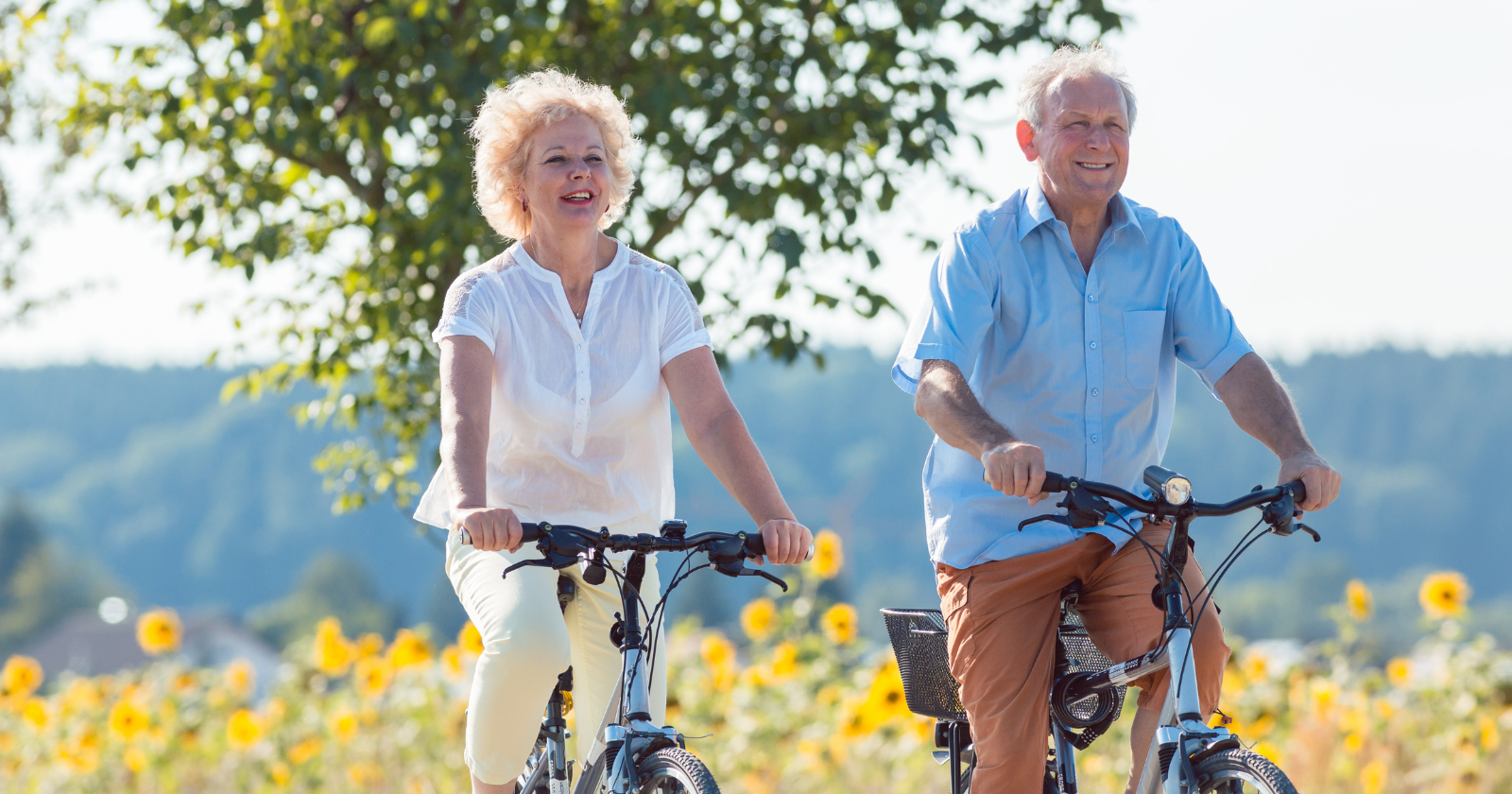

There is a particular kind of older person who insists they never exercise.
Then you spend a day with them.
They walk to buy bread. They go upstairs because the clean towels belong upstairs. They carry two shopping bags home, stand to make coffee, water the balcony plants, take a longer route to see a friend and get out of the chair every time something needs doing.
By evening, they have not completed a workout. They have simply completed a life that kept asking their body to move.
The headline calls this psychology, but the central evidence comes from physical-activity and ageing research. Nor have researchers identified a universal set of ten habits practised by every fit person over 60. The useful finding is narrower: movement accumulated through transport, household work, social activity and brief daily tasks still counts as physical activity, even when nobody changes clothes or calls it exercise.
This article is general reporting, not individual exercise advice. Health conditions, mobility, pain, medication and falls risk can all change what is safe. A clinician or qualified exercise professional can help adapt activity to an individual body.
There is one more correction worth making. Everyday movement can contribute a great deal, but it does not automatically cover everything recommended for later life. The World Health Organization’s 2020 guidelines recommend that adults aged 65 and over combine aerobic activity with muscle-strengthening work and varied activity that emphasises balance and strength. The guidelines also say that some movement is better than none and that replacing sedentary time with activity of any intensity has value.
So the body does not interpret carrying groceries as “purposeful exercise”. It does something less poetic and more useful: it responds to muscular load, energy demand, repetition, balance challenge and time spent out of the chair, regardless of whether the person thinks they are training.
These ten habits are practical ways that can happen.
1. They walk because something is at the other end
A walk with a destination is easier to repeat than a walk whose only purpose is satisfying a fitness plan. Bread, a library book, coffee with a neighbour and a letter that needs posting all give movement a reason outside itself.
This does not mean chasing an arbitrary number. A meta-analysis of 15 international cohorts found that, among adults aged 60 and over, the association between daily steps and lower mortality risk levelled off at roughly 6,000 to 8,000 steps a day. It was observational evidence, not proof that a particular step count prevents death, and the useful message is not that everyone should reach 6,000. It is that benefits appeared well below the familiar 10,000-step target.
The habit is simply to let nearby destinations generate some of those steps when distance, weather, pavements and mobility allow.
2. They do not optimise every small trip out of the day
Modern convenience is very good at deleting movement. One trip carries everything upstairs. A voice command turns off the light. Deliveries remove the walk to the shop. Frequently used objects are arranged so that almost nothing requires standing.
People who move throughout the day often preserve a little benign inefficiency. They take the mug back when they have finished with it. They get the tool when the job requires it. They make two safe trips instead of one overloaded trip.
None of these actions is impressive. That is exactly why they can survive as habits. The activity is attached to finishing the task, not to summoning enough enthusiasm for a separate workout.
3. They interrupt sitting with a real task
“Stand more” is vague advice. Getting up to refill water, open a window, hang washing or speak to someone in the next room gives the movement a clear beginning and end.
In a randomised crossover study involving 60 adults aged 65 to 79, participants completed prolonged sitting, sitting interrupted by standing, and sitting interrupted every 30 minutes by five minutes of light walking. The walking-break condition produced lower glucose and blood-pressure readings during the experimental day than prolonged sitting. It was a short laboratory study, so it cannot tell us what happens over years. It does show that light movement breaks are physiologically different from remaining seated.
The habit is not constant restlessness. It is allowing ordinary needs to break up long, unbroken stretches in the chair.
4. They let housework remain physical
Sweeping, changing sheets, cooking, putting away groceries and tending plants all involve standing, reaching, walking and carrying. Their intensity varies, but their contribution is not zero.
A prospective study followed women aged 63 to 99 who wore accelerometers. Higher amounts of light and moderate-to-vigorous activity were associated with lower mortality during follow-up, although the study could not prove movement caused the difference. Its useful contribution was measuring activity that questionnaires often miss, including the lighter movement spread through an ordinary day.
Gardening is especially good at generating repeat visits, small loads and changing postures. Scandinavia Standard’s guide to gardening in small spaces shows that a large garden is not required. A few containers can still create reasons to stand, reach, carry water and go outside.
5. They carry manageable things instead of merely moving themselves
A body does different work when it carries a shopping bag, laundry basket, watering can or small parcel. The load asks muscles and grip to contribute while the person is already completing a necessary task.
The word manageable matters. An awkward or heavy load can increase the risk of a fall or injury, and household carrying is not a complete substitute for progressive strength training. It is simply one way muscular effort enters daily life.
People who remain active often keep handling the objects their lives require for as long as they can do so safely. They do not turn every physical demand over to somebody else merely because help is available.
6. They keep a little effort in the route
A staircase, a gentle hill or a briefly quicker walking pace can change the intensity of a trip without turning it into a workout. For someone with suitable mobility and cardiovascular health, the harder minute is embedded inside an activity that was happening anyway.
A 2022 Nature Medicine study analysed wearable data from 25,241 UK Biobank participants who reported no leisure-time exercise. Brief bursts of vigorous activity in daily life, sometimes only one or two minutes, were associated with lower mortality risk. The authors called this vigorous intermittent lifestyle physical activity. The result was observational and cannot establish that the bursts caused the lower risk.
It also should not be read as permission for everyone to charge up stairs. The habit is to retain appropriate challenge, not to ignore symptoms, balance limits or medical advice.
7. They practise strength and balance inside familiar movements
Standing up from a chair without pushing through the arms, rising onto the toes while holding a stable counter, or narrowing the stance during a safe kitchen task can turn a routine movement into a modest strength or balance challenge.
This principle has been tested directly. In the 2012 LiFE trial, 317 people aged 70 and over with a history of falls were assigned to a programme integrating balance and strength activities into daily routines, a structured exercise programme, or gentle control exercise. The lifestyle-integrated group had a lower rate of falls than the control group during follow-up.
That does not make improvised balance work safe for everyone. The study’s activities were selected and taught. The broader lesson is that training does not always need a separate time slot; it can be attached to movements a person already performs.
8. They make some social time mobile
Coffee is social time. So is walking to the café, meeting a friend around the block or talking while tending a shared garden.
Movement is easier to repeat when stopping would also mean losing something else that matters. A weekly walk can be exercise, conversation and a standing appointment at once. The destination and company make it purposeful; the body still receives the steps.
Integration matters because one action can meet several ordinary needs. It does not require claiming that all Scandinavians age the same way.
9. They use transport as an activity choice when the environment permits
Walking and cycling can move physical activity out of the category of self-improvement and into the category of getting somewhere.
This habit is shaped by infrastructure as much as motivation. A safe cycle lane, maintained pavement, nearby shop and reliable crossing make movement possible. A dangerous road or distant services make it less so. Describing active older adults as disciplined while ignoring their built environment confuses access with character.
Scandinavia Standard’s guide to incorporating cycling into daily life makes the same practical point: a bicycle can be transport rather than sports equipment, and adapted or electric cycles can widen the range of people able to use one. Safety and local conditions remain decisive.
10. They distribute movement instead of trying to repay a sedentary day
The most important pattern is not any single chore, stair or walk. It is distribution.
A person who moves for two minutes here and eight minutes there gives the body repeated changes in posture and demand. They may still choose formal exercise, but the workout is not being asked to compensate for every other waking hour.
This is also why the phrase “low-grade exercise” is slightly misleading. Much daily movement is light physical activity, not exercise in the structured sense. It may not raise aerobic fitness or build strength enough on its own. Its value lies partly in replacing stillness and adding volume, with occasional moments of greater load or intensity.
The research adds an important qualification to the cultural story: movement-rich lives are supported by homes, streets, routines and relationships that keep offering reasons to move.
People who stay active after 60 are not simply lucky, but neither are they all following a secret psychological code. Health, disability, work history, income, neighbourhood design and available support shape what movement is possible.
What many active lives do share is a reduced distance between needing to move and having a reason to move. The walk has a destination. The standing has a task. The carrying has an object. The repetition comes from life asking again tomorrow.
It may not look like exercise. It still counts as movement.