
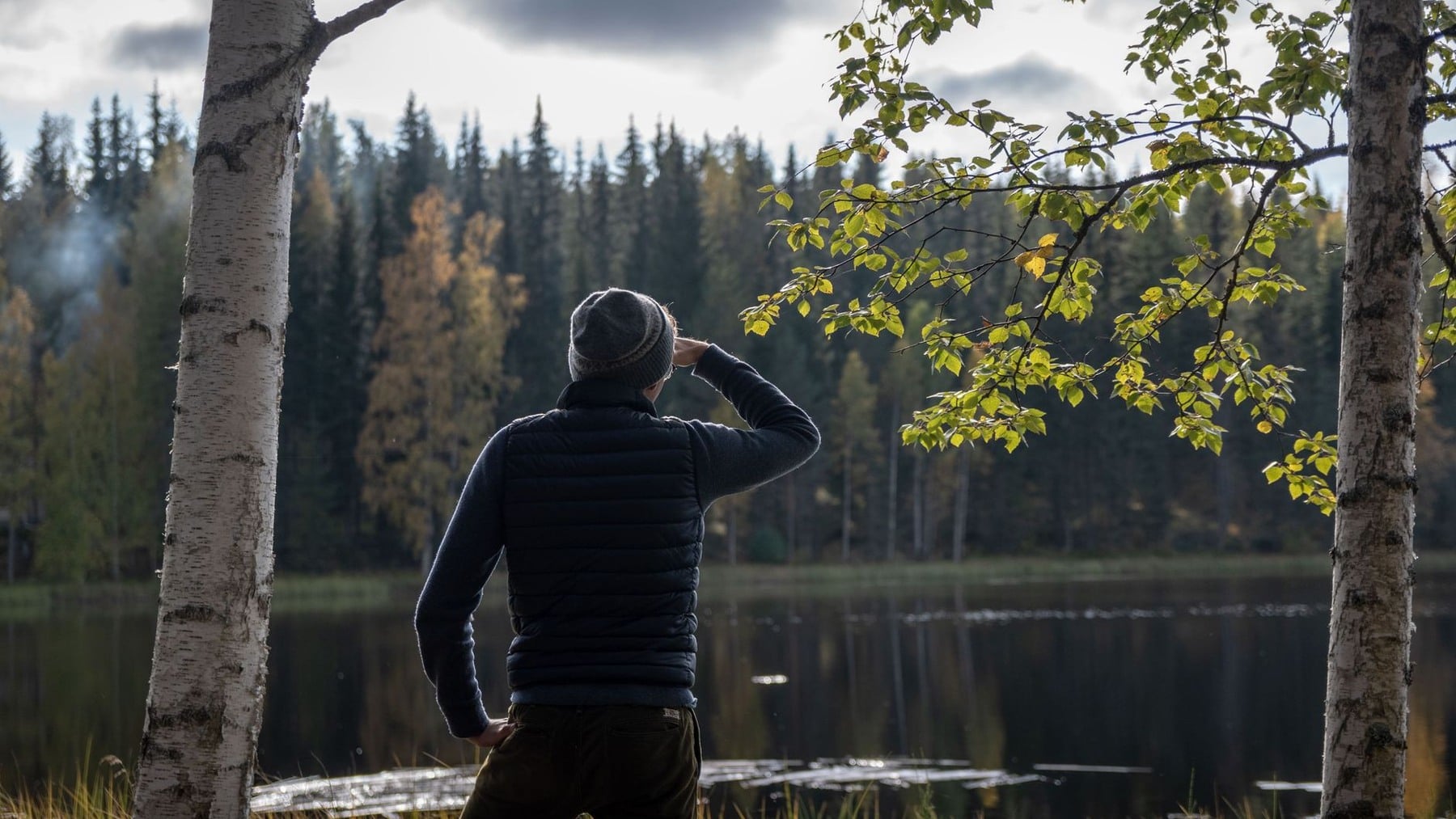
In Finland, a forest can be privately owned without being closed to everyone else. The principle commonly translated as Every Person’s Right, and still called Everyman’s rights by several official English-language services, lets people move through and spend time in nature without asking the landowner or paying a fee. It is a striking freedom in a world where private property often means a gate, a warning sign and a presumption that strangers must stay out.
The freedom is broad, but it is not a licence to behave as if the land has no owner. The practical boundary is damage or more than minor harm and disturbance. Homes, gardens, cultivated ground, protected habitats and temporary safety restrictions all matter. The rules below are a general guide, not a substitute for checking the current instructions for a particular destination.
There is no single Every Person’s Right Act
Finland’s official outdoor service, Luontoon, defines the principle as everyone’s right to spend time in nature regardless of who owns the area. It states that landowner permission is not normally required and use is free. It also makes the crucial qualification that different laws can grant, guide or restrict those rights.
This is why the Finnish term jokaisenoikeudet is better understood as a legal framework than as the informal generosity of landowners. A detailed Ministry of the Environment guide explains that the framework is assembled from legislation concerning property, privacy, nature conservation, water, littering, traffic and other activities. It also cautions that courts assess a disputed act in its particular circumstances. There is no single national map colouring every permitted square metre green.
Nor does the principle erase ownership. A landowner can still farm, fell timber, protect a yard and expect visitors not to interfere. What ownership does not normally confer is an absolute power to exclude a quiet walker, skier or berry picker from uncultivated natural ground merely because the title deed is private.
Walking and temporary camping depend on conduct
Walking, skiing and cycling are generally allowed in forests, natural meadows and other uncultivated areas. Private gardens and domestic yards are outside the permission. So are planted or cultivated fields when passage could cause damage. A working forest is not automatically closed, but access cannot be used to obstruct forestry or harm young trees.
Temporary camping is allowed where access itself is allowed. That word temporary does real work. A tent pitched quietly for a short stay, far enough from homes to preserve privacy, is different from a repeated base camp, an event, or a large group occupying the same ground. Official guidance does not turn respect for a home into one universal distance in metres. Noise, visibility, the character of the site and the length and scale of the stay can all affect whether the intrusion has become unreasonable.
An open fire is a separate matter. Lighting one on somebody else’s land is not part of Every Person’s Right. It needs the landowner’s permission or a maintained site where permission has already been provided. Even then, current wildfire restrictions govern what is possible. The Finnish Meteorological Institute warning map is the live source to check before any flame is lit. A tent is not permission for a campfire, and fallen timber is not a free fuel supply.
Water access follows the same low-impact logic
Swimming, boating and moving over frozen water appear in the familiar summaries of Every Person’s Right. Here the legal basis is unusually direct. Section 3 of Finland’s Water Act gives everyone the right to travel in a water body and on its ice-covered surface, anchor temporarily and swim, as long as they do not cause unnecessary damage, harm or disturbance.
That does not create a right to cross a private garden to reach the lake, occupy somebody’s jetty or swim beside a home in a way that interferes with domestic privacy. The route to the water matters as much as the water itself. Local safety closures and protected nesting or seal areas can also limit landing and movement.
Fishing should not be folded casually into the swimming rule. Hook-and-line angling and ice fishing are often described as common fishing rights, but species, methods and waters can bring fees, permits and restrictions. A right to enter the lake is not automatically a right to take whatever is in it.
Wild berries and mushrooms are a particularly clear freedom
Picking wild berries and mushrooms is one of the clearest parts of the system. Chapter 28, section 14 of Finland’s Criminal Code excludes gathering wild berries, mushrooms, flowers and similar natural products on another person’s land from its property offences. The section expressly leaves moss and lichen outside that permission.
Wild is the operative word. Garden fruit, farm crops and cultivated berries are not public harvests. Protected species remain protected. The permission also does not extend to cutting or damaging trees, taking firewood or hauling away fallen trunks. Chaga can look like a mushroom, but because it grows as part of a tree it is not treated like a freely pickable forest mushroom. Metsähallitus’s natural products permit guidance lists chaga, moss, resin, branches and other materials that require permission on the state land it manages.
For anyone drawn specifically by Finland’s amber-coloured northern fruit, Scandinavia Standard’s earlier guide to cloudberries explains what makes the berry distinctive. Knowing the plant, however, does not remove the need to check whether a protected area’s local rules allow collecting there.
National parks, fragile ground and Åland need extra checks
National parks and nature reserves are not ordinary forests with better signposting. Finland’s Nature Conservation Act allows access, camping, landing and vehicle use to be restricted where conservation requires it. Luontoon notes that camping in national parks is usually confined to designated places. A strict nature reserve may permit entry only on marked routes or with specific permission.
Edible berries and useful mushrooms are often still pickable in national parks, but the rules are site-specific. A bird nesting area may close seasonally. A fell or lichen-rich patch can remain legally accessible while being too fragile for careless shortcuts. Staying on a marked trail is sometimes an ecological choice and sometimes a legal requirement, so signs and the destination’s current Luontoon page outrank a general summary read before the trip.
For named routes, Scandinavia Standard’s guide to six scenic hiking trails in Finland is a useful starting point. Conditions, fire warnings and park regulations can change after any travel article is published, so each destination still needs a fresh check.
Åland is another important exception to the shorthand. The autonomous islands have their own legislation, and the Government of Åland says public access to privately owned land is more limited than on mainland Finland. A broad statement about Finnish practice should never be used to overrule an Åland reserve notice or local instruction.
Leave no trace is shorthand for a reciprocal duty
Every Person’s Right is expansive because private ownership does not make ordinary, low-impact movement through nature exclusively private. Its reciprocal obligation is equally important. Visitors may not litter, disturb wildlife, damage nests, cut trees, drive motor vehicles off-road without permission or intrude on domestic privacy. Dogs are subject to control rules too, including the official guidance that they should not be kept unleashed from 1 March to 19 August.
“Leave no trace” captures the spirit, but it is not the whole legal test. The boundaries come from several laws and from the real effect of an activity. One person walking through a forest, swimming from an unobtrusive shore or filling a container with wild bilberries will usually fit within the framework. A noisy group camp, an unauthorised fire, repeated occupation or damage to a protected patch may not.
This is less a romantic national philosophy than a practical compromise between access, property, privacy and conservation. The freedom remains broad because the expected footprint is small: pass through, stay briefly, take only what the rules permit, and leave the ground as usable as it was before.