
For decades, holidays were marketed through accumulation: more landmarks, more restaurants, more nightlife, more experiences fitted into a finite number of days. In 2026, part of the travel industry is selling the opposite. The promise is fewer voices through the hotel wall, fewer engines outside the window, fewer notifications and fewer reasons to hurry.
The fashionable name is the “quietcation”. It is an imprecise label, not an official tourism category, yet it describes a recognisable shift. Silence has become valuable because ordinary life supplies so little of it. That puts the Nordic region in an unusually strong position. Forests, fjords, lakes, islands and mountains offer physical distance from crowds, while cabins, saunas and outdoor access traditions provide a cultural language for doing less.
There is a catch. The Nordics are not uniformly empty, natural places are not acoustically silent, and marketing a secluded place too successfully can destroy the quality being sold. Quiet can be a luxury, but it has to be handled as a limited condition rather than another attraction to consume.
A trend with numbers behind it, but no standard definition
Hilton’s 2026 trends research found that 56 percent of respondents named rest and recharging as a motivation for leisure travel. Thirty-seven percent wanted time in nature, while 28 percent of the travellers it describes as jetsetters planned to seek more quiet moments alone, even during group trips. Separate US results cited by the company found substantial interest in reading, nature-immersion and silent retreats.
Those figures are evidence of appetite, not a market census. “Quietcation” may mean a phone-free retreat with scheduled silence, a solitary cabin, a hotel room designed to block urban noise or simply a slower holiday with unprogrammed afternoons. No standard body certifies the term, and there is no reliable global count of bookings made under it. Claims that quietcations are booming should therefore be read as a strong marketing and consumer-interest trend, not a settled statistical category.
Why the label resonates is less mysterious. The World Health Organization’s guidance on environmental noise identifies road, rail, air traffic and construction as important sources of exposure and links excessive noise with annoyance and sleep disturbance, among other health effects. A quiet holiday is not medical treatment, and a week in a forest cannot undo chronic exposure. Still, a room without traffic outside and a day without alerts can feel scarce enough to command a premium.
The Nordic advantage is space between population centres
The geography needs one clarification. The Nordic region includes Denmark, Finland, Iceland, Norway and Sweden, together with Greenland, the Faroe Islands and Åland. Scandinavia in the strict geographic sense normally refers to Denmark, Norway and Sweden, although English-language travel marketing often stretches the word to include Finland and Iceland. The quiet-travel opportunity belongs to the wider Nordic map.
It is not simply that the countries have small populations. It is that people and land are distributed unevenly. Nordregio’s State of the Nordic Region 2026 reports that 70 percent of the Nordic population lived in inner and outer urban areas in 2025, while only 9 percent lived in rural heartlands and sparsely populated areas. The capitals and regional centres concentrate people, leaving large northern and inland territories with comparatively few residents.
That pattern creates something travel businesses can package: not silence everywhere, but access to extensive quiet landscapes beyond dense urban corridors. Norway has fjords and plateaus separated by difficult terrain. Sweden and Finland have broad forest and lake systems. Iceland combines a concentrated capital population with a vast interior. Even where distances are shorter, archipelagos and peninsulas divide the coast into small pockets.
Denmark is an important corrective to the postcard. It is relatively compact and densely settled. Copenhagen, Stockholm, Oslo, Helsinki and Reykjavík are busy cities, while places such as Lofoten, Geiranger and Iceland’s best-known waterfalls can be crowded in high season. The regional advantage is choice, not an all-purpose guarantee.
Natural quiet is full of sound
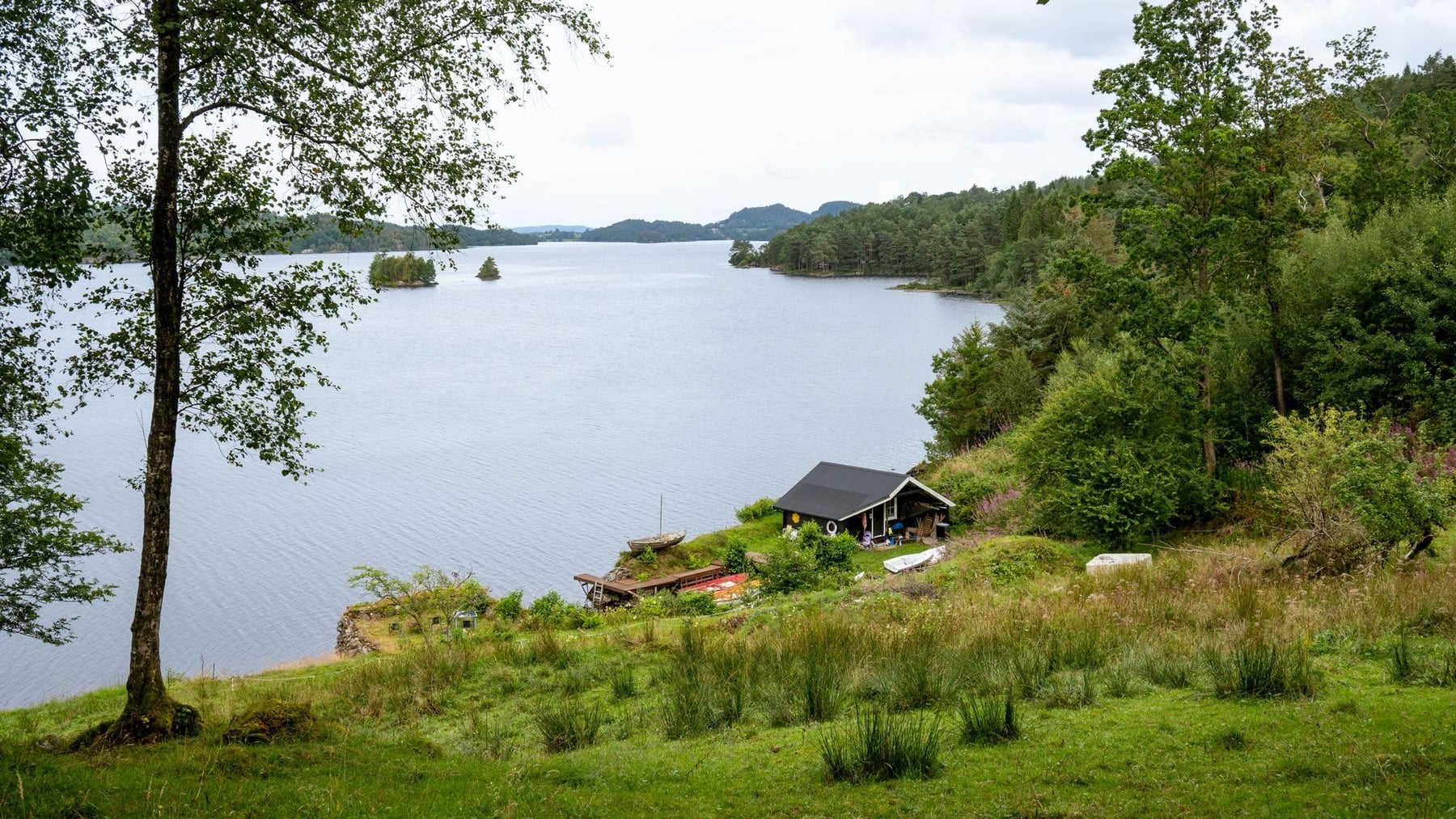
A good quietcation is almost never silent in the literal sense. A pine forest has birds, insects, rainfall and branches moving in the wind. A fjord carries waterfalls, waves and boat engines across water. A lakeside cabin has a stove, creaking timber and perhaps an axe on a chopping block. On Iceland’s coast, wind may overwhelm any idea of stillness.
What many travellers want is not an acoustic vacuum but a change in the soundscape. Mechanical noise, crowds and the expectation of constant conversation recede. Weather, water and wildlife become audible. That distinction matters because a destination can promise distance from traffic more honestly than it can promise silence.
Nordic tourism organisations are already making the distinction part of their sales language. Visit Norway has a guide devoted to quietcations. A June 2026 Fjord Norway feature on “the sound of silence” suggests kayaking, roadless settlements and sparsely populated islands, activities in which natural sound is part of the experience rather than a defect in it.
Each Nordic landscape offers a different version
Norway supplies the most dramatic visual version: a cabin beside a fjord, a plateau beyond the treeline or a village where the road ends before arrival. The country’s domestic hyttetur tradition also gives the experience structure. As Scandinavia Standard’s guide to Norwegian cabin culture explains, a cabin trip is not simply a remote hotel stay. It involves outdoor routines, practical chores and an expectation that guests adapt to the place.
Sweden offers long forest distances, tens of thousands of lakes and archipelagos that let travellers move beyond a single busy harbour. Its Right of Public Access makes much of that nature available without a resort gate. Finland’s version combines forest, lake, cottage and sauna, often with less anxiety about filling conversational space. In March, Visit Finland marketed a 2026 Lakeland escape around forest walks, sauna, swimming, hammock naps and time without notifications. It was a promotion, but also a clear example of a national tourism agency treating an unhurried absence of programming as the product.
Iceland offers geographical isolation, especially away from the south-west and the Ring Road’s most familiar stops. It also exposes the limits of the word “quiet”: wind, surf and weather are central to the place. Denmark cannot compete on vast wilderness, but its smaller islands, dunes and off-season coasts can provide calm within easier reach of towns and railways.
The most convincing trip may combine these forms. A few days in a simple shelter can be quieter than a heavily programmed wellness retreat. Scandinavia Standard’s feature on Finland’s compact Nolla cabins captures the appeal: small quarters, natural surroundings and enough comfort to make simplicity feel intentional.
Nature can be open even when privacy is expensive
Calling silence a luxury risks making it sound as though quiet belongs only to people who can pay for a glass cabin with a private sauna. Nordic access traditions complicate that idea. Under Sweden’s Right of Public Access, people can walk, cycle, paddle and camp for a limited time across much of the countryside, provided they keep away from homes, respect restrictions and follow the rule not to disturb or destroy. Related traditions exist in Finland and Norway, with national differences visitors must learn.
Nature itself is therefore not always behind a paywall. What an expensive property sells is certainty and convenience: exclusive use, sound insulation, warmth, meals, a view without another building in it, perhaps a transfer across difficult terrain. Remoteness costs money to service. A lower-budget traveller can find deep quiet by hiking, camping or using a basic hut, but assumes more of the work and risk.
The distinction is useful. The luxury is often not the forest or water. It is control over interruption, plus the confidence that someone has solved transport, shelter and food. Quiet becomes a premium hospitality feature in much the same way that a private pool or late checkout once did.
The sales pitch can erase the thing it promises
A quiet destination has a built-in capacity limit. Publish the same overlook, island or cabin to millions of people and the silence begins to disappear. Extra vehicles, holiday rentals, waste and seasonal labour can put pressure on communities that were attractive precisely because they were small.
The Nordic Tourism Plan 2025-2030 addresses this wider contradiction. It calls for managing peak-season pressure, protecting landscapes, accounting for residents’ interests and using responsible marketing. Quiet travel can support that agenda if it sends visitors to less compressed seasons and spreads demand. It undermines it if every campaign directs people to the same photogenic shore.
Remote land is also not vacant land. Sápmi is a living Indigenous homeland across northern Norway, Sweden, Finland and Russia. Reindeer herding, local work and daily life continue in landscapes visitors may misread as empty wilderness. Noise is not the only intrusion; leaving a marked route, flying a drone or lingering near homes and animals can disturb without producing many decibels.
A credible quietcation operator should explain those limits before arrival. Small groups, existing buildings, local suppliers and clear seasonal rules are more consistent with the promise than building a large complex whose marketing depends on appearing alone.
How to book quiet rather than a quiet-looking photograph
Start with the soundscape, not the styling. Ask the host how close the nearest through-road is, whether heating depends on a generator, whether boats or snowmobiles pass the property, and whether construction is planned. A cabin can look isolated in a cropped photograph while sitting beside a working harbour or under a flight path.
Choose one base and stay long enough for the weather to change. Packing several remote locations into four days recreates the very pressure the trip is meant to remove. Shoulder seasons may offer more space, but travellers must check daylight, trail conditions, ferry frequency and seasonal closures. Sometimes a place is quiet because the café, bus and grocery shop are also closed.
Download maps, tickets, access rules and emergency contacts before switching off mobile data. Tell someone the route, carry suitable layers and keep a charged phone available. Digital disconnection should remove needless input, not useful safety information.
Respect is part of the booking. Keep away from homes, do not assume that access rights allow vehicles or large camps, follow fire restrictions and avoid broadcasting fragile locations. Even Sweden’s astonishing official count of 267,570 islands is not an invitation to treat every shore as a private playground. Abundance does not cancel ownership, habitat or local rules.
A luxury defined by what is left alone
The quietcation fits 2026 because it reverses an old tourism promise. Instead of proving value through a longer list of inclusions, it treats unclaimed time, privacy and a less crowded soundscape as amenities. The Nordics possess the physical ingredients on an exceptional scale, and their cabin cultures, outdoor traditions and seasonal rhythms give the idea more substance than a silent room in an otherwise frantic itinerary.
Yet the most memorable Nordic quiet is not empty. It contains waves under a kayak, wind across birch leaves, a stove beginning to draw and perhaps one ferry moving along a distant channel. What has gone missing is the pressure to answer, perform or move on.
If the industry can sell access without concentrating crowds, respect people who already live on the land and resist turning every remote place into content, quiet may remain an unusual kind of luxury. Its value comes not from what tourism installs there, but from what the visitor is finally able to hear because so much has been left alone.