
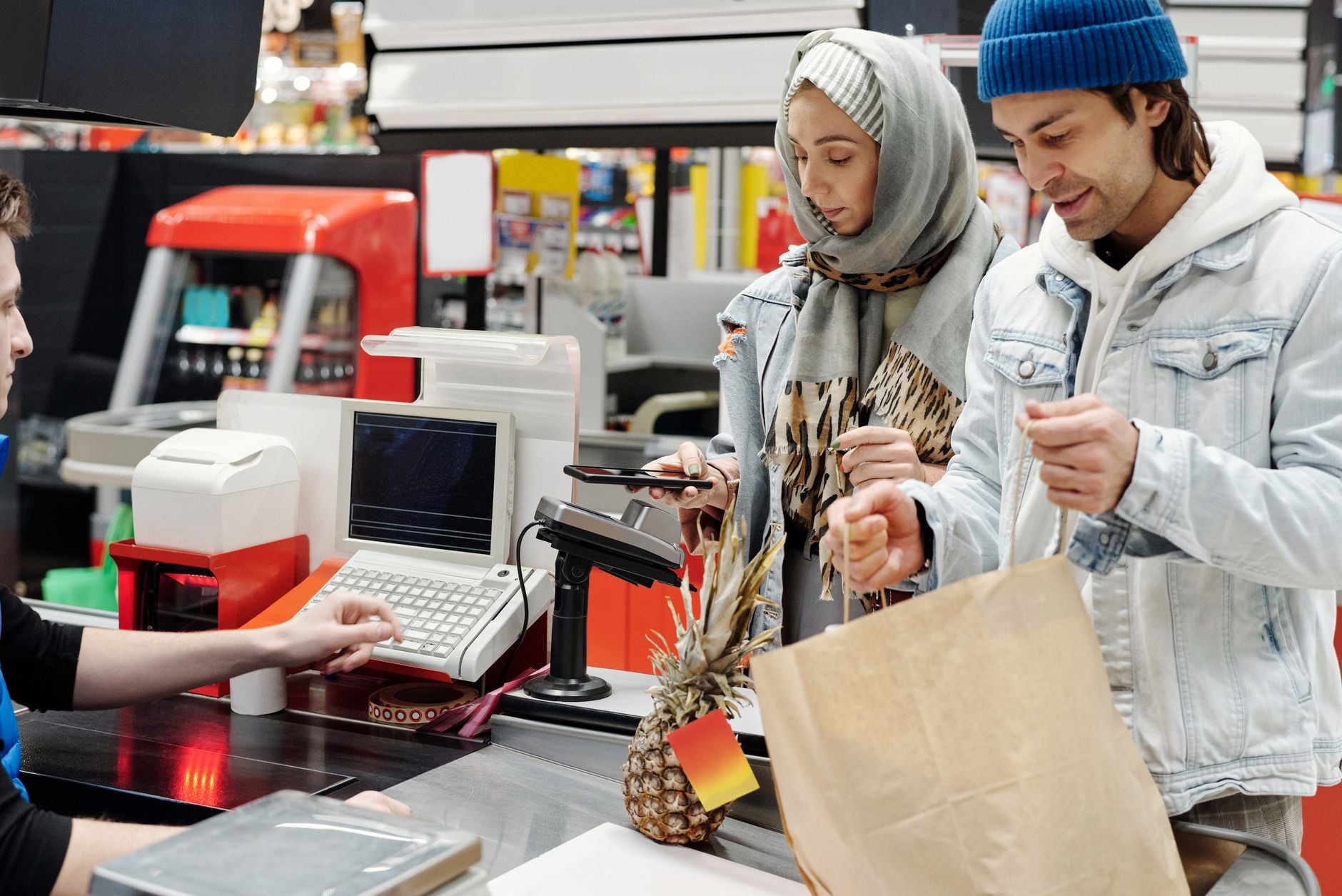

The queue at a supermarket checkout is a small piece of social order. Nobody signs a contract, yet most people understand the arrangement: whoever arrived first is served first.
Then somebody with a full trolley notices the person behind them holding one carton of milk. They step aside and say, “You go ahead.” The rule has not vanished. It has been adjusted by the only person entitled to surrender their place.
I think that is what makes the gesture interesting. People who let someone go first are often doing more than performing good manners. They have noticed that the same minute may cost two people different amounts, then chosen to carry the smaller inconvenience themselves.
A queue makes strangers equal in one narrow way
Queues solve a recurring problem without requiring strangers to negotiate every time. Arrival order becomes a rough definition of fairness. It does not matter who is wealthier, louder or more important elsewhere. In this little system, position is earned by waiting.
Legal scholar David Fagundes explored this in a 2017 article in Law & Social Inquiry. He described the queue as a surprisingly reliable form of informal order among strangers who may never meet again. People usually respect it without formal enforcement, and they often react strongly when somebody simply cuts in.
Letting another person ahead is different from cutting because the place is given by the person who bears the delay. The gesture preserves the queue’s underlying concern with fairness while admitting that arrival time is not the only relevant fact.
The person behind may have one item. They may be trying to settle a restless child, moving carefully with a walking aid, or looking anxiously at the clock. None of those details gives them an automatic right to jump the queue. They give the person in front information with which to reconsider the cost.
The real act begins with noticing
It is easy to reduce kindness to temperament: kind people do kind things. That explanation skips the first step. Before anyone yields a place, they have to look beyond their own transaction and register that another person’s situation differs from theirs.
This does not require extraordinary empathy or a hidden psychological gift. It is ordinary attention. The same attention appears when somebody holds a lift after seeing a person hurry towards it, moves a bag from a train seat, or pauses so another pedestrian can pass through a narrow doorway.
A 2023 study in Scientific Reports examined more than 1,000 moments of immediate, low-cost assistance captured in everyday video across eight cultures on five continents. The settings involved family members and other familiar people, not strangers in supermarket queues, so the result should not be stretched too far.
Within those settings, people complied with small requests for help far more often than they declined, and when they declined they usually supplied a reason. The authors’ larger point was that tiny acts of cooperation are woven densely into ordinary interaction. They are frequent enough to look unremarkable, even though daily life would become much rougher without them.
A minute can be a real gift without becoming a grand sacrifice
Letting someone go first usually costs little. That is part of why it works. The giver can absorb a minute or two, while the recipient may avoid a missed bus, calm a difficult moment or simply feel seen by a stranger.
Adjacent research suggests people can misjudge that difference. In a series of field and laboratory experiments published in the Journal of Experimental Psychology: General, Amit Kumar and Nicholas Epley found that people performing small acts of kindness underestimated how positive recipients would feel. The experiments included giving hot chocolate to a stranger and giving away a small gift, not yielding places in line.
This is one programme of studies, not a rule about every exchange. Still, it offers a useful possibility: the person who gives up two minutes may experience the act as almost trivial, while the person waved forward experiences recognition as well as saved time.
I recently wrote about research on brief “micro-acts” such as doing something kind. What links that work with the queue is scale. Social life is not held together only by large promises. Much of it consists of small accommodations that nobody records.
One courteous moment is not a personality test
I would be careful about turning this gesture into a flattering diagnosis. A person who lets others go first is not automatically more compassionate in every part of life. They may be relaxed that day, in no hurry, or eager to avoid feeling watched while unloading a large trolley.
The reverse matters too. Someone who keeps their place is not necessarily selfish. They may have a deadline invisible to everyone else, have already waited a long time, or simply prefer the shared rule to an improvised exception.
Generosity becomes less generous when it is demanded. The person at the front can offer their own place, but they cannot volunteer the extra waiting time of everybody behind them. In a long queue, waving several people through may create an unfairness for strangers who never agreed to it.
That boundary is part of the gesture’s quiet intelligence. It is local and proportionate. One person notices one small imbalance and gives away only what belongs to them.
Courtesy is a form of social information
Another earlier piece looked at why follow-up questions make people feel heard. Letting somebody ahead in line is nearly wordless, but it sends a related message: I have registered your circumstances, not merely your position behind me.
The recipient may decline. They may accept without much thought. Nothing needs to become a lesson or an obligation to repay the favour. The useful part is smaller than that.
A queue begins by saying that everyone’s time counts equally. A thoughtful exception adds that equal value does not always mean equal need. Sometimes fairness is holding your place. Sometimes it is noticing that you can give it away.